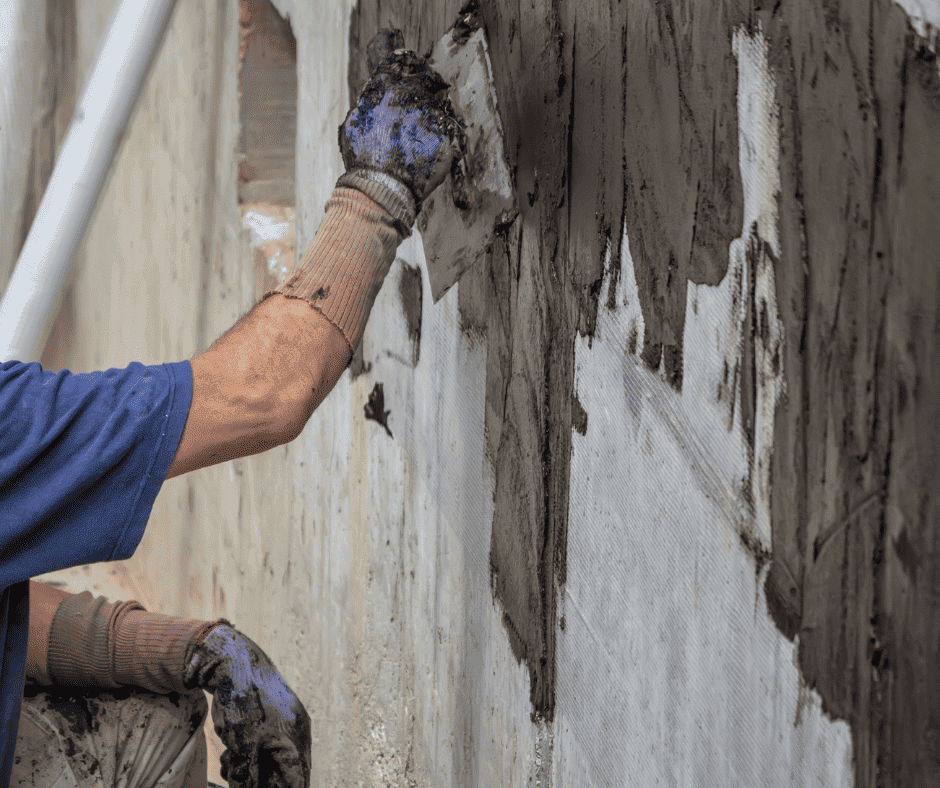
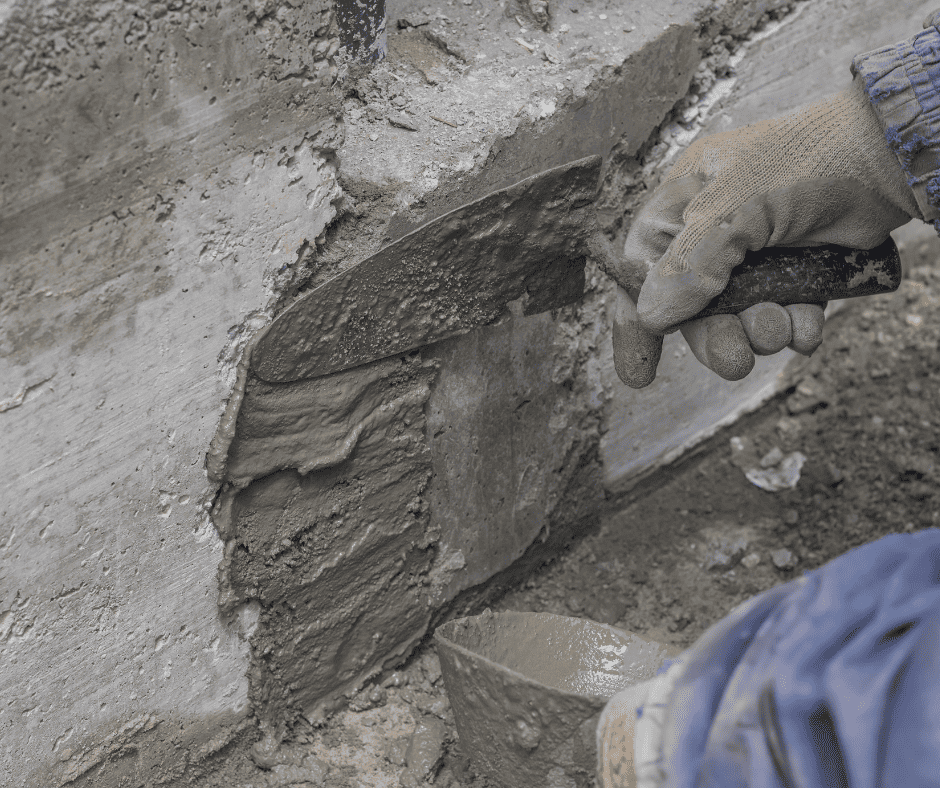
Parging is a mortar-based coating applied over concrete, concrete block, brick, or stone masonry. It can create a smoother, more uniform wall surface and may provide limited surface protection when the correct material is used.
Your basement may benefit from parging when the underlying wall is stable and the goal is to improve its appearance, cover minor surface irregularities, or prepare it for a compatible wall-protection system.
Parging is not a substitute for structural repair, repointing, exterior drainage, foundation waterproofing, air sealing, or insulation. Active leaking, widening cracks, bowing walls, loose masonry, or recurring dampness should be investigated before the wall is covered.
Kelly Masonry evaluates foundation walls, cracks, moisture conditions, drainage, and masonry compatibility through our structural-repair services.
Parging at a Glance
| Question | Direct answer |
|---|---|
| What is parging? | A mortar-based coating applied over a masonry surface |
| Is parging waterproofing? | No. It may form part of some damp-proofing or wall-protection systems, but it is not automatically waterproof |
| Does parging strengthen a foundation? | Ordinary parging does not repair structural movement or make a damaged foundation structurally sound |
| Can parging stop a basement leak? | It may reduce minor surface moisture in a compatible system, but it will not reliably stop active leaks or hydrostatic pressure |
| Does parging insulate a basement? | No. It provides very little thermal resistance compared with a designed insulation system |
| Can block, concrete, brick, and stone be parged? | Potentially, but the product and preparation must be compatible with the wall |
| Can parging be painted? | Often, after the coating has cured and moisture conditions have been resolved, using a compatible masonry finish |
| Why does parging crack or peel? | Common causes include movement, moisture, poor preparation, incompatible materials, excessive thickness, and inadequate curing |
| Does every unfinished basement need parging? | No. A sound unfinished wall may not require any coating |
| Should cracks be covered with parging? | Cracks should be evaluated and repaired appropriately before they are concealed |
What Is Parging?
The Concrete Masonry & Hardscapes Association defines parging as a mortar coating applied over a surface, as well as the process of applying that coating.
Parging material is not one universal mixture. Depending on the application, a coating may contain:
- Cementitious binders
- Sand or other graded aggregate
- Lime
- Polymer modifiers
- Water-repelling ingredients
- Bonding additives
- Product-specific reinforcing components
The correct material depends on:
- Concrete, block, brick, or stone
- Interior or exterior use
- Above-grade or below-grade exposure
- Existing paint or coating
- Wall age
- Moisture conditions
- Desired finish
- Whether the coating is decorative, protective, damp-proofing, or surface bonding
Do not assume that the same cement-rich mixture is appropriate for every foundation.
Parging vs. Waterproofing, Dampproofing, Stucco, and Repointing
These terms describe different types of work.
| Treatment | Primary purpose |
|---|---|
| Parging | Creates a mortar coating over a masonry surface |
| Dampproofing | Limits moisture movement where significant water pressure is not expected |
| Waterproofing | Uses a designed system to resist water intrusion under more demanding conditions |
| Repointing | Removes and replaces deteriorated mortar within masonry joints |
| Stucco | A plaster finish system that may use multiple coats and decorative finishes |
| Surface-bonding cement | A product-specific reinforced coating intended for certain masonry-wall systems |
| Structural repair | Corrects problems involving wall capacity, movement, settlement, displacement, or failure |
A wall may require more than one treatment.
For example, model residential-code provisions for certain concrete-masonry foundation walls call for an exterior parging coat followed by a separate damp-proofing layer. This illustrates that parging and dampproofing are not the same material or function.
Read our guide to repointing masonry joints when the deterioration is located between individual bricks or stones rather than across the wall surface.
Interior vs. Exterior Parging
The location of the coating affects what it can realistically accomplish.
Exterior parging
Exterior parging may be used to:
- Create a more uniform surface over concrete block
- Cover minor surface irregularities
- Protect exposed above-grade masonry
- Prepare a suitable surface for a compatible dampproofing product
- Improve the appearance of a visible foundation
Exterior work must account for soil contact, rain, freezing, drainage, surface preparation, and any subsequent coating or membrane.
Interior parging
Interior parging may be used to:
- Create a cleaner-looking basement wall
- Reduce the visual appearance of block joints
- Cover minor, stable surface irregularities
- Stabilize selected sound masonry surfaces
- Create a compatible base for an approved finish
Interior parging does not stop water from reaching the outside of a foundation wall. Applying a coating to the room side of an actively wet wall may conceal the symptoms temporarily while the water source remains.
What Can Parging Do?
When the wall is suitable and the coating is installed correctly, parging may provide several benefits.
Create a uniform appearance
Parging can cover block joints, rough concrete, patching, or minor surface variations to create a more consistent wall.
Protect selected exposed surfaces
A compatible exterior coating may provide limited protection against weathering and minor surface deterioration.
Provide a base for another system
Certain wall-protection or damp-proofing systems require a suitable, continuous substrate. Parging may be one step in that complete assembly.
Make maintenance easier
A relatively smooth, sound wall may be easier to inspect or clean than irregular block, concrete, or rubble masonry.
Support an appropriate restoration
Selected nonstructural surface cracks, eroded areas, or damaged coatings may be repairable with a compatible parging or masonry-repair material.
What Can Parging Not Do?
Parging should not be used to conceal a problem that requires another repair.
Ordinary parging will not:
- Straighten a bowing foundation wall
- Stop structural settlement
- Stabilize loose bricks, stones, or blocks
- Rebuild failed mortar joints
- Correct an unstable foundation
- Stop exterior hydrostatic pressure by itself
- Replace perimeter drainage
- Correct grading that directs water toward the house
- Replace a designed basement waterproofing system
- Provide meaningful basement insulation
- Permanently bridge active cracks
- Correct mold without eliminating moisture
- Make every old masonry wall suitable for paint
The wall should be diagnosed before it is covered.
Does Your Basement Need Parging?
A basement wall may be a good candidate when:
- The wall is structurally stable
- The masonry is firmly bonded
- The surface is dry or its moisture condition is understood
- The goal is a cleaner, more uniform appearance
- Minor surface irregularities need to be covered
- The selected coating is compatible with the masonry
- Required crack, joint, and drainage repairs have already been completed
Parging may not be the correct first step when:
- Water enters during rain
- The wall remains consistently damp
- White mineral deposits repeatedly appear
- Paint or previous coatings are peeling
- Cracks are becoming wider
- The wall is bowing or leaning
- Blocks, bricks, or stones are loose
- Mortar joints are extensively deteriorated
- The floor and wall joint leaks
- Water collects around the foundation
- The masonry is historic and the existing materials have not been identified
Can Parging Stop Water From Entering a Basement?
Parging alone should not be presented as a guaranteed basement-waterproofing solution.
Water can enter or affect a basement through:
- Foundation cracks
- Wall joints
- The wall-floor connection
- Porous masonry
- Openings around utilities
- Poor exterior grading
- Downspouts discharging near the foundation
- Failed drains
- Groundwater
- Plumbing leaks
- Condensation
- High indoor humidity
The U.S. Environmental Protection Agency recommends correcting moisture before finishing a basement. Solutions may include redirecting downspouts, regrading the property, repairing leaks, improving drainage, or completing more extensive work.
Read our guide to yard drainage problems when runoff or grading may be directing water toward the foundation.
A basement inspection should determine:
- Whether the moisture is liquid water, vapor, or condensation
- Whether it originates inside or outside
- Whether cracks or masonry joints are involved
- Whether the wall is structurally stable
- Whether exterior drainage can be improved
- Whether waterproofing, damp-proofing, crack repair, or another system is needed
Is Parging Structural?
Ordinary parging is primarily a surface treatment.
It may cover minor nonstructural imperfections, but it should not be credited with repairing the structural capacity of a foundation unless the exact engineered product and wall system are specifically designed for that purpose.
Signs that require a different evaluation include:
- Horizontal cracks
- Stair-step cracks
- Widening cracks
- Displaced blocks or stones
- Bowing
- Leaning
- Separation from adjoining walls
- Settlement
- Doors or windows becoming difficult to operate
- Repeated cracking through previous repairs
Parging over these symptoms can make the wall look better temporarily while making future movement harder to monitor.
Learn more about structural masonry repairs and the cost factors involved in foundation and wall repair.
Does Parging Improve Energy Efficiency?
Parging is not insulation.
A relatively continuous coating may close selected small surface openings, but it does not provide the thermal resistance of a properly designed basement insulation and air-sealing system.
Basement energy performance may depend on:
- Rim-joist air sealing
- Wall insulation
- Floor or slab conditions
- Windows
- Utility penetrations
- Moisture management
- Heating and ventilation
- The complete wall assembly
Improperly finishing or insulating a damp basement can also trap moisture within the wall system. Energy and moisture improvements should therefore be planned together rather than expecting parging to perform both functions.
Can Stone Foundations Be Parged?
Sometimes, but older stone foundations require particular care.
Many older Main Line and Delaware County homes use:
- Natural stone
- Rubble masonry
- Lime-rich mortar
- Multiple repair mortars
- Previous plaster, paint, or cement coatings
A dense modern cement coating may be incompatible with softer historic stone or lime mortar. It can also hide deteriorated joints, make future repairs more difficult, or affect how moisture dries through the wall.
Before parging an older stone foundation:
- Identify the stone and original mortar.
- Inspect the mortar joints.
- Determine whether previous coatings are present.
- Identify moisture sources.
- Test whether the existing surface can support the coating.
- Select a compatible and appropriately permeable material.
- Complete necessary repointing first.
The National Park Service recommends diagnosing moisture carefully before applying remedial coatings to historic masonry and warns that inappropriate waterproof treatments can trap moisture and contribute to damage.
Kelly Masonry offers brick and stone repair for walls requiring repointing or masonry restoration before a finish is considered.
Can Painted Walls Be Parged?
Parging should not automatically be applied over paint.
The new coating needs a sound, properly prepared substrate. Paint, waterproof coatings, dirt, oils, salts, loose mortar, and previous patching can interfere with bonding.
The inspection should determine:
- What coating is currently present
- Whether it is firmly bonded
- Whether it is vapor permeable
- Whether moisture is pushing it away from the wall
- Whether removal will damage the underlying masonry
- What preparation the selected parging product requires
Applying a new coating over loose paint usually transfers the failure into the new work.
How Is Parging Professionally Applied?
The exact procedure depends on the wall and selected product, but a professional project generally includes the following stages.
1. Diagnose the wall
Inspect the wall material, cracks, movement, moisture, salts, previous coatings, drainage, and intended result.
2. Correct underlying problems
Complete necessary drainage, crack, joint, masonry, or structural repairs first.
3. Prepare the surface
Remove loose or incompatible material, dirt, dust, organic growth, and other bond-breaking contaminants using a method appropriate for the masonry.
4. Repair the substrate
Repair loose units, deteriorated joints, voids, and cracks as required. An active structural crack should not simply be filled and hidden.
5. Select the compatible system
Choose the coating, bonding treatment, reinforcing method, thickness, finish, and curing process for the exact wall and exposure.
6. Apply the coating
Install the product according to its technical requirements and maintain a consistent finish.
7. Cure and protect the work
Protect new cementitious material from rapid drying, freezing, rain, impact, and premature finishing.
8. Apply a compatible final finish
Paint or another finish should be applied only after the coating has cured and moisture conditions are suitable.
Do not use one universal mortar ratio, thickness, bonding agent, or curing period for every parging project.
Why Does Parging Crack, Flake, or Fall Off?
Parging failure is often a symptom rather than the original problem.
Common causes include:
Wall movement
A thin coating will usually crack when the underlying wall continues to move.
Active moisture
Water or vapor can weaken the bond, carry salts to the surface, and contribute to peeling or blistering.
Poor surface preparation
Dust, paint, loose mortar, smooth concrete, oil, or deteriorated masonry can prevent proper adhesion.
Incompatible material
A coating that is too rigid, dense, or otherwise unsuitable may perform poorly on the existing wall.
Excessive or inconsistent thickness
Applying the coating outside the product’s requirements can increase shrinkage and cracking.
Weather during installation
Freezing, high heat, strong wind, rain, or rapid drying can affect curing.
Missing or incorrect reinforcement
Some systems require mesh, fibers, control joints, or other product-specific details.
Painting too soon
New mortar or plaster can retain moisture for an extended period. Painting before curing may contribute to staining, peeling, or trapped moisture.
Can Cracked Parging Be Patched?
A small, stable, isolated defect may be repairable.
Before patching, determine:
- Why the coating cracked
- Whether the wall moved
- Whether moisture is present
- Whether surrounding material is firmly bonded
- Whether the original material can be identified
- Whether the patch will remain visible
- Whether a larger area should be removed
A patch is unlikely to last when the wall continues to move or when water remains behind the coating.
Patch repair may be appropriate when:
- Damage is isolated
- Surrounding parging is sound
- The cause has been corrected
- The wall is stable
- A compatible repair material is available
A larger replacement may be appropriate when:
- Large areas sound hollow
- The coating is extensively cracked
- Moisture has caused widespread separation
- Multiple incompatible coatings are present
- Previous patches repeatedly fail
- The underlying masonry requires repair
Can Parging Be Painted?
Parging can often be painted, but not immediately and not with every paint.
Before painting:
- Allow the coating to cure
- Confirm that the wall is dry enough
- Resolve moisture problems
- Use a finish approved for the coating and masonry
- Consider the wall’s need to dry
- Test the selected finish
- Follow the paint manufacturer’s preparation requirements
A dense or incompatible coating can trap moisture or peel from a damp wall. Color preference should come after material compatibility and moisture performance.
How Long Does Parging Last?
There is no universal parging lifespan.
Durability depends on:
- Wall stability
- Moisture
- Drainage
- Surface preparation
- Material compatibility
- Application thickness
- Weather
- Curing
- Exterior exposure
- Freeze-thaw conditions
- Paint or finish
- Maintenance
A sound coating on a stable, dry, properly prepared wall may remain serviceable for many years. A coating applied over an active moisture or movement problem may fail quickly.
Avoid contractors who promise a fixed lifespan without first inspecting the wall.
How Much Does Parging Cost?
Parging cost depends on:
- Wall area
- Interior or exterior location
- Wall material
- Surface condition
- Removal of paint or failed coatings
- Crack and joint repairs
- Moisture correction
- Access
- Product selection
- Reinforcement
- Finish texture
- Painting
- Protection of nearby floors and mechanical equipment
- Structural or drainage work included in the project
Kelly Masonry parging projects generally [INSERT VERIFIED MINIMUM OR RANGE].
This figure should be verified before publication. Do not use Kelly Masonry’s broader structural-repair pricing as though it were a parging-only price.
An inspection is required because two walls with the same area may need very different preparation and repairs.
Does Parging Require a Permit?
A straightforward coating repair may not require the same review as structural foundation work, excavation, drainage changes, or a complete basement conversion.
Permit requirements may change when the project involves:
- Structural alterations
- Foundation reconstruction
- Exterior excavation
- Underpinning
- New drainage systems
- Finished habitable basement space
- Electrical, plumbing, or mechanical work
- Historic-property regulations
Pennsylvania uses the Uniform Construction Code, and most municipalities administer it locally. Confirm requirements with the township or borough before beginning significant foundation work.
What We Evaluate During a Parging Consultation
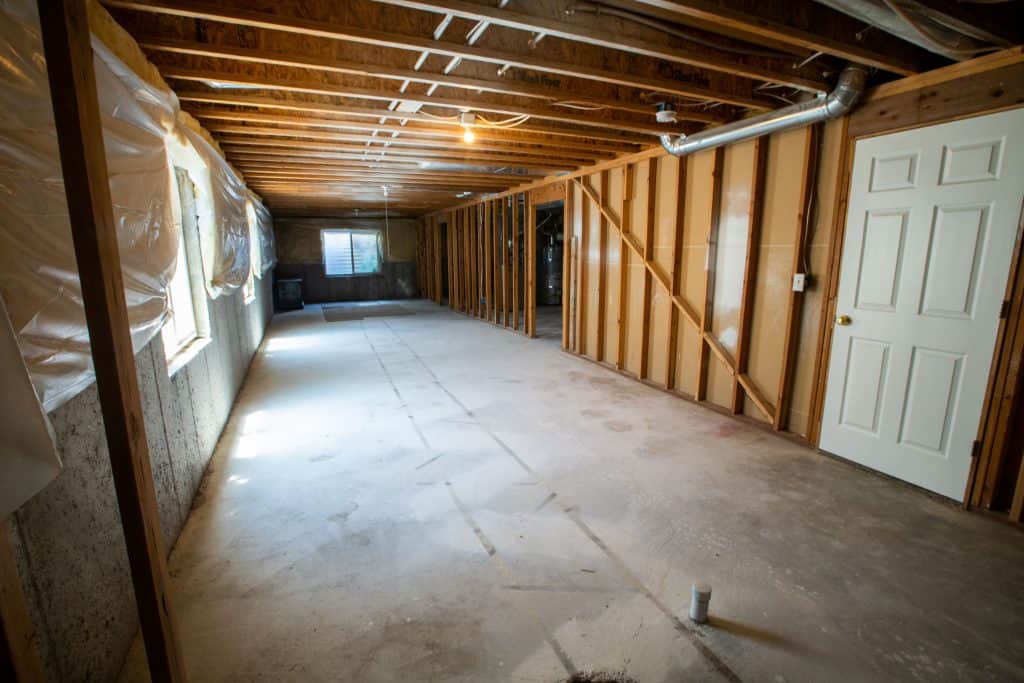
Kelly Masonry evaluates:
- Concrete, block, brick, or stone
- Interior or exterior application
- Above-grade or below-grade exposure
- Wall movement
- Crack patterns
- Mortar-joint condition
- Moisture and salts
- Exterior grading
- Downspouts
- Drainage
- Existing paint and coatings
- Surface strength
- Historic-material compatibility
- Desired finish
- Future basement plans
- Whether another repair should come first
The inspection may result in a recommendation for:
- Parging
- Repointing
- Crack repair
- Masonry restoration
- Drainage improvements
- Damp-proofing
- Waterproofing
- Structural evaluation
- No coating at all
Learn more about Kelly Masonry’s inspection and project process.
Add photographs showing:
- The original wall
- Cracks or failed coating
- Surface preparation
- Necessary masonry repairs
- Coating application
- The completed wall
- The wall after a period of service, when available
Frequently Asked Questions
Is parging the same as waterproofing?
No. Parging is a mortar-based coating. It may form part of certain wall-protection or damp-proofing systems, but it is not automatically a waterproofing system.
Can parging stop water from entering my basement?
It may reduce minor surface moisture in an appropriate system, but it will not reliably stop active leaks, hydrostatic pressure, poor drainage, or structural cracks.
Is interior parging enough to waterproof a foundation?
Usually not. An interior coating does not prevent water from reaching the exterior side of the foundation.
Does parging strengthen a foundation wall?
Ordinary parging should not be considered structural reinforcement. Product-specific surface-bonding systems are different and must be used according to their design requirements.
Does parging insulate a basement?
No. Parging provides very little thermal resistance. Insulation, air sealing, and moisture control should be planned as a complete wall assembly.
Can parging cover foundation cracks?
Cracks should be evaluated before covering. Stable surface defects may be repairable, while active or structural cracks require another solution.
Can a stone foundation be parged?
Sometimes, but the material must be compatible with the stone and mortar. Older walls should be evaluated for moisture, repointing needs, and historic-material compatibility.
Can parging be applied over paint?
Not automatically. Existing paint may prevent bonding and may need to be removed using a masonry-appropriate method.
Why is my parging turning white?
White deposits may be efflorescence—salts carried to the surface by moisture. Recurring deposits suggest that the moisture source should be investigated.
Why is my parging falling off?
Possible causes include moisture, wall movement, inadequate preparation, incompatible materials, weather during installation, or a weak existing surface.
Can damaged parging be patched?
Small stable areas may be patchable after the cause is corrected. Widespread hollow, cracked, or moisture-damaged material may need broader removal and replacement.
Does parging need to be painted?
No. Painting is optional and depends on the desired appearance, exposure, coating, moisture conditions, and product compatibility.
How long should parging cure before painting?
The required curing period varies by material, thickness, weather, and paint system. Follow the parging and paint manufacturers’ written instructions.
How long does parging last?
There is no single lifespan. Performance depends on wall stability, moisture, drainage, preparation, compatibility, application, curing, exposure, and maintenance.
Do all unfinished basement walls need parging?
No. A sound, unfinished wall may not need any coating unless the homeowner wants a different appearance or the wall system requires one.
About the Author
John Kelly is the founder of Kelly Masonry. Since 2002, Kelly Masonry has helped homeowners evaluate and repair masonry walls, foundations, drainage problems, brick, stone, and concrete throughout Delaware County, the Main Line, and surrounding Pennsylvania communities.
Reviewed by: John Kelly
Last updated: July 30, 2026
Not Sure Whether Your Basement Needs Parging?
Kelly Masonry can inspect the wall, identify moisture and structural concerns, evaluate material compatibility, and determine whether parging or another repair is appropriate.
Explore our structural-repair services, review our brick and stone repair services, browse our completed projects, or request a consultation.