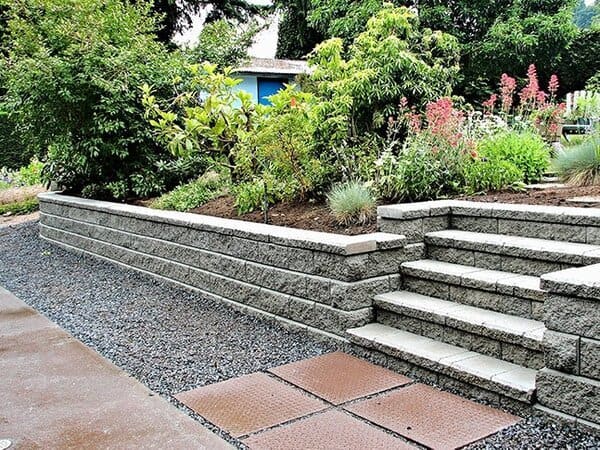
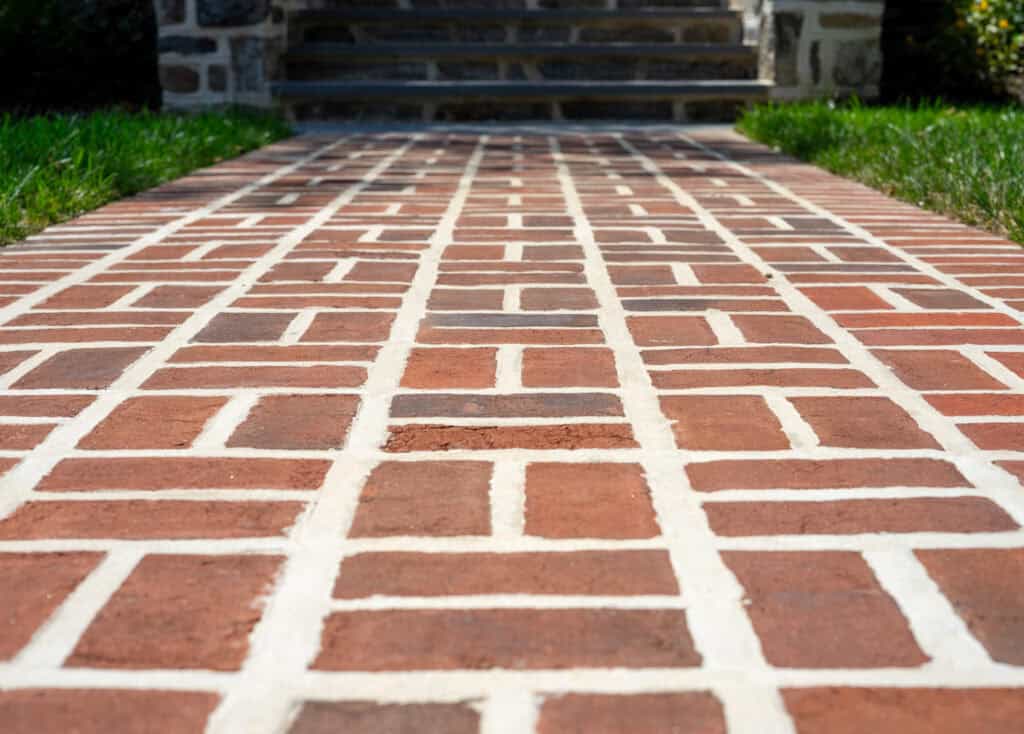
Brick and masonry repair projects with Kelly Masonry generally begin around $5,000 for localized work. Larger restoration projects commonly fall between $10,000 and $25,000, depending on the amount of damage, materials, access, water-management needs, and whether structural work is required.
These figures are planning ranges rather than fixed quotes. An on-site inspection is necessary because similar-looking cracks can have very different causes and repair requirements.
Brick and Masonry Repair Costs at a Glance
| Project level | Kelly Masonry planning range | Typical scope |
|---|---|---|
| Localized repair | Around $5,000 | Loose or damaged brick or stone in a limited area, localized mortar repair, or a small restoration scope |
| Larger restoration | $10,000–$12,000 | Extended wall, patio, retaining-wall, or structural masonry repairs |
| Extensive restoration | $20,000–$25,000 | Major facade, wall, walkway, patio, or multi-area restoration |
These ranges reflect the types of repair projects Kelly Masonry typically performs. Very small cosmetic patches may fall below the company’s normal project scope.
View Kelly Masonry’s brick and stone repair services or request an on-site consultation.
What Affects Brick and Masonry Repair Cost?
The price of masonry repair depends on the underlying cause of the damage and the work required to correct it.
Size of the repair area
Repairing one localized section generally costs less than restoring an entire wall, chimney, facade, patio, or walkway. However, a small visible crack can still require significant diagnostic or structural work.
Type of repair
Repointing deteriorated mortar is different from replacing damaged bricks, rebuilding a wall section, repairing a chimney, or correcting structural movement. Each repair requires different materials, labor, access, and preparation.
Cause of the damage
A lasting repair must address the cause rather than only covering the visible symptom. Common causes include:
- Water entering through failed joints, flashing, caps, or adjacent surfaces
- Freeze-thaw exposure
- Deteriorated or incompatible mortar
- Settlement or structural movement
- Corroding metal lintels or embedded components
- Poor grading or drainage
- Previous repairs made with unsuitable materials
Material matching
Matching older brick, natural stone, mortar color, texture, joint profile, and weathering can add time and cost. A repair that is technically sound but visually mismatched may remain noticeable.
Access and site protection
Scaffolding, lifts, confined spaces, steep grades, landscaping protection, traffic control, and difficult material access can affect the proposal.
Structural and engineering requirements
Bowing walls, displaced masonry, significant stair-step cracking, foundation movement, or failed structural components may require additional evaluation and a more involved repair plan.
Common Types of Masonry Repair
| Repair type | When it may be needed | What the work generally involves |
|---|---|---|
| Repointing | Mortar is cracked, loose, recessed, or missing while the masonry units remain serviceable | Removing deteriorated mortar and installing compatible replacement mortar |
| Brick replacement | Individual bricks are severely cracked, spalled, loose, or missing | Carefully removing damaged units and installing compatible replacement brick |
| Stone repair | Stones are loose, cracked, displaced, or surrounded by failing mortar | Resetting or replacing stone and restoring surrounding joints |
| Chimney masonry repair | The chimney has cracked crowns, deteriorated mortar, loose brick, leaks, or damaged flashing | Repairing masonry and addressing the source of water entry |
| Water-management correction | Damage repeatedly returns because moisture is entering the assembly | Correcting flashing, caps, joints, drainage, grading, or adjacent surfaces |
| Structural repair | A wall is bowing, separating, shifting, or developing significant movement cracks | Stabilization, rebuilding, reinforcement, or coordination with an engineer |
| Partial rebuilding | A section has deteriorated beyond a reliable localized repair | Carefully dismantling and rebuilding the affected masonry |
Learn more about what repointing means and when deteriorated mortar needs professional attention.
Repointing vs. Brick Replacement
Repointing is appropriate when the mortar joints have deteriorated but the bricks or stones remain in usable condition. The deteriorated mortar is removed to an appropriate depth and replaced with mortar that is compatible with the existing masonry.
Brick replacement is necessary when the masonry unit itself is badly cracked, spalled, loose, or missing.
Some projects require both. Replacing damaged bricks without repairing failed surrounding mortar may leave the original problem unresolved. Repointing around bricks that have already deteriorated beyond repair may also be inadequate.
Older masonry requires particular care because hard, incompatible replacement mortar can transfer stress and moisture into softer brick or stone.
What Does Efflorescence Mean?
Efflorescence is a white, crystalline salt deposit that can appear on brick, stone, concrete, or mortar when moisture moves through the masonry and evaporates at the surface.
Efflorescence is not the same as mold. It is often a sign that moisture is moving through the wall or hardscape, so the source should be investigated before the surface is cleaned or coated.
Read our guide to understanding efflorescence for more information.
Should Masonry Be Waterproofed?
Masonry should be protected from uncontrolled water entry, but applying a waterproof coating is not automatically the correct solution.
The first step is to identify how water is entering. The repair may involve failed mortar joints, flashing, wall caps, chimney crowns, grading, gutters, drainage, or cracks around openings.
An incompatible surface coating can change how moisture moves through brick and mortar. For older homes, the masonry and existing mortar should be evaluated before a sealer, coating, or water repellent is applied.
Cosmetic Crack or Structural Concern?
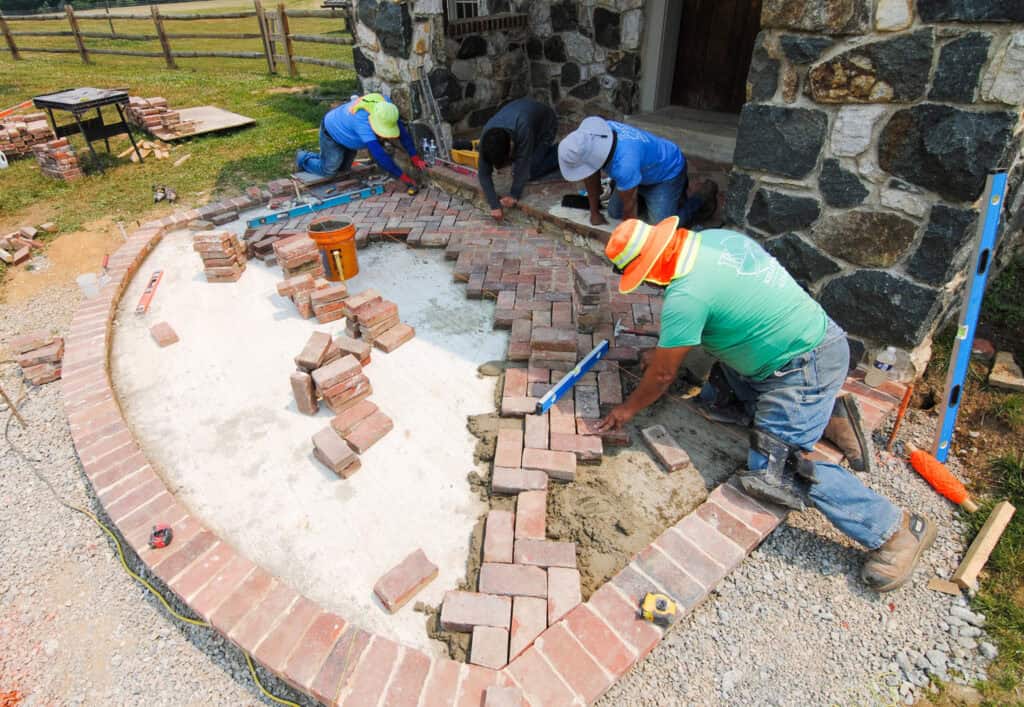
Not every masonry crack means that a wall is failing, but the crack pattern and surrounding movement matter.
Arrange a professional inspection when you notice:
- A crack that is widening or changing
- Stair-step cracks through mortar joints
- Brick or stone that has shifted out of alignment
- A bowing or leaning wall
- Separation around windows, doors, or corners
- Repeated cracking after previous repairs
- Loose masonry above a doorway or window
- Water entering through the damaged area
- Foundation movement or settlement
A mason can identify the visible masonry condition. Significant movement may also require evaluation by a qualified structural engineer.
See Kelly Masonry’s structural repair services and structural repair cost guide.
DIY vs. Professional Masonry Repair
Homeowners can monitor cracks, keep gutters and drains clear, document changes, and maintain surrounding landscaping. Repairs that involve removing mortar, replacing bricks, rebuilding walls, or correcting structural movement are better evaluated by an experienced masonry professional.
Applying caulk, patching over an active crack, using an incompatible mortar, or coating a damp wall may hide the symptom without correcting the cause. It may also make the eventual repair more difficult.
Professional installation is especially advisable when the work involves:
- Historic or older brick
- Structural movement
- Chimneys
- Walls above doors or windows
- Large or elevated areas
- Retaining walls
- Recurring water entry
- Material and mortar matching
- Previous failed repairs
How to Compare Masonry Repair Estimates
A useful masonry repair proposal should explain more than the total price.
Ask each contractor to identify:
- The probable cause of the damage
- The exact area included in the proposal
- Whether masonry units will be repaired or replaced
- How the replacement mortar will be selected
- Whether water-management work is included
- Whether scaffolding or lift access is required
- How nearby surfaces and landscaping will be protected
- What cleanup and disposal are included
- What conditions could change the final scope
- What workmanship warranty applies to the repair
A lower estimate may exclude material matching, access equipment, water correction, disposal, or restoration of surrounding areas. Compare the repair scopes, not only the totals.
Read about Kelly Masonry’s project process before scheduling a consultation.
Frequently Asked Questions
How much does brick repair cost?
Kelly Masonry’s published repair planning ranges begin around $5,000 for localized work. Larger restoration projects commonly range from $10,000 to $25,000. The exact cost depends on the cause, area, materials, access, and structural requirements.
Why can’t brick repair always be priced per square foot?
Square-foot pricing does not account for all project conditions. Access, brick matching, mortar matching, scaffolding, corners, openings, water damage, demolition, cleanup, and structural work may have a larger effect on cost than surface area alone.
How much does repointing cost?
Repointing cost depends on the size and location of the repair, mortar depth, joint profile, access, material compatibility, and preparation. Kelly Masonry provides project-specific pricing after inspecting the wall.
Can individual bricks be replaced?
Yes. Individual bricks can often be replaced when the surrounding wall remains stable and compatible replacement units are available. The cause of the original damage should also be corrected.
Is efflorescence a structural problem?
Efflorescence alone does not prove structural failure. It indicates that moisture and soluble salts have moved through the masonry. The moisture source should be identified, particularly when deposits repeatedly return.
Is a cracked brick wall dangerous?
Some cracks are cosmetic, while others indicate ongoing movement. Widening cracks, bowing, displacement, stair-step patterns, or loose masonry should be evaluated promptly.
Should damaged masonry be repaired or rebuilt?
Localized damage may be repairable. Rebuilding may be necessary when masonry is unstable, extensively deteriorated, severely displaced, or affected by an unresolved structural problem.
How long does masonry repair last?
There is no single lifespan for every repair. Longevity depends on correcting the damage source, using compatible materials, proper workmanship, exposure, drainage, and ongoing maintenance.
Does Kelly Masonry repair chimneys?
Kelly Masonry provides masonry chimney repair for cracked, loose, deteriorated, or leaking chimney components. Visit our chimney repair service page for more information.
About the Author
John Kelly is the founder of Kelly Masonry and has more than 25 years of masonry experience. He and his team repair and restore brick, stone, mortar, patios, walkways, walls, chimneys, and structural masonry throughout Delaware County, the Main Line, and surrounding Pennsylvania communities.
Reviewed by: John Kelly
Last updated: July 29, 2026
Request a Brick or Masonry Repair Consultation
Kelly Masonry repairs brick, stone, mortar, walls, patios, walkways, chimneys, and other masonry throughout Delaware County, the Main Line, and surrounding Pennsylvania communities.
Our team will inspect the damage, discuss the likely cause, identify the appropriate repair scope, and provide a project-specific proposal.
View our brick and stone repair services, browse completed projects, or request a consultation.
About the Author
John Kelly is a certified Master Mason and the founder of Kelly Masonry. Carrying on a multi-generational family legacy of stonework passed down from his father and uncles in Ireland, John has over 20 years of hands-on experience restoring structural and decorative masonry across Springfield, Delaware County, and the Main Line. Under his leadership, Kelly Masonry has completed over 500 custom projects and earned a 4.8/5-star rating across 52+ verified customer reviews.
Kelly Masonry Qualifications
- 25+ years of masonry experience: Founder John Kelly has worked in masonry for more than 25 years.
- Insured: Proof of current insurance is available upon request.
- Local project experience: Kelly Masonry serves Delaware County, the Main Line, and surrounding Pennsylvania communities.
- Repair and restoration expertise: Services include brick repair, stone repair, repointing, chimney masonry, patios, walkways, walls, and structural masonry.
- Project-specific warranty: Warranty terms are provided in the written proposal for the applicable repair scope.
Pennsylvania Home Improvement Contractor registration is administered by the Pennsylvania Office of Attorney General. Registration does not imply state endorsement of a contractor’s competency or skill.