The Hidden Causes of Settling Patios in Delaware County
Key Points:
- Patio pavers rarely sink because of the stones themselves; the problem almost always stems from improper base preparation, poor compaction, or inadequate water management beneath the surface.
- In Pennsylvania, clay-heavy soils and severe freeze-thaw cycles create a perfect storm for frost heave, which can lift and drop pavers unevenly if the foundation lacks proper drainage.
- While minor settling can sometimes be fixed by lifting the stones and adding leveling sand, recurring sinking usually requires excavating the area and rebuilding the foundation correctly.
The Frustration of a Sinking, Uneven Patio
If you live in Springfield, Media, or anywhere along the Main Line, you know that outdoor living spaces are a major investment. You likely spent significant time and money creating a beautiful paver patio to enjoy during the warmer months. That is why there are few things more frustrating than walking outside one spring and realizing your once-level patio now looks like a roller coaster. You might notice puddles forming in low spots, tripping hazards where stones have shifted, or weeds aggressively taking over widened joints.
When homeowners call us about this issue, they usually ask the same questions: “Did I buy bad pavers?” or “Can you just come out and put some sand under the low spots?” It is incredibly disappointing to watch an expensive hardscaping project deteriorate, especially if it was installed relatively recently.
In this guide, we are going to explain exactly why patio pavers sink in our specific climate. We will break down the science behind frost heave, explain why quick fixes rarely last, and outline the proper methods for repairing a settling patio so it stays level for decades. Understanding these issues is also important when you are planning a new patio or evaluating whether paver patios or concrete is the right choice for your home.
The Real Story: What Happens Beneath Your Patio
Why “Just Adding Sand” Is Rarely a Permanent Fix
When a homeowner sees a sunken area on their patio, the instinct is often to pry up the affected pavers, pour in some sand, and drop the stones back into place. While this might look better temporarily, it almost never solves the underlying problem. The reality is that pavers do not sink on their own. They sink because the foundation beneath them has failed.
The cost and effort required to fix sinking pavers depend entirely on why the foundation failed in the first place. If you simply add sand over a failing foundation, that new sand will eventually wash away or settle, and you will be right back where you started. To fix the problem permanently, we have to diagnose what is happening below the surface.
How Pennsylvania Clay Soils and Poor Compaction Cause Settling
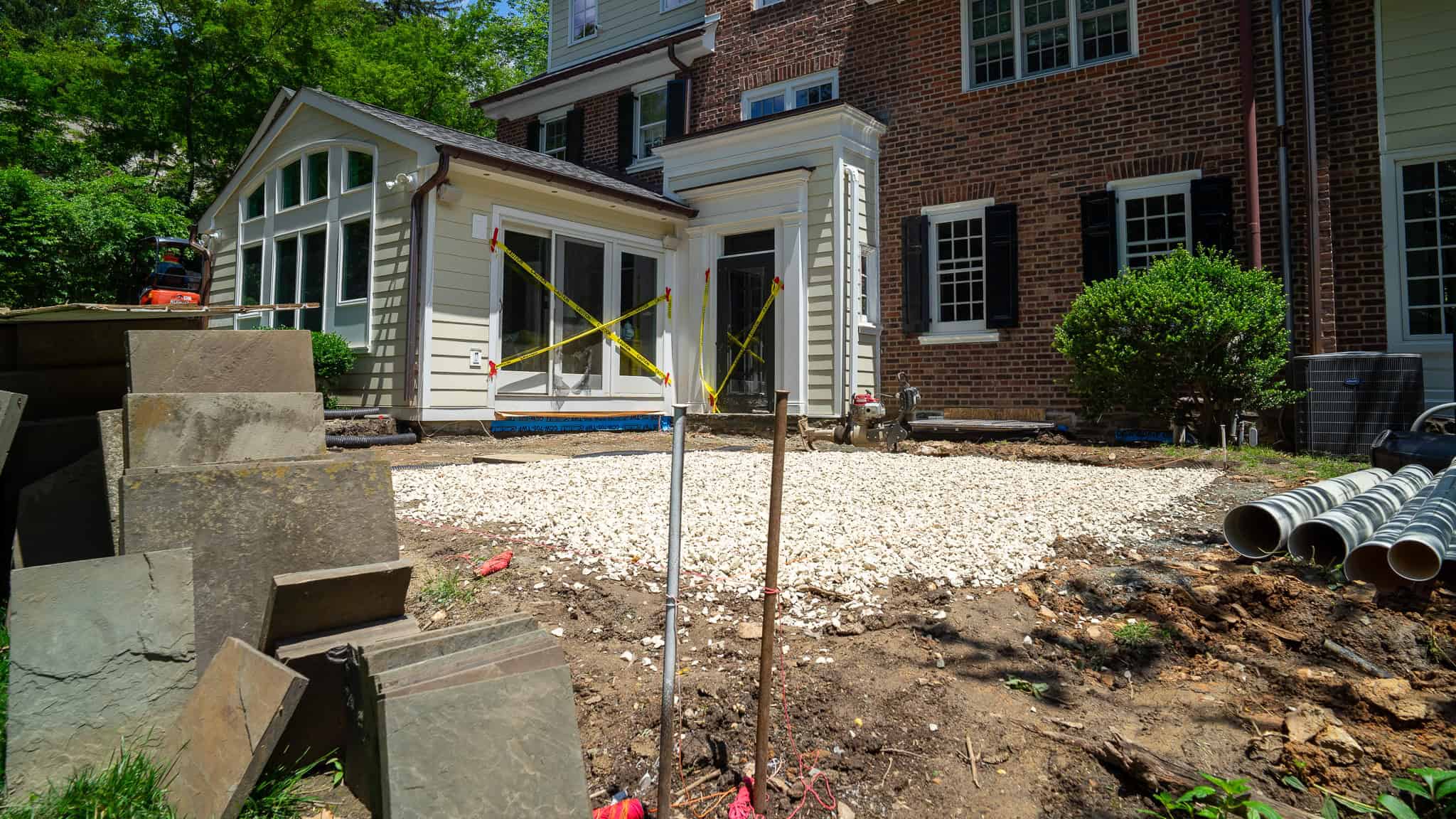
The most common reason for sinking pavers is improper base preparation during the initial installation. A proper paver patio in Delaware County requires excavating 6 to 8 inches of soil and replacing it with a carefully compacted aggregate base.
Many contractors cut corners by not digging deep enough, using the wrong type of gravel, or failing to compact the base material in small, manageable layers. If the base is not compacted with a heavy plate compactor, it leaves microscopic air pockets. Over time, the weight of foot traffic, furniture, and rainfall will force those air pockets to collapse, causing the pavers above to sink. This is why proper drainage system installation is so critical to patio longevity.
Furthermore, much of Delaware County has clay-heavy soil. Clay retains water and provides a very unstable subgrade. If the original installer did not use a geotextile fabric separator between the clay subgrade and the gravel base, the wet clay can slowly pump up into the gravel, destroying its structural integrity and causing massive settling. This is a common mistake that homeowners learn about too late. That is why choosing the right masonry contractor is so important.
The Destructive Power of Frost Heave and Trapped Water
In our climate, water management is the single most important factor in patio longevity. When water gets trapped in the base layer beneath your pavers, it creates a ticking time bomb. During a Pennsylvania winter, that trapped water freezes and expands. This expansion pushes the pavers upward, a process known as frost heave.
When the ice melts in the spring, the pavers drop back down, but rarely into their original positions. The expanding ice often displaces the bedding sand, leaving voids that cause the pavers to settle unevenly. If your patio lacks proper drainage or was built with a dense-graded base that holds water instead of letting it drain through, frost heave will destroy it within a few seasons [1]. This is why understanding how long a paver patio actually lasts depends so heavily on foundation engineering.
Comparing Your Options: Quick Repair vs. Foundation Rebuild
When deciding how to address sinking pavers, you generally have two options depending on the severity of the problem.
| Repair Approach | Best Used For | What It Involves | Long-Term Reliability |
|---|---|---|---|
| Localized Spot Repair | Minor settling in one small area (e.g., near a downspout) | Lifting affected pavers, adding/compacting base material, reinstalling | Moderate; only works if the rest of the foundation is solid |
| Full Foundation Rebuild | Widespread sinking, severe frost heave, or persistent drainage issues | Removing all pavers, excavating to proper depth, installing new compacted base | Excellent; addresses the root cause permanently |
When to Call a Professional for Patio Repairs
It can be difficult to know whether your sinking patio is a minor nuisance or a sign of total foundation failure. We recommend calling a professional if you notice widespread unevenness, large puddles forming that take hours to drain, or pavers that have shifted so much they present a tripping hazard.
Additionally, if your patio is sinking near your home’s foundation, you need to address it immediately. A patio that pitches toward your house will direct thousands of gallons of rainwater against your foundation, potentially causing flooded basements and severe structural damage. This is also why regular patio maintenance is important, even for well-built patios.
Making the Right Choice: Fixing Your Patio Permanently
Your patio should be a place to relax, not a constant source of stress and ongoing repairs. While lifting a few stones and adding sand might seem like an easy weekend project, it rarely addresses the poor compaction, trapped water, or clay soil issues that are actually causing the problem.
At Kelly Masonry, our design-build approach focuses heavily on what you cannot see: the foundation. With over 20 years of experience, we understand exactly how to engineer a patio base that manages water properly and resists Pennsylvania’s brutal freeze-thaw cycles. We also understand why patio estimates vary so widely when it comes to repairs and rebuilds. If you are tired of dealing with sinking pavers and want a permanent solution, we invite you to request a consultation. We can evaluate your current patio, diagnose the root cause of the settling, and help you determine the best path forward.
Common Questions About Sinking Pavers
How long should a properly installed paver patio last before settling? A professionally installed paver patio with a properly engineered base should not experience significant settling for decades. While minor shifting can occasionally happen, widespread sinking within the first 5 to 10 years is almost always a sign of improper installation, poor compaction, or inadequate drainage.
Can sinking pavers be reused if the foundation is rebuilt? Yes. One of the greatest advantages of concrete pavers or natural stone is that they can be lifted, cleaned, and reused. If your patio is sinking but the pavers themselves are in good condition, a masonry contractor can remove them, rebuild the foundation correctly, and reinstall the original stones, saving you the cost of new materials.
Does polymeric sand prevent pavers from sinking? No. Polymeric sand is excellent for locking pavers together, preventing weed growth, and deterring insects. However, it does not provide structural support. If the gravel foundation beneath the patio fails or settles, the polymeric sand will simply crack as the pavers shift. The foundation must be solid for the sand to work properly.