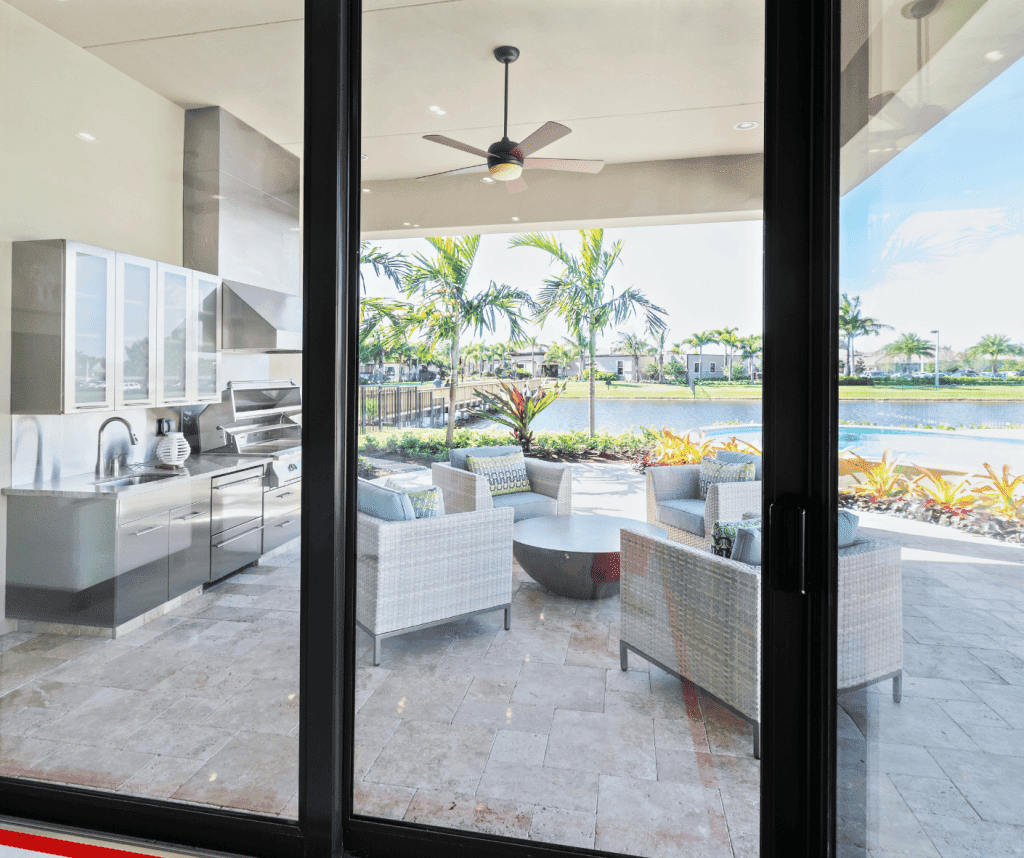
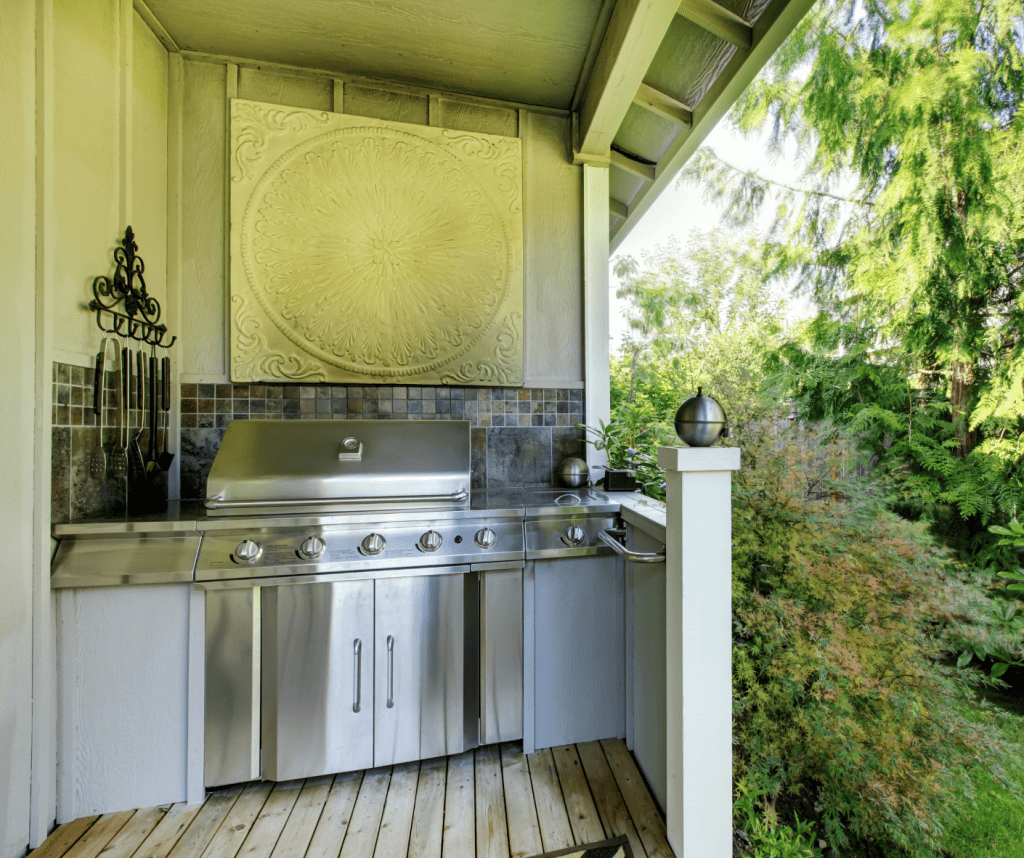

SEO Title: Outdoor Kitchen Cost in Main Line, PA: 2026 Guide
Meta Description: Custom outdoor kitchens typically start around $50,000. Learn what affects outdoor kitchen cost, including appliances, utilities, masonry, patios, permits, and design.
How Much Does an Outdoor Kitchen Cost in Delaware County & the Main Line?
For budgeting purposes, our custom outdoor kitchen projects typically start around $50,000. The final investment can rise significantly when the project includes premium appliances, extensive masonry, plumbing, electrical work, a new patio, pergola or roof structure, lighting, seating, or other outdoor-living features.
A complete backyard project with an outdoor kitchen can cost considerably more than the kitchen itself.
The best way to estimate your project is to break it into its main parts: layout, structure, countertops, appliances, utilities, patio or foundation work, and the surrounding outdoor space.
Kelly Masonry designs and builds custom outdoor kitchens throughout Delaware County and the Main Line.
Outdoor Kitchen Cost at a Glance
| Project scope | Planning range |
|---|---|
| Custom outdoor kitchen | Typically starts around $50,000 |
| Medium outdoor-living project with cooking area | Around $80,000 |
| Larger custom outdoor-living project with fully equipped kitchen | $100,000+ |
These are planning figures, not fixed prices.
A $50,000 outdoor kitchen and a $100,000 outdoor-living project are not necessarily comparable. One may involve the kitchen structure and appliances, while another may also include a new patio, drainage, lighting, pergola, fireplace, seating walls, landscaping, and other features.
Review our project pricing or try our pricing calculator when you are beginning to set a budget.
What Counts as an Outdoor Kitchen?
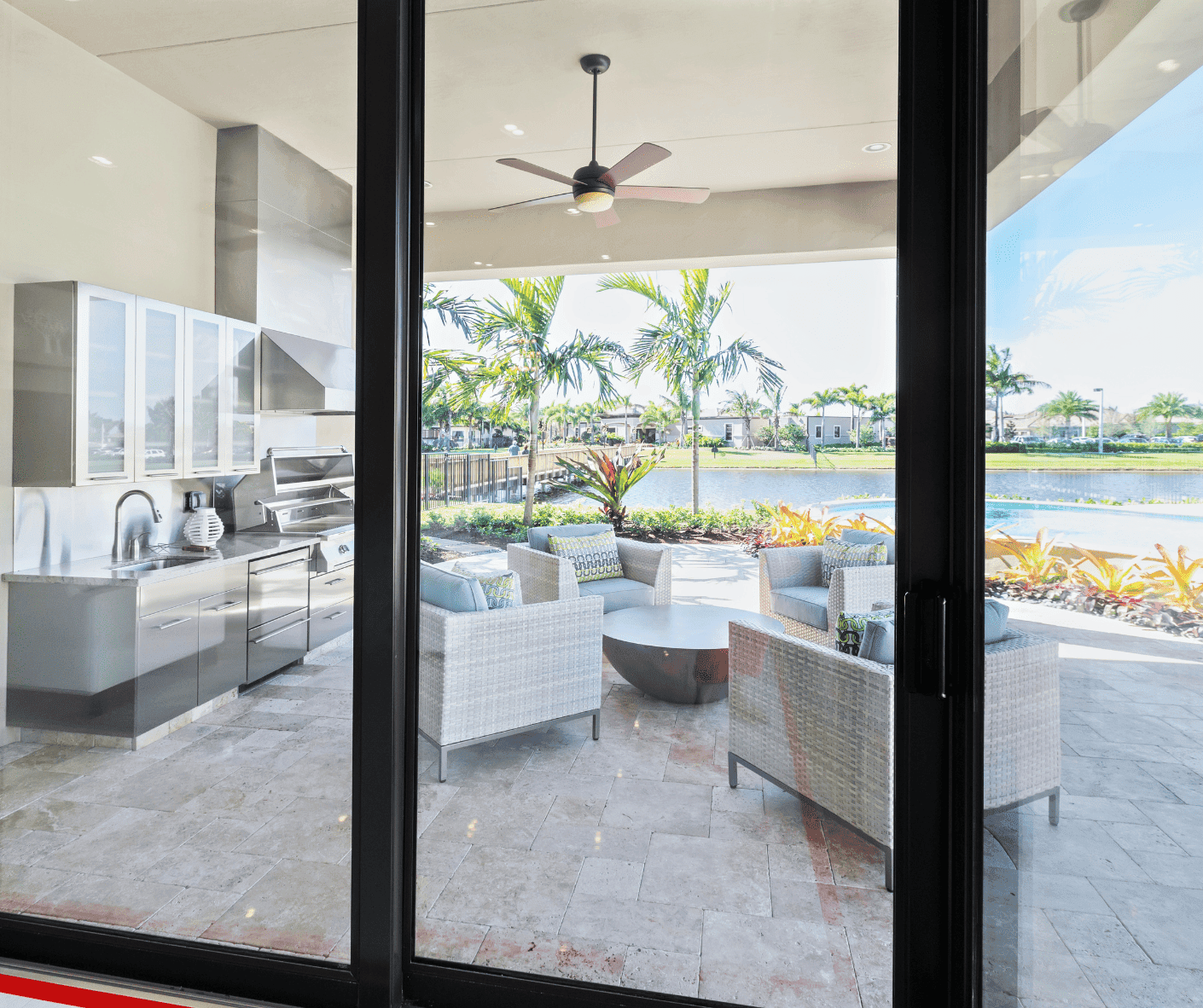
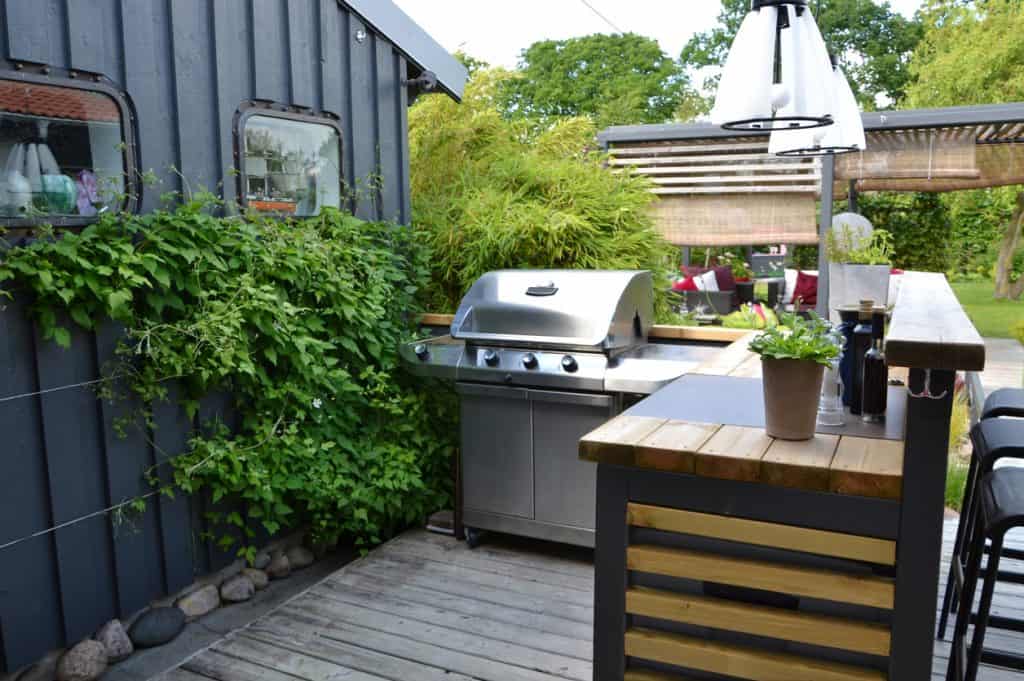
An outdoor kitchen can be as simple as a built-in grill with counter space and storage, or it can function more like a complete second kitchen with refrigeration, a sink, burners, a pizza oven, and other appliances.
The biggest difference from an indoor kitchen is exposure to the weather. The structure, cabinets, countertops, appliances, utilities, and finishes all need to be selected and installed for outdoor conditions.
That difference is one reason a permanent custom outdoor kitchen can cost significantly more than placing a freestanding grill on an existing patio.
What Makes an Outdoor Kitchen Cost $50,000 or More?
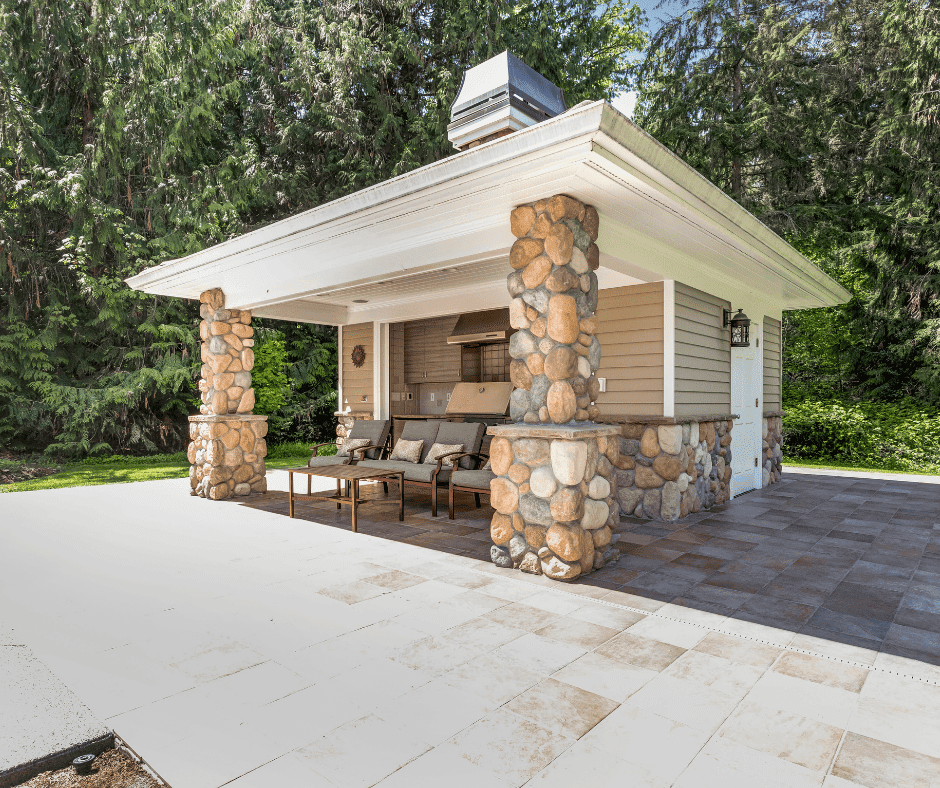
Outdoor kitchens vary so much in price because homeowners are rarely buying exactly the same thing.
The biggest cost factors are:
- Kitchen size and layout
- Masonry and cabinet construction
- Countertop material
- Grill and appliances
- Gas, electrical, and plumbing
- Patio or foundation work
- Pergolas, roofs, and shade structures
- Site access and existing conditions
- Permits and professional design
- Additional outdoor-living features
1. Size and Layout
A simple straight kitchen with a grill and preparation area requires less material and labor than a large L-shaped or U-shaped kitchen with several cooking zones.
Layout affects:
- Masonry
- Cabinetry
- Countertop area
- Appliance openings
- Utility runs
- Footings or foundation
- Lighting
- Seating
- Circulation around the kitchen
Before deciding on size, think about how many people normally cook and entertain outside.
A kitchen should have enough room to work comfortably without taking over the entire patio.
Our guide to planning space for an outdoor living area can help you think through the overall layout.
2. Masonry, Cabinets, and Structure
The kitchen structure is one of the biggest differences between a simple grill station and a permanent custom outdoor kitchen.
Depending on the design, the kitchen may use:
- Natural stone
- Brick
- Manufactured stone veneer
- Masonry block
- Outdoor-rated cabinet systems
- Stainless-steel cabinets
- Other exterior-rated assemblies
A custom masonry kitchen usually requires more site work and craftsmanship than a freestanding or modular unit, but it can also be designed to match the patio, home, fireplace, walls, and other masonry on the property.
The important question is not simply which material costs less. It is whether the complete assembly is designed for outdoor moisture, temperature changes, appliances, and long-term use.
3. Countertops
Countertops affect both appearance and budget.
Common outdoor options may include:
- Granite
- Selected natural stone
- Concrete
- Porcelain or sintered surfaces
- Stainless steel
- Other products specifically approved for exterior use
The right choice depends on:
- Sun exposure
- Freeze-thaw conditions
- Staining
- Heat
- Maintenance
- Thickness
- Support
- Edge details
- Manufacturer recommendations
Do not assume every indoor countertop material is suitable outside.
4. Grills and Appliances
Appliances can change the budget quickly.
A custom outdoor kitchen may include:
- Built-in gas or propane grill
- Side burner
- Smoker
- Pizza oven
- Outdoor refrigerator
- Freezer
- Ice maker
- Sink
- Dishwasher
- Warming drawer
- Storage
- Trash and recycling cabinets
The more appliances you add, the more the project may require changes to the masonry, countertops, electrical system, gas supply, plumbing, drainage, and ventilation.
Choose appliances early in the design process. The kitchen should be built around the exact appliance specifications rather than leaving generic openings and trying to make the equipment fit later.
Outdoor equipment should also be specifically approved for the intended location and installed according to the manufacturer’s clearance and ventilation requirements.
5. Gas, Electrical, and Plumbing
Utilities are easy to underestimate when homeowners first think about an outdoor kitchen.
Gas
A built-in grill, burner, fireplace, or pizza oven may require:
- Natural-gas piping
- Propane planning
- Shutoff valves
- Appliance-specific connections
- Required clearances
- Coordination with surrounding materials
The appliance manufacturer’s instructions and applicable local requirements should guide the final installation.
Electrical
Outdoor kitchens commonly need electricity for:
- Refrigeration
- Lighting
- Ignition
- Outlets
- Fans
- Entertainment systems
- Selected cooking appliances
Electrical service should be designed for outdoor use and installed according to applicable electrical requirements.
Plumbing
Adding a sink, dishwasher, ice maker, or other water-connected equipment may require:
- Water supply
- Drainage
- Winterization planning
- Shutoff access
- Coordination with the house plumbing
Pennsylvania winters make winterization especially important for exposed plumbing.
6. The Patio or Foundation Under the Kitchen
A permanent outdoor kitchen needs suitable support.
Do not assume an existing patio can automatically support a new masonry kitchen.
Before construction, evaluate:
- Existing patio structure
- Base condition
- Concrete slab
- Footings
- Settlement
- Drainage
- Kitchen weight
- Utility trenches
- Frost conditions
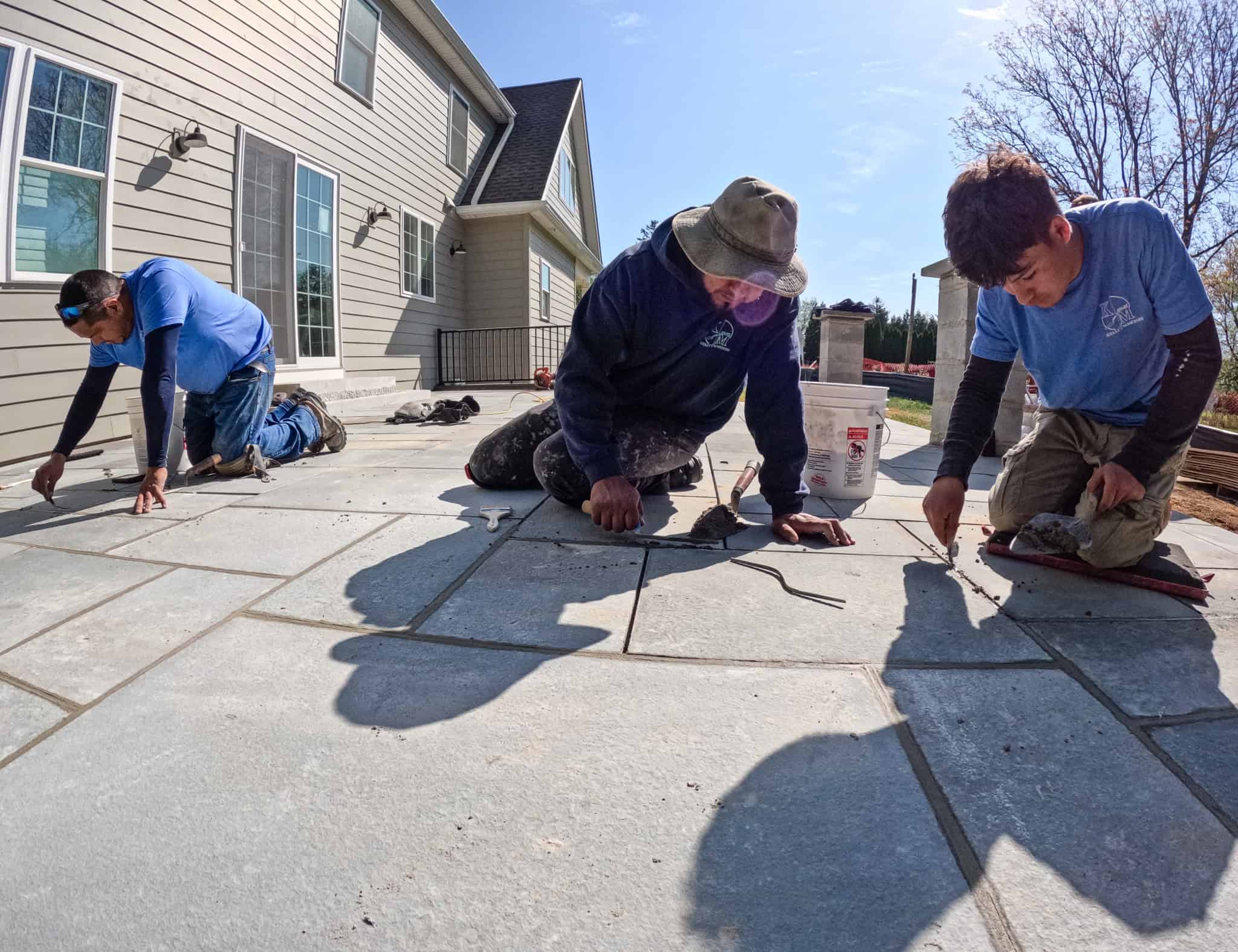
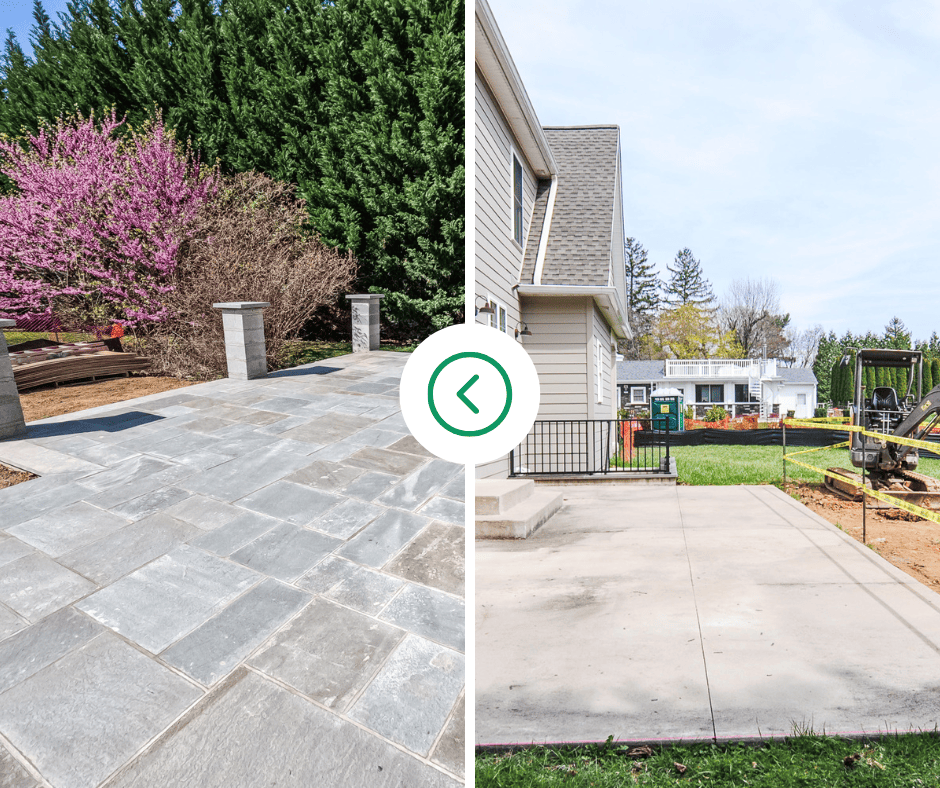
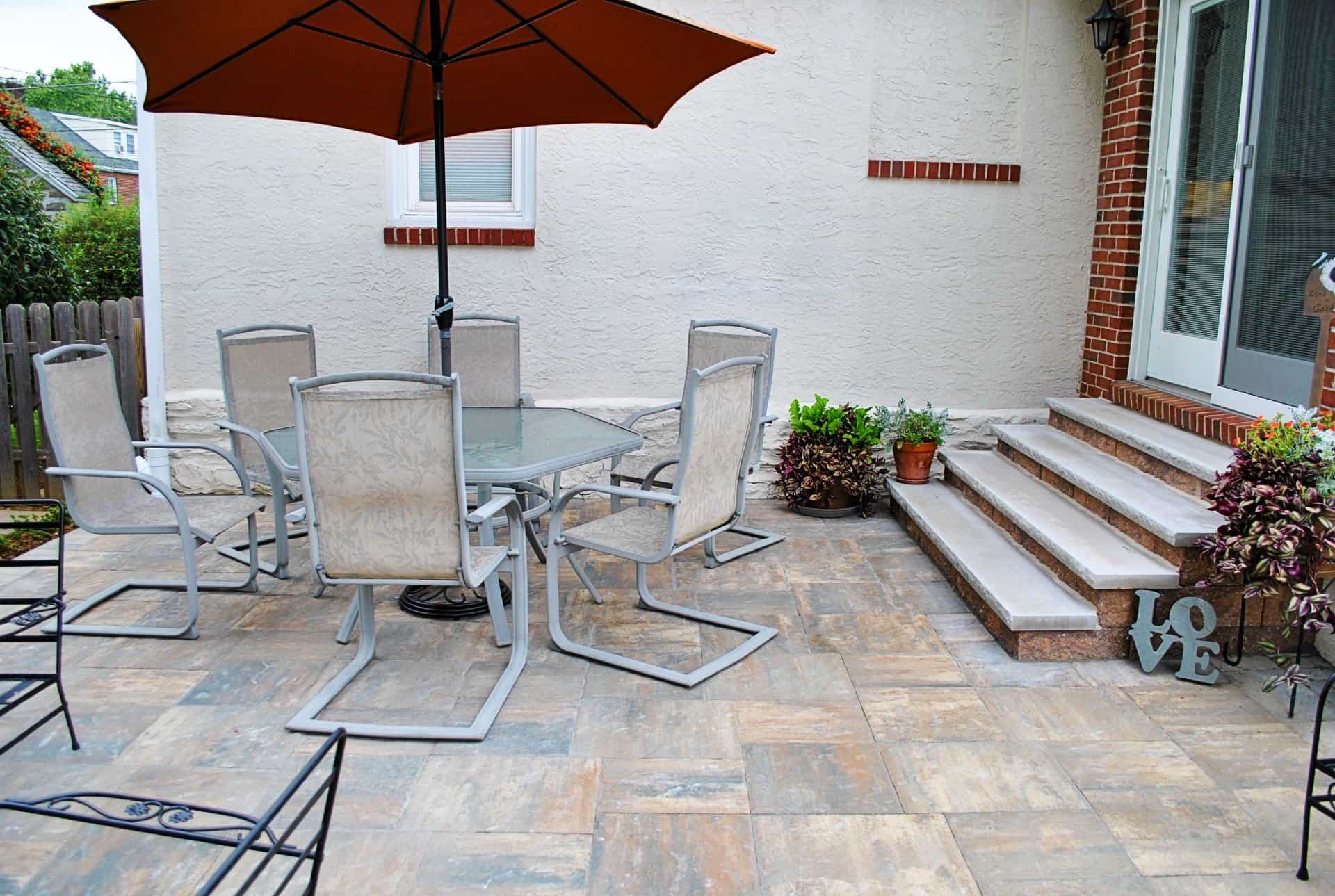
Sometimes the kitchen can be incorporated into an existing outdoor space. Other projects require new foundations, rebuilding part of the patio, or constructing an entirely new patio.
If the project includes a new patio, review our patio installation cost guide.
7. Pergolas, Roofs, and Shade
Many homeowners want the kitchen to feel like an outdoor room rather than a grill sitting at the edge of a patio.
That may mean adding:
- Pergola
- Pavilion
- Covered structure
- Lighting
- Ceiling fan
- Heaters
- Television
- Dining area
These features can significantly change the project scope and budget.
They also affect the kitchen design. Grills and other cooking equipment need to be coordinated carefully with roofs, ceilings, walls, ventilation, and combustible materials.
If shade is part of the plan, it is usually better to design it at the same time as the kitchen rather than trying to add it later.
Explore our pergola services to see how these structures can fit into a larger outdoor space.
8. Site Access and Existing Conditions
Two kitchens with the same dimensions can have very different construction costs.
Site conditions may include:
- Narrow access
- Steep grades
- Existing patios
- Demolition
- Drainage problems
- Tree roots
- Retaining walls
- Utility conflicts
- Long material-carry distances
- Limited equipment access
These conditions affect labor, equipment, excavation, and construction time.
A site visit is important because a price based only on kitchen dimensions can miss a large part of the actual work.
9. Permits and Design
Depending on the project, municipal approval may be needed for:
- Gas work
- Electrical work
- Plumbing
- Pergolas or roofs
- Structural construction
- Significant hardscape changes
- Drainage
- Other related work
Pennsylvania uses the Uniform Construction Code, while permit and zoning requirements are generally handled locally.
Check with the applicable township or borough before construction begins.
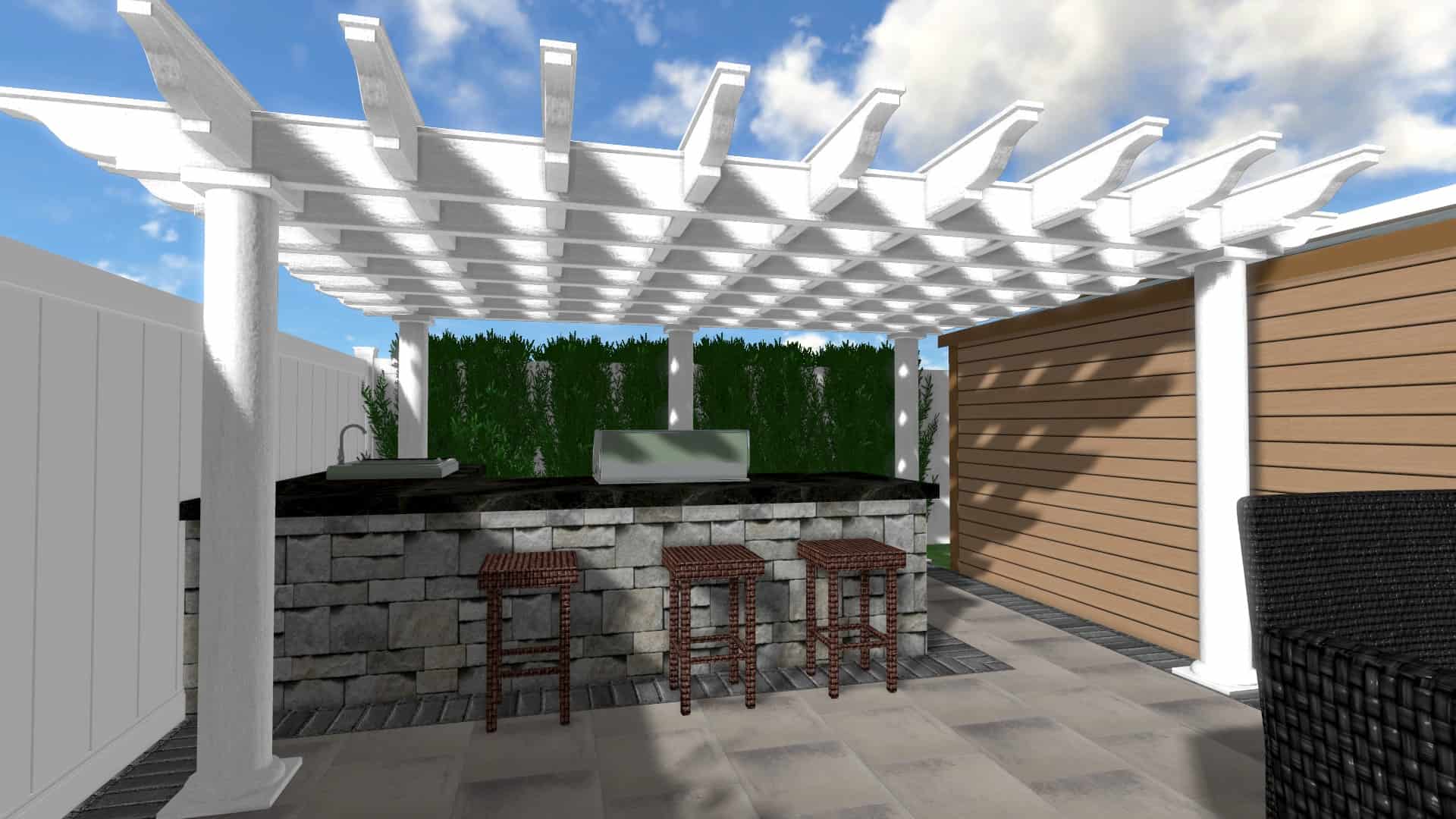
For projects that benefit from full planning, a 3D design can help you evaluate the kitchen, patio, seating, lighting, and other elements together before construction begins.
Learn more about our design and construction process.
10. The Rest of the Outdoor Living Space
The outdoor kitchen may be only one part of the project.
Homeowners often combine it with:
- A new patio
- Dining area
- Sitting wall
- Fireplace or fire pit
- Pergola
- Landscape lighting
- Retaining wall
- Water feature
- Landscaping
- Walkways
- Drainage improvements
For budgeting purposes, our outdoor-living projects generally fall around:
- $40,000 for a smaller project
- $80,000 for a medium project that may include a cooking area
- $100,000+ for a larger custom project that may include a fully equipped outdoor kitchen
That is why it is important to decide whether you are budgeting for an outdoor kitchen or for an entire backyard transformation.
What Is Included in a $50,000 Outdoor Kitchen?
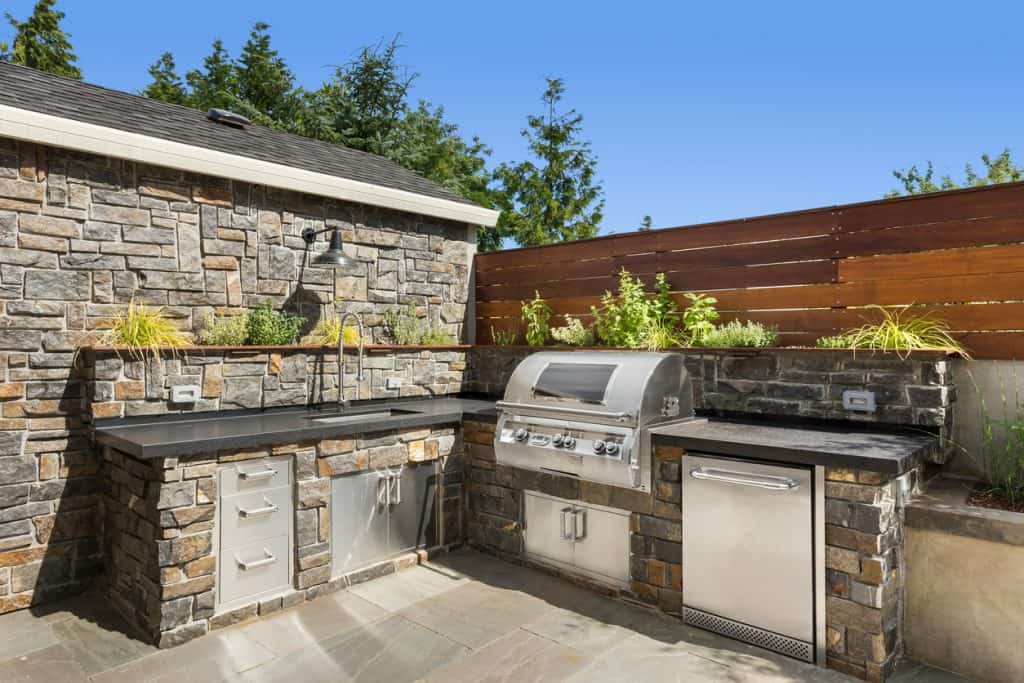
There is no universal package, but a custom kitchen around this starting point may involve a combination of:
- Design and layout
- Permanent kitchen structure
- Masonry or exterior finish
- Countertops
- Built-in grill
- Storage
- Utility coordination
- Site preparation
- Installation labor
The exact scope depends on the property and the materials and appliances selected.
Features such as extensive premium appliances, refrigeration, sinks, plumbing, large masonry islands, pizza ovens, pergolas, new patios, lighting, fireplaces, and major landscaping can push the total higher.
Custom vs. Prefabricated Outdoor Kitchens
A prefabricated or modular outdoor kitchen can cost less than a fully custom masonry kitchen.
That does not necessarily mean one is better.
A prefabricated kitchen may make sense when:
- Budget is the main priority
- A smaller cooking station is enough
- The patio already exists
- Limited customization is acceptable
- The system is approved for outdoor exposure
A custom outdoor kitchen may make sense when:
- The kitchen needs to match the home or masonry
- The layout must fit a specific property
- Several appliances are being integrated
- Utilities need to be coordinated
- The kitchen is part of a larger patio or outdoor-living design
- Long-term appearance and integration are priorities
Compare the complete project scope rather than only the purchase price of the cabinets or grill.
How Can You Control Outdoor Kitchen Costs?
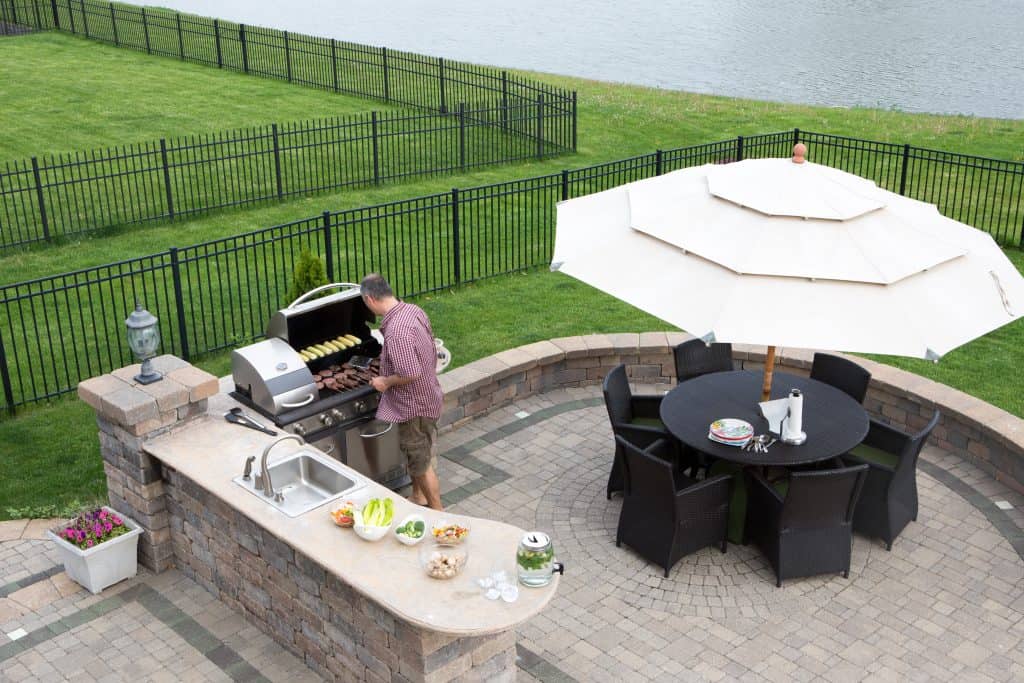
The best way to control the budget is to make the important decisions early.
Prioritize how you actually cook
A grill, preparation area, and storage may provide everything you need.
You do not automatically need every available appliance.
Each additional appliance adds purchase cost and may also add utility and construction costs.
Keep utilities reasonably close
Long gas, electrical, plumbing, and drainage runs can increase project complexity.
Design the kitchen with the patio
Planning the kitchen and patio together can reduce awkward cuts, utility retrofits, and layout changes later.
Decide where to spend more
Some homeowners choose to spend more on:
- Grill
- Countertop
- Masonry
- Lighting
and keep secondary appliances simpler.
The right priorities depend on how you plan to use the space.
Avoid building twice
It may cost less initially to install a simple grill station and add a sink, roof, lighting, and larger patio later. But repeated demolition and utility work can make phased construction more expensive.
If you expect to expand the space, plan the future layout before building the first phase.
What Are the Benefits of an Outdoor Kitchen?
For homeowners who regularly cook or entertain outside, an outdoor kitchen can make the backyard much easier to use.
Instead of carrying food, utensils, and supplies back and forth from the house, the cooking and preparation area stays closer to the patio and guests.
An outdoor kitchen can also:
- Add dedicated prep and serving space
- Keep grilling and stronger cooking odors outside
- Create a natural gathering area for family and guests
- Connect the cooking area with the patio, dining area, pool, or fire feature
- Reduce trips between the indoor kitchen and backyard
The value of those features depends on how often you use the space.
A well-planned grill, counter, and storage area may be more useful for one family than a large kitchen filled with appliances they rarely use.
Why Professional Installation Matters
A permanent outdoor kitchen involves more than setting appliances into a countertop.
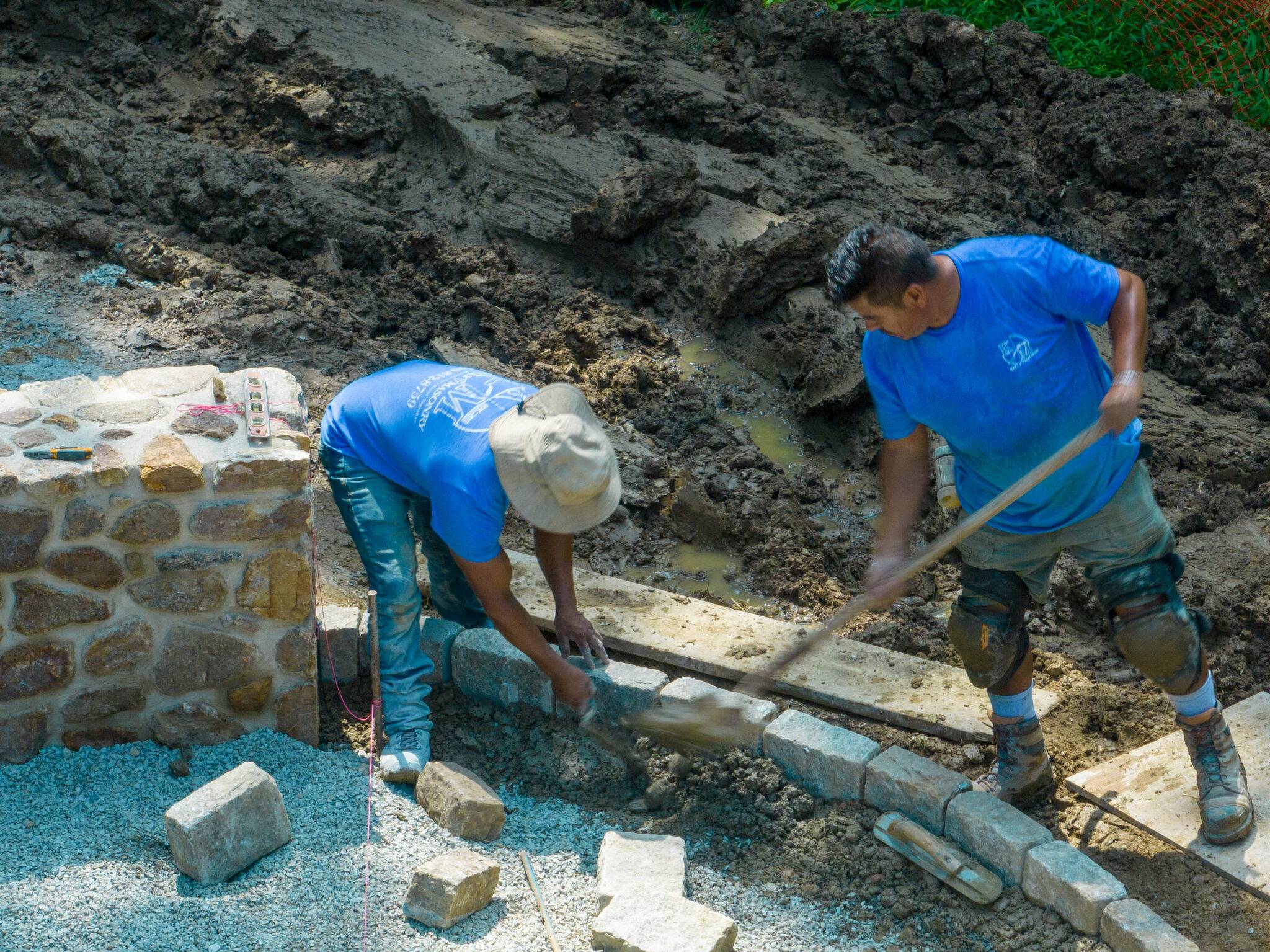
Depending on the project, the work may involve excavation, foundations, masonry, countertops, gas, electrical service, plumbing, drainage, appliance clearances, and permits.
These pieces need to be planned together.
For example, the exact grill can affect the size of the opening, ventilation requirements, gas connection, surrounding materials, and countertop layout.
The same applies to sinks, refrigerators, pizza ovens, lighting, and roof structures.
A well-planned project addresses these details before construction starts instead of trying to work around them after the kitchen has already been built.
Learn more about Kelly Masonry’s design and construction process.
How Long Does an Outdoor Kitchen Project Take?
There is no universal timeline.
The schedule depends on:
- Design
- Material selections
- Appliance availability
- Permits
- Site preparation
- Utilities
- Patio construction
- Masonry
- Countertops
- Pergolas or roofs
- Inspections
- Weather
A kitchen that is part of a full backyard renovation will usually take longer than a kitchen installed on an existing suitable patio.
The timeline should be discussed after the design and scope are clear rather than estimated from price alone.
Is an Outdoor Kitchen Worth the Cost?
An outdoor kitchen can be worthwhile when you will actually use it and when it is designed as part of the property rather than simply added because it is popular.
It can make outdoor entertaining more convenient by keeping cooking, preparation, storage, and guests in the same area.
Whether it adds a specific amount of resale value depends on the property, market, project quality, and buyer. We would not recommend building one based on a guaranteed return on investment.
The more useful question is whether the kitchen improves how you use your home and outdoor space.
Frequently Asked Questions
How much does a custom outdoor kitchen cost?
For budgeting purposes, our custom outdoor kitchen projects typically start around $50,000. More elaborate kitchens and complete outdoor-living projects can reach $80,000, $100,000, or more depending on the scope.
Why do outdoor kitchens cost so much?
A permanent outdoor kitchen can involve foundations, masonry, countertops, appliances, gas, electrical work, plumbing, drainage, permits, design, and site preparation. It is closer to a construction project than simply buying a grill.
What is the most expensive part of an outdoor kitchen?
There is no single answer. Appliances, masonry, countertops, utilities, site preparation, and surrounding patio construction can all become major parts of the budget.
Can I build an outdoor kitchen on my existing patio?
Sometimes. The patio should be evaluated for structure, settlement, drainage, utilities, and the weight and layout of the proposed kitchen.
Do outdoor kitchens need permits?
They may. Gas, electrical, plumbing, structural work, roofs, and other components can trigger local permit requirements.
Do outdoor kitchens need plumbing?
No. A grill-and-counter kitchen may not need water. Plumbing is usually added when the design includes a sink, dishwasher, ice maker, or another water-connected feature.
Does an outdoor kitchen need electricity?
Many do. Refrigerators, lighting, ignition systems, outlets, and other appliances may require electrical service.
Can you use indoor appliances outside?
Do not assume so. Appliances should be approved by the manufacturer for the intended outdoor location and installed according to their requirements.
Does an outdoor kitchen need to be covered?
Not necessarily. A pergola, pavilion, or roof can improve shade and comfort, but cooking equipment must be coordinated with the structure, ventilation, and required clearances.
Can an outdoor kitchen be built in phases?
Yes, but future appliances, utilities, patio dimensions, and structures should be planned before the first phase so later work does not require unnecessary demolition.
About the Author
John Kelly is the founder of Kelly Masonry. Since 2002, Kelly Masonry has designed and built masonry and outdoor-living projects throughout Delaware County, the Main Line, and surrounding Pennsylvania communities.
Originally published: July 13, 2022
Reviewed by: John Kelly
Last updated: August 7, 2026
Planning an Outdoor Kitchen?
If you are starting to think about an outdoor kitchen, we can help you work through the layout, appliances, masonry, utilities, patio, drainage, lighting, and overall budget before construction begins.
Explore our outdoor kitchen services, browse our project portfolio, review our pricing, or request a consultation.