Key Points:
- Attached patios provide a seamless transition from your indoor living space, making them ideal for frequent outdoor dining and extending your home’s footprint.
- Freestanding (or detached) patios offer unparalleled design flexibility, allowing you to create a private retreat anywhere in your yard, away from the main house.
- The structural requirements for each differ significantly; attached structures rely on your home’s existing framing, while freestanding patios require independent, robust footings to withstand Pennsylvania’s freeze-thaw cycles.
Choosing the Right Patio Style for Your Home and Lifestyle
Deciding where to place your new outdoor living space is often the most challenging part of the planning process. Many homeowners in Media, Wayne, Villanova, and throughout Delaware County struggle to visualize how a new patio will integrate with their existing property. The fear of disrupting the home’s architecture or placing a patio in an impractical location can delay a project indefinitely. Without understanding the structural and lifestyle implications of each option, it is easy to make a choice that doesn’t fully support your family’s needs.
By the end of this guide, you will understand the critical differences between freestanding and attached patios, including how they are built, how they function, and which option provides the best long-term value for your specific property. If you are ready to explore the possibilities for your backyard, we invite you to schedule a consultation with our design team to discuss your vision.
Understanding the Structural Differences
The fundamental difference between an attached and a freestanding patio lies in how the structural load is managed. An attached patio cover or structure transfers a significant portion of its weight directly to your home. This requires careful engineering to ensure the connection point ties securely into sound framing. The roofline, wall construction, and existing fascia of your home all dictate how an attached patio can be built.
Conversely, a freestanding patio carries its entire load through its own columns, beams, and footings. This independence provides tremendous placement freedom but demands rigorous foundation engineering. For homeowners considering a patio cover not attached to the house, this type of structure must be fully self-supporting, with carefully planned footings that can handle both the weight of the structure and environmental stress. In Pennsylvania, where freeze-thaw cycles and expansive soils are common, the depth and anchoring of these independent footings are critical to the patio’s long-term stability and performance.
The Case for Attached Patios
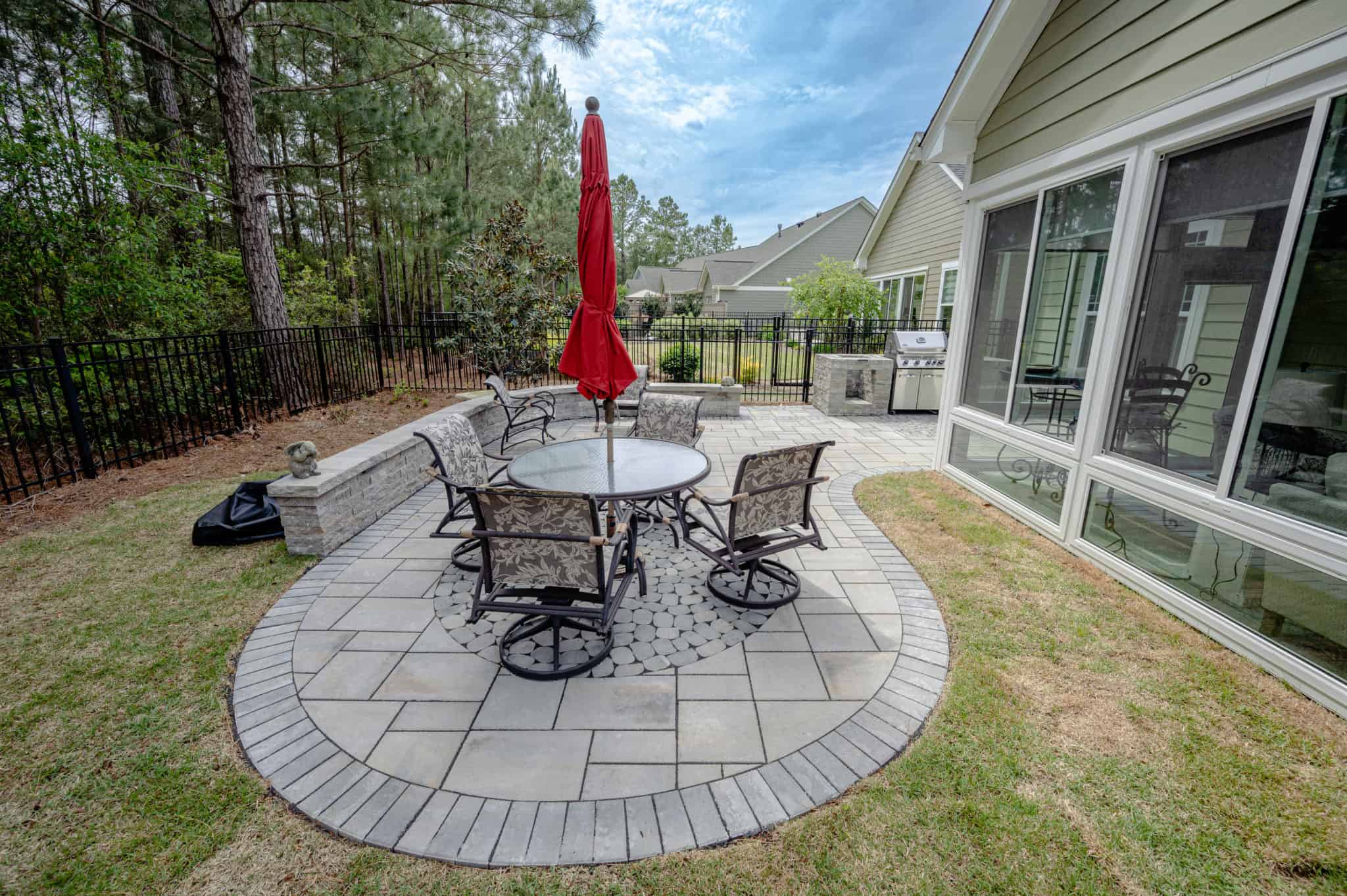
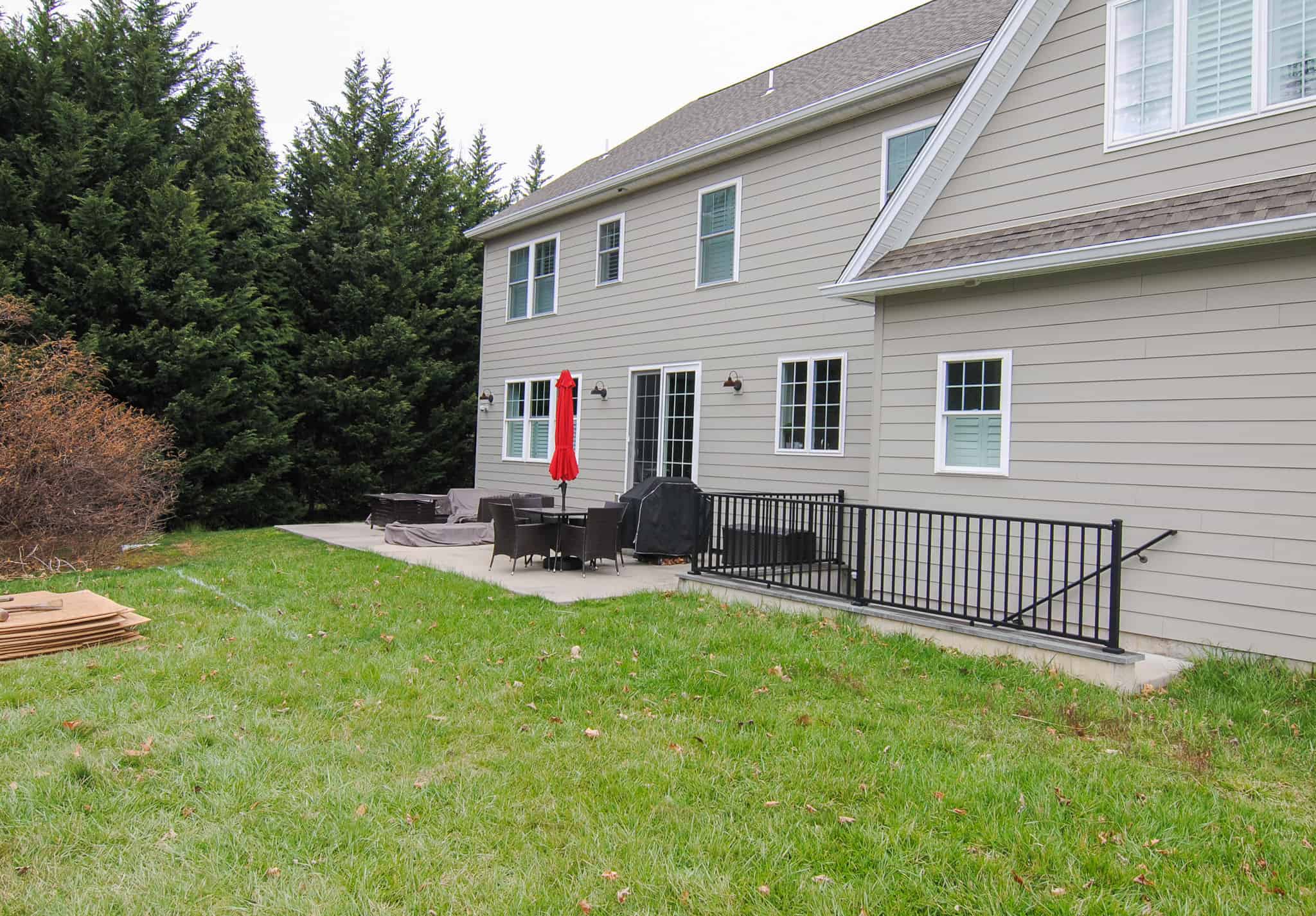
Attached patios are incredibly popular for homeowners seeking convenience and a unified aesthetic. By extending directly from a back door or sliding glass window, they create a natural flow between your indoor kitchen or living room and your outdoor entertaining area. This seamless transition makes hosting summer barbecues or enjoying a morning coffee effortless.
Furthermore, attached patios often require less new infrastructure. Because they are situated immediately adjacent to the house, extending electrical wiring for lighting or plumbing for an outdoor kitchen is generally more straightforward. This proximity also means the patio benefits from the existing shelter of the home, providing immediate relief from the sun or wind depending on the orientation.
The Appeal of Freestanding Patios
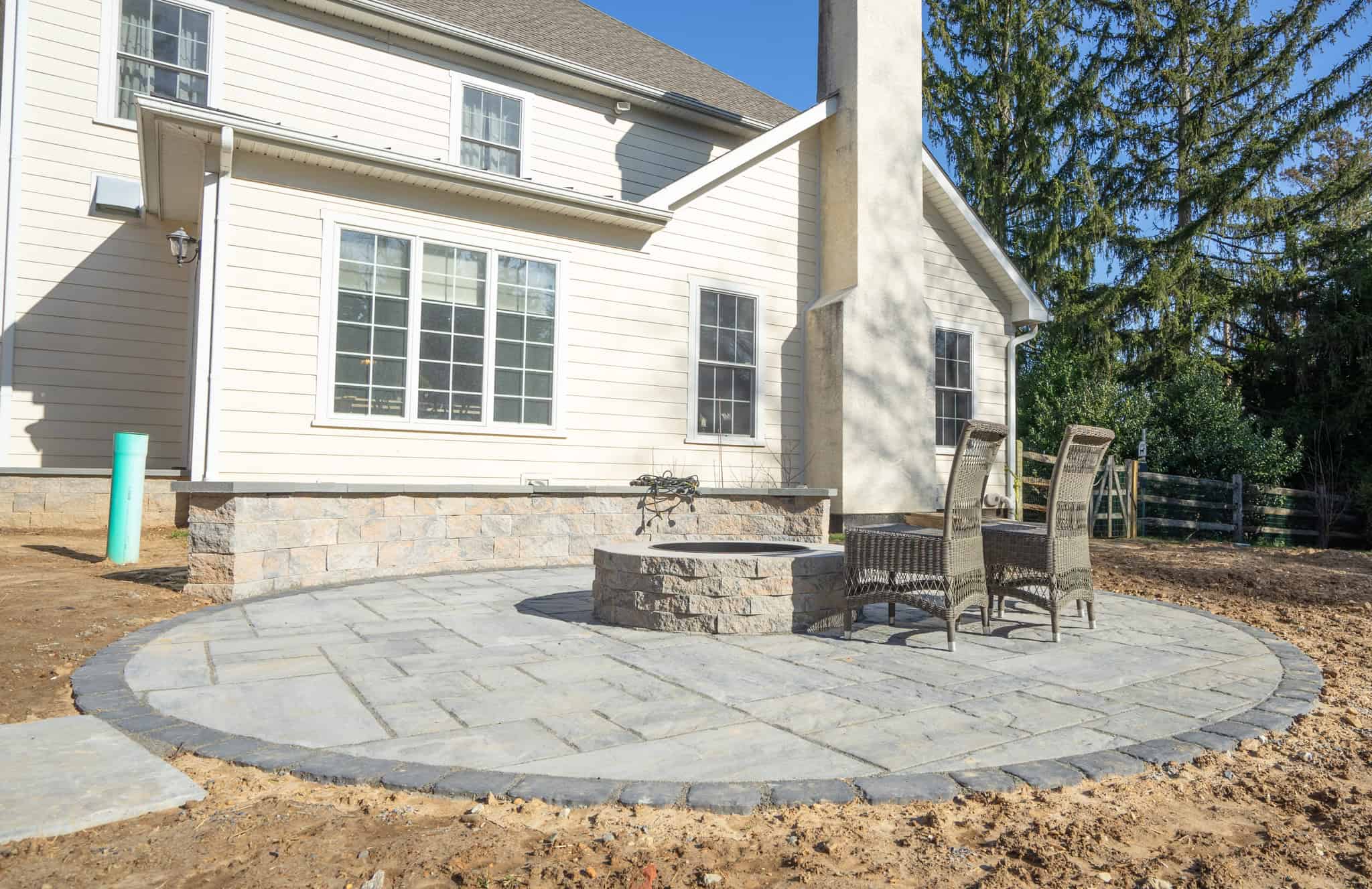
Freestanding, or detached, patios offer a completely different experience, functioning as a distinct destination within your landscape. Without the constraints of your home’s architecture, you have total design freedom. You can position the patio to capture the best evening sunlight, nestle it under mature shade trees, or place it adjacent to a pool.
These standalone structures excel at creating a private retreat. If you want a quiet space for reading, a dedicated area for a fire pit, or a secluded garden oasis, a freestanding patio provides the necessary physical and psychological separation from the main house. Many homeowners exploring how to build patio cover not attached to the house are drawn to this option because it allows for a completely custom layout without relying on the home’s existing structure. While extending utilities to a distant corner of the yard requires more planning, the result is a truly unique outdoor room.
Comparing Your Options
| Feature | Attached Patio | Freestanding Patio |
| Accessibility | Immediate access from the home; seamless indoor-outdoor flow. | Requires walking across the yard; serves as a separate destination. |
| Design Integration | Must blend with the home’s existing architecture and roofline. | Total freedom to choose unique styles, shapes, and materials. |
| Structural Support | Relies on the home’s framing; connection points are critical. | Requires independent, deeply anchored footings for stability. |
| Utility Extension | Generally simpler to connect to the home’s existing power and water. | Requires trenching and extended runs for electrical or plumbing. |
Hidden Considerations for Delaware County Homeowners
When planning your patio, local climate and property conditions introduce specific challenges. For attached patios, managing water runoff is paramount. The design must seamlessly integrate with your home’s existing gutters to prevent water from pooling against the foundation or compromising the connection points during heavy rain or snowmelt.
For freestanding patios, soil quality and grading are the primary hidden factors. A patio placed far from the house may require significant excavation and leveling to create a stable base. This is especially important when building a patio cover not attached to house, since all structural stability depends on properly installed footings rather than support from the home. Additionally, if you live in an older neighborhood in Haverford or Swarthmore, navigating mature tree roots or uneven terrain can complicate the installation of the necessary deep footings.
ROI and Long-Term Value
A thoughtfully designed outdoor living space consistently ranks as one of the best investments for a property. Both attached and freestanding patios enhance your home’s appeal, but they do so in different ways. An attached patio effectively increases your perceived living square footage, which is highly attractive to buyers looking for turnkey entertaining spaces.
A freestanding patio, particularly one featuring high-quality natural stone or a custom fire feature, adds a “wow factor” that differentiates your property. We encourage our clients to focus on livability rather than just resale percentages. The true return on investment is the years of enjoyment, relaxation, and memories created in a space tailored perfectly to your lifestyle.
A Framework for Your Decision
Before deciding between an attached or freestanding design, ask yourself these three guiding questions:
- How do you plan to use the space daily? If you want a convenient spot for family dinners, an attached patio is ideal. If you desire a quiet evening retreat or are considering how to build a patio cover not attached to the house, a freestanding option may better suit your goals.
- What are the physical constraints of your property? Evaluate your yard’s grading, existing landscaping, and the architectural style of your home to see which option naturally fits better.
- Are you prepared for the necessary infrastructure work? Determine if you are willing to undertake the trenching required to bring utilities to a freestanding patio or if you prefer the simpler connections of an attached design.
Ready to Design the Right Patio for Your Delaware County Home?
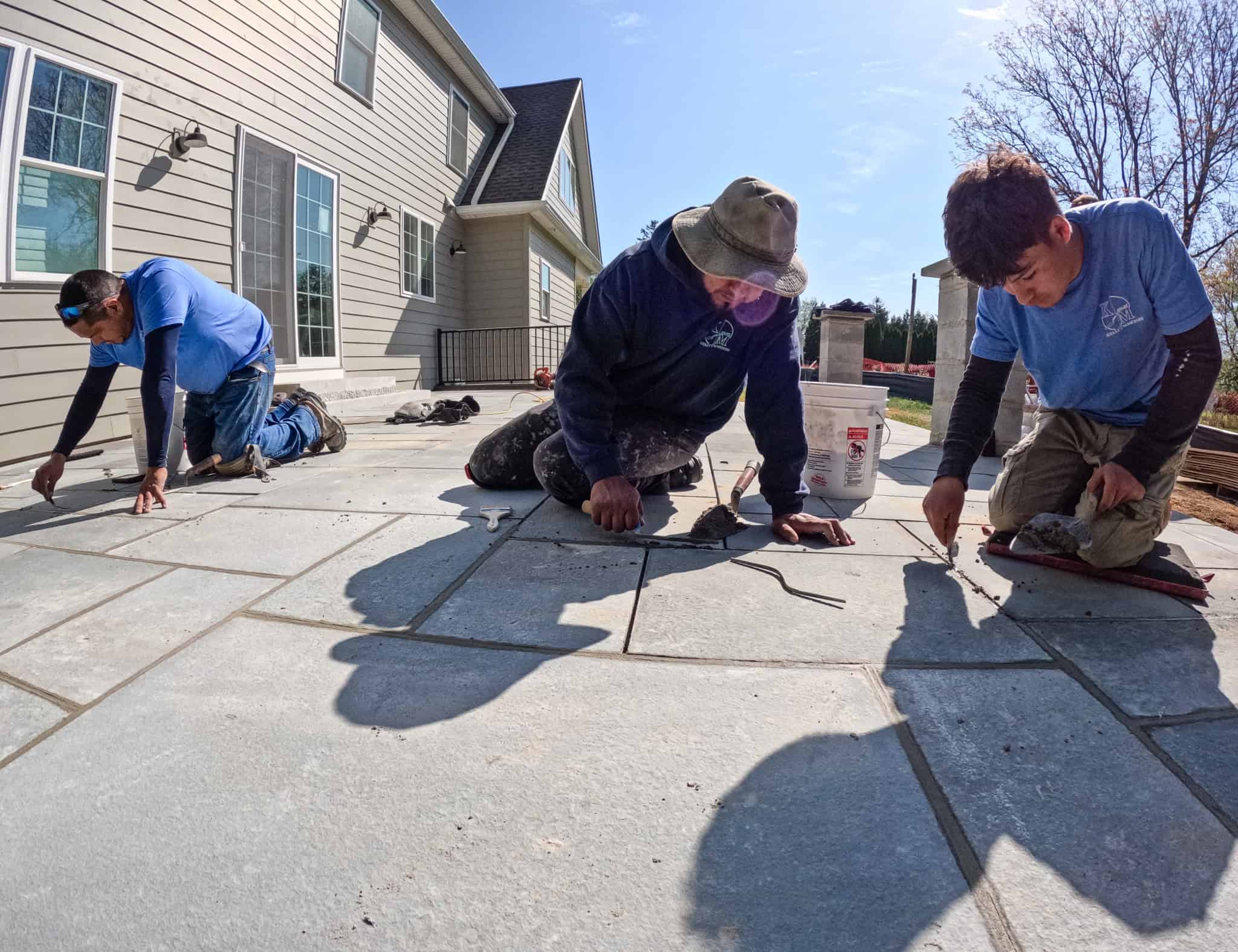
Choosing between an attached and a freestanding patio is a decision that shapes how you experience your home for years to come. At Kelly Masonry, our design-build approach ensures that we carefully evaluate your property’s unique characteristics and your family’s lifestyle before recommending a solution. We manage every detail, from structural engineering and material selection to the final installation of your custom stonework. We invite you to request a consultation today to begin crafting an outdoor living space that perfectly complements your home.
Freestanding vs. Attached Patios: Common Questions Homeowners Ask
Does a freestanding patio require different permits than an attached patio?
Permit requirements vary by municipality in Delaware County. Generally, any structure with a roof or significant footings requires a permit, but attached structures often involve stricter scrutiny regarding how they tie into the existing home. We handle all necessary permitting for our clients.
Can I add a roof or cover to either type of patio later?
Yes, both can be covered later. However, adding a cover to an attached patio requires ensuring your home’s framing can support the additional load. A freestanding patio cover will require its own independent structural support system.
Which patio type is better for uneven or sloped backyards?
Freestanding patios often provide more flexibility for sloped yards, as they can be built as multi-level terraces or positioned in the most level area of the property. Attached patios on sloped lots may require extensive retaining walls to create a usable flat surface near the home.