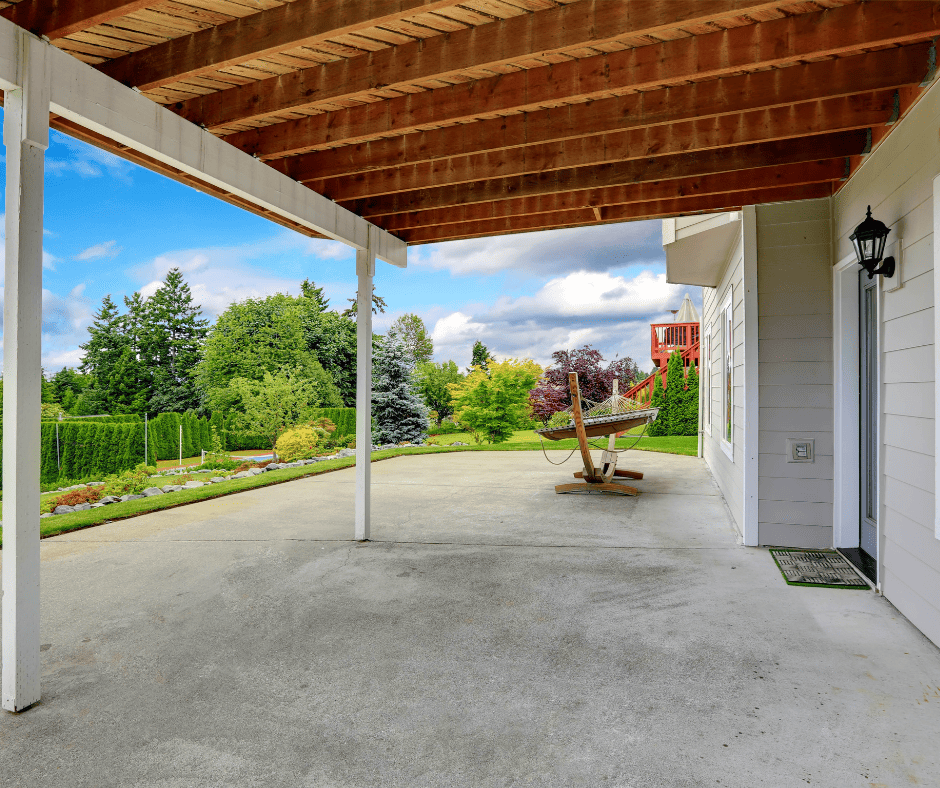
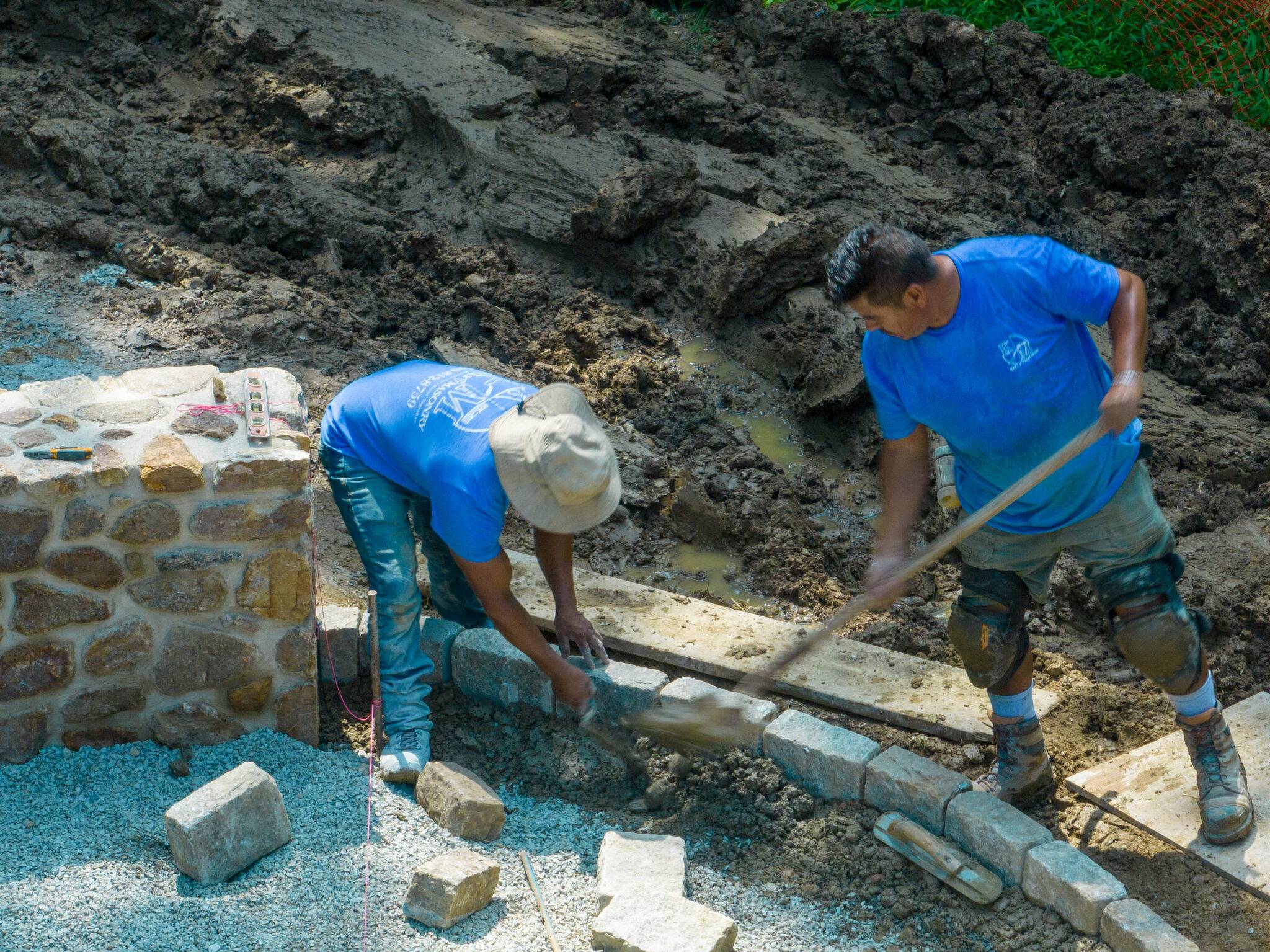
If you’re planning a new patio—or dealing with an existing one that has issues—you may be wondering: do you actually need a drainage system for your patio?
The short answer is: in many cases, yes—but not always in the way you might think.
For homeowners in Delaware County, PA and the Main Line, drainage is one of the most important (and most overlooked) parts of a successful masonry project. When handled correctly, it protects your patio, your home, and your investment for years to come. When ignored, it can lead to problems like settling, water pooling, and long-term damage.
In this guide, we’ll break down when you need patio drainage, what options exist, and how to think about it before starting your project.
Why Drainage Matters for Patios in Pennsylvania
Patios in this region deal with a unique combination of challenges:
- Heavy rain throughout the year
- Freeze-thaw cycles in winter
- Older properties with established grading
- Sloped yards, especially in Main Line communities
Water is the number one cause of patio failure.
When water isn’t properly managed, it can:
- Wash out the base beneath pavers
- Cause patios to settle or shift
- Create standing water on the surface
- Lead to erosion around the patio
- Affect nearby foundations or basements
That’s why drainage isn’t just an “extra feature”—it’s often a core part of the installation process.
The Most Important Drainage Feature: Proper Slope
Before thinking about drains or pipes, it’s important to understand this:
The most important form of patio drainage is proper slope.
A well-built patio is designed so that water naturally flows away from the home and off the surface.
Typically, this means:
- A slight pitch (about 1/8”–1/4” per foot)
- Water directed away from the house
- Smooth, intentional grading across the patio
In many cases, this alone is enough to manage water effectively.
If your patio is installed correctly with proper slope, you may not need any visible drainage system at all.
When You Might Need a Drainage System
There are situations where slope alone isn’t enough.
You may need a drainage system for your patio if:
1. Your Yard Has Limited Slope
Some properties are relatively flat, which makes it harder for water to naturally flow away.
In these cases, additional drainage solutions may be needed to prevent water from sitting on the patio.
2. Your Patio Is Near Your Home’s Foundation
If a patio sits close to your house, managing water becomes more critical.
Without proper drainage, water can collect near the foundation, increasing the risk of:
- Basement moisture issues
- Foundation damage over time
This is especially important for older homes in the Main Line, where drainage may already be a concern.
3. You Have a Low Spot or “Water Trap”
If your patio area sits lower than surrounding areas, water may naturally collect there.
This is common in:
- Backyards with surrounding slopes
- Areas between retaining walls
- Sunken patios or outdoor living spaces
In these situations, a drainage system helps redirect water away from the low point.
4. You’re Adding Retaining Walls or Changing Grade
Whenever you change the grading of a yard—especially with retaining walls—you also change how water moves through the space.
Retaining walls often require:
- Drainage behind the wall
- Gravel backfill
- Drain pipes to relieve water pressure
Without proper drainage, water can build up and cause structural issues.
Common Patio Drainage Solutions
If your project requires more than just slope, there are several drainage options available.
1. Channel Drains
Channel drains are long, narrow drains installed along the edge of a patio or between surfaces (like where a patio meets a driveway).
They:
- Collect surface water
- Direct it away through underground piping
- Are often covered with metal or plastic grates
These are commonly used in areas where water tends to flow across a surface.
2. French Drains
A French drain is a trench filled with gravel and a perforated pipe that redirects water underground.
They are ideal for:
- Managing groundwater
- Draining low areas
- Moving water away from patios and foundations
French drains are often installed around or beneath patio areas where water buildup is a concern.
3. Dry Wells
A dry well collects water and allows it to slowly drain into the surrounding soil.
These are useful when:
- You need to manage runoff on-site
- There’s no easy place to direct water away
4. Permeable Paver Systems
Some patios are designed using permeable pavers, which allow water to pass through the surface into a specially prepared base below.
These systems:
- Reduce runoff
- Help manage drainage naturally
- Can be a good option for certain properties
Signs Your Existing Patio Has Drainage Problems
If you already have a patio, here are some signs that drainage may be an issue:
- Water pooling after rain
- Pavers that feel loose or uneven
- Areas that stay wet long after storms
- Soil erosion around the patio
- Water collecting near your home
These are all indicators that water isn’t being properly managed.
Why Drainage Planning Should Happen Early
One of the biggest mistakes homeowners make is addressing drainage after a patio is installed.
At that point, fixing the issue often requires:
- Removing sections of the patio
- Regrading the base
- Installing new drainage systems
That’s why drainage should always be considered during the planning and design phase.
A well-designed patio takes into account:
- Existing grading
- Water flow across the property
- Soil conditions
- Proximity to the home
When these factors are addressed early, the final result performs much better.
Do All Patios Need a Drainage System?
Not necessarily.
Some patios only need:
- Proper excavation
- A well-compacted stone base
- Correct slope away from the home
However, many patios—especially in areas like Delaware County and the Main Line—benefit from additional drainage solutions due to:
- Older properties
- Complex grading
- Weather conditions
The key is evaluating each property individually.
Final Thoughts
So, do you need a drainage system for your patio?
The answer depends on your property—but one thing is always true:
Water management is critical to the success of any masonry project.
Whether it’s achieved through proper slope, a well-built base, or a full drainage system, the goal is the same:
to ensure your patio remains stable, functional, and beautiful for years to come.
If you’re planning a patio project, taking the time to understand drainage now can help you avoid costly issues later—and ensure your outdoor space performs the way it should.