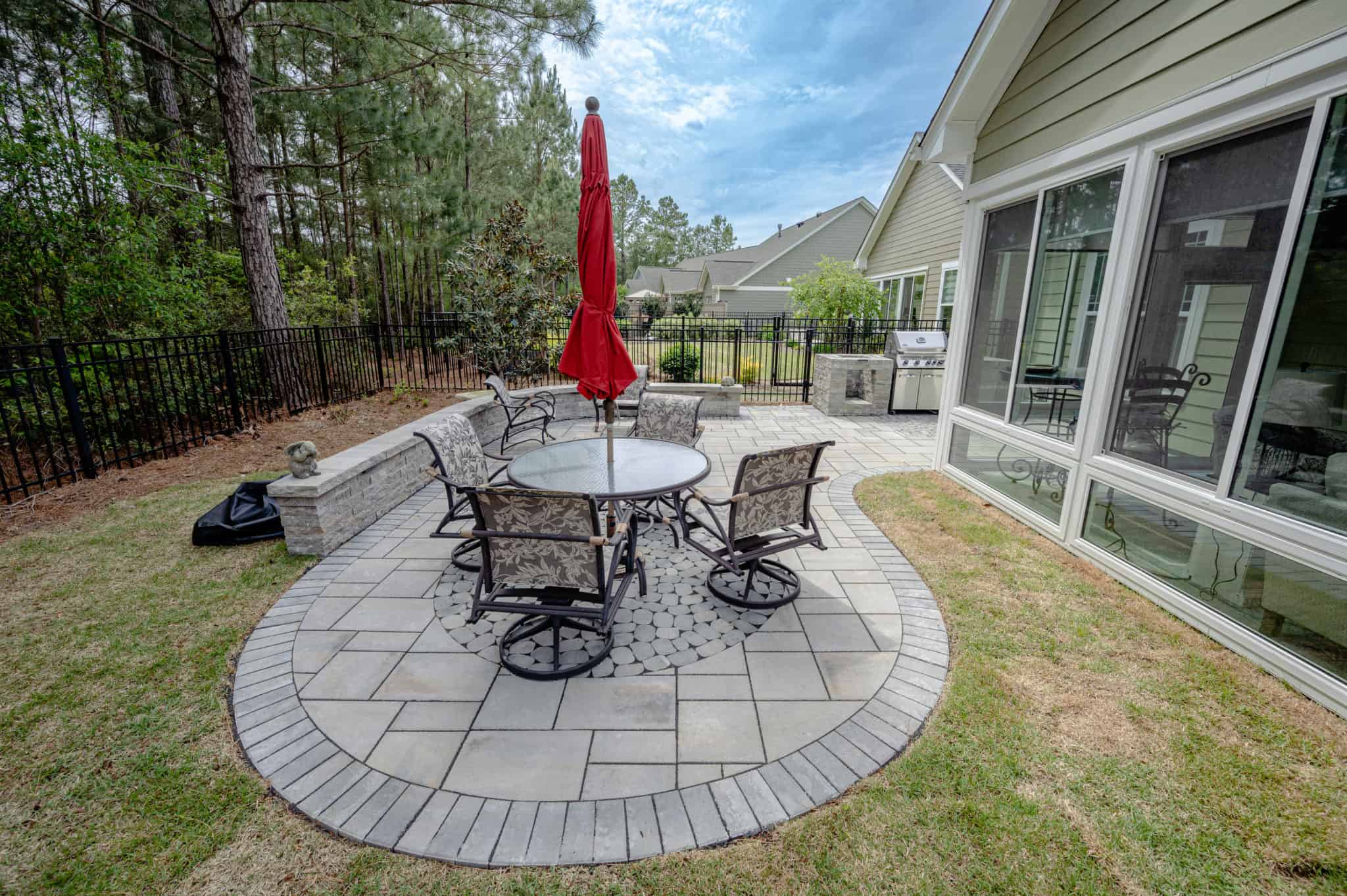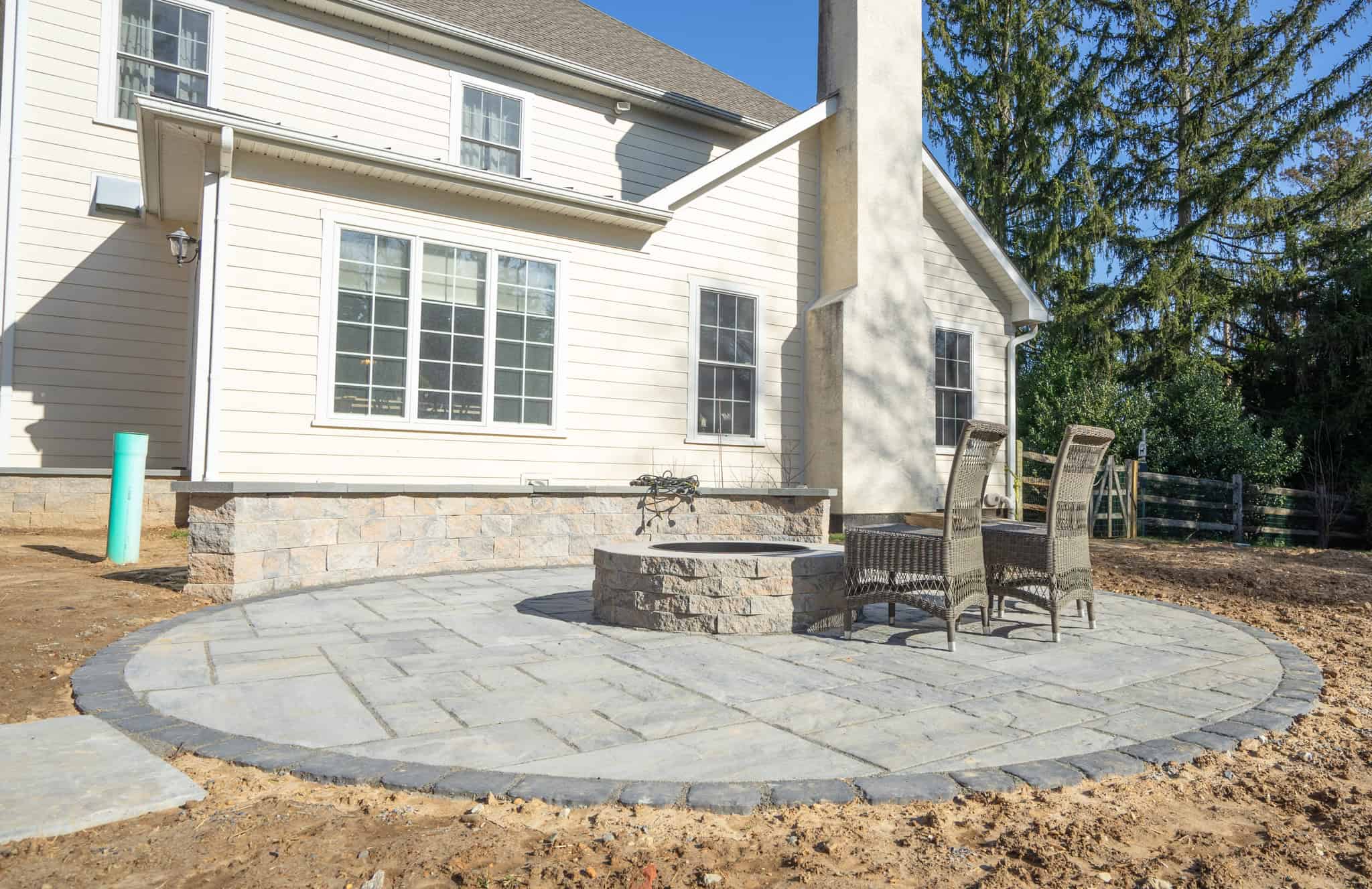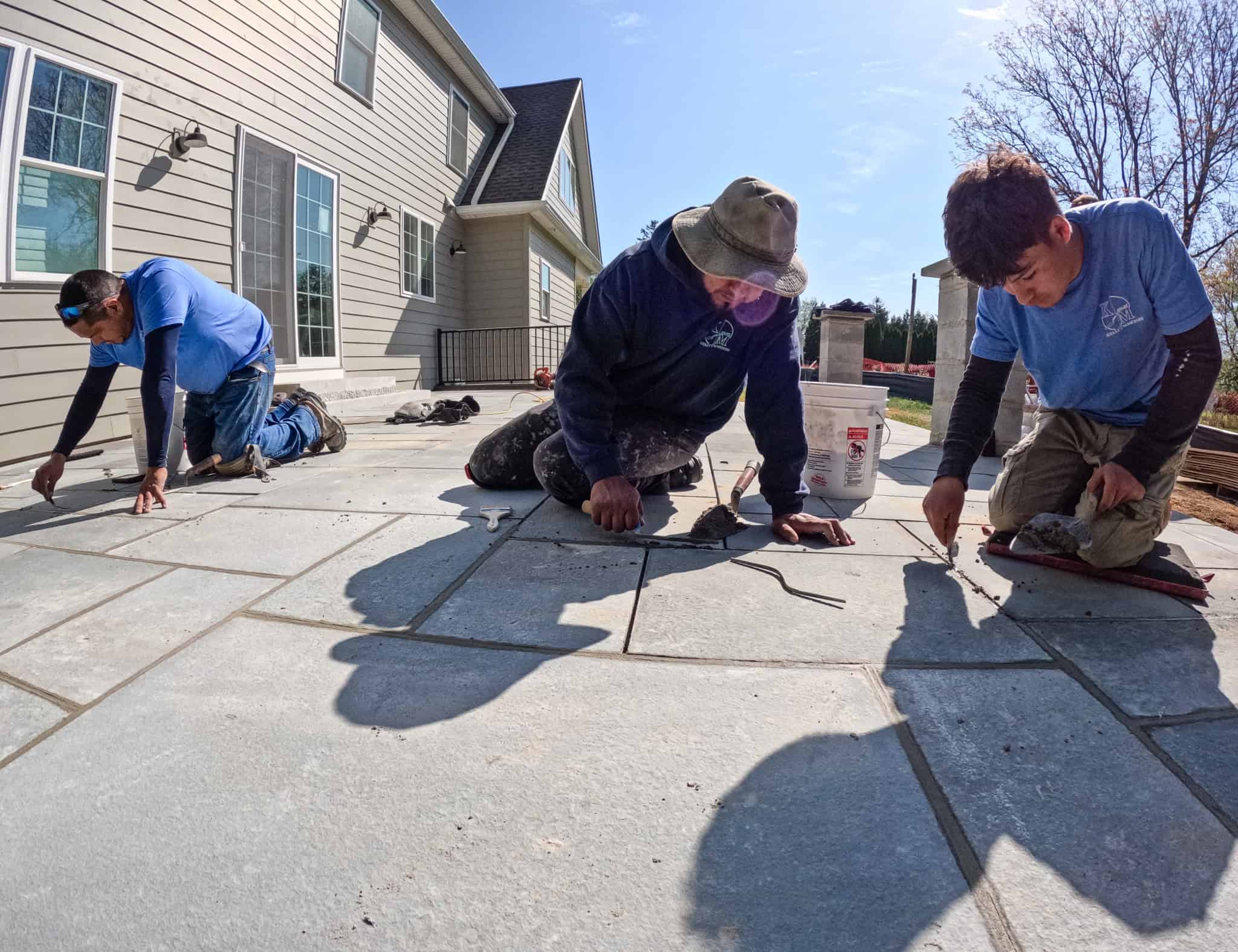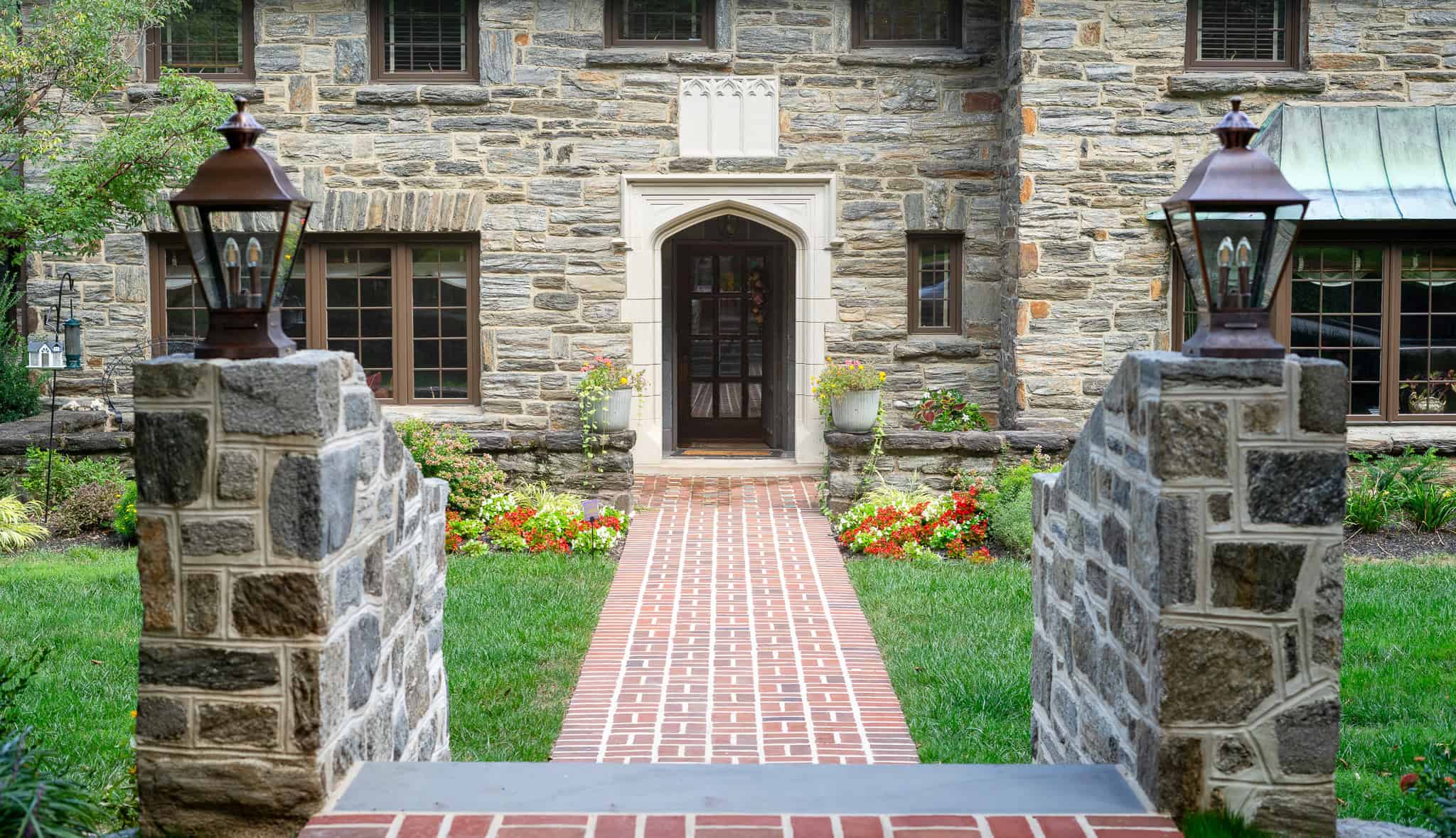
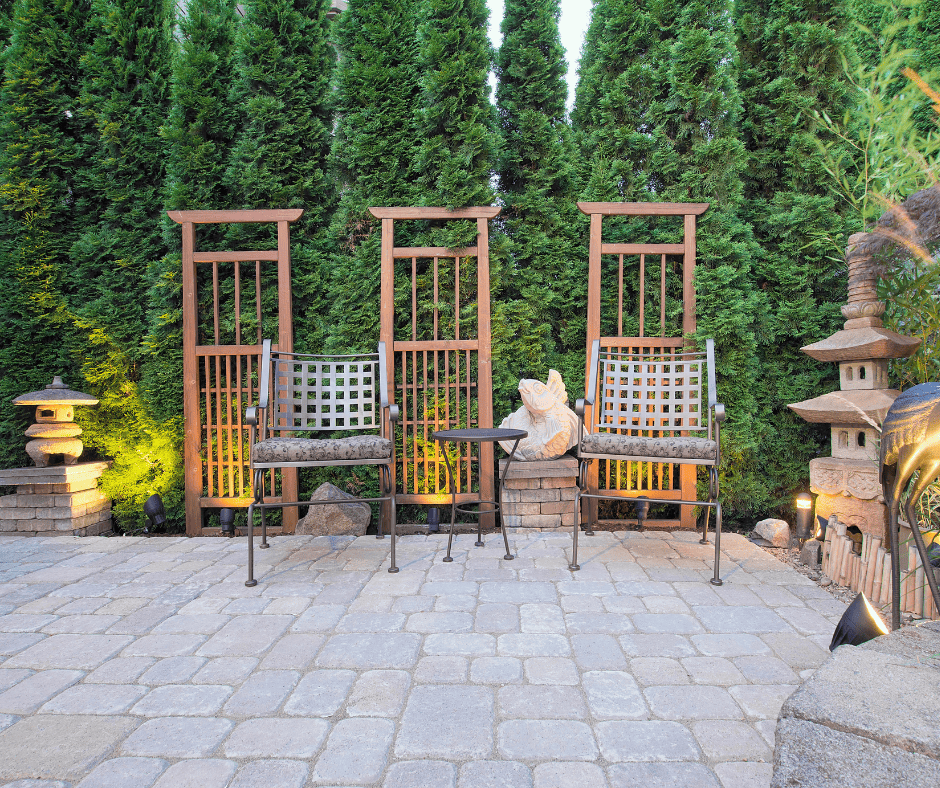
For many homeowners in Delaware County and the Main Line, high-quality interlocking concrete pavers are the best all-around patio material. They offer a wide range of designs, can be installed in flexible pavement systems, and allow individual units to be removed and replaced when repairs are necessary.
They are not automatically the best choice for every property.
Natural stone may be better when authentic appearance and architectural compatibility are the priorities. Poured concrete may offer a lower initial investment for a straightforward design. Clay brick can suit historic homes, while exterior-rated porcelain pavers can create a clean modern appearance.
The correct patio material depends on:
- Your home’s architecture
- Project budget
- Desired appearance
- Site access
- Soil and drainage
- Patio size
- Furniture and intended use
- Maintenance expectations
- Surface consistency
- Repairability
- Installation system
- Pennsylvania freeze-thaw exposure
Kelly Masonry designs and builds custom patios throughout Delaware County and the Main Line.
Patio Materials at a Glance
| Patio material | Best suited for | Primary advantage | Main consideration |
|---|---|---|---|
| Interlocking concrete pavers | Most residential patios | Design flexibility and individual-unit repair | Base, drainage, joints, and edge restraints must be installed correctly |
| Natural stone | Premium and architecturally distinctive patios | Authentic appearance and natural variation | Higher material and installation investment |
| Clay brick pavers | Traditional and historic homes | Classic color and character | Product quality, joint maintenance, and installation system matter |
| Poured concrete | Simple patios with lower initial budgets | Continuous surface and flexible shapes | Cracking and visibly matched repairs can be concerns |
| Porcelain pavers | Modern, low-absorption surfaces | Consistent appearance and stain resistance | Product must be exterior-rated and installed as a complete system |
| Gravel | Informal garden or low-use spaces | Lower initial cost and drainage | Movement, furniture stability, accessibility, and maintenance |
| Permeable paving | Projects with stormwater goals | Allows water into a designed pavement system | Requires engineered surface, joints, base, drainage, and maintenance |
There is no universally superior patio material. The best choice is the one that fits the property, design goals, complete installation system, and maintenance expectations.
Our Overall Recommendation: Interlocking Concrete Pavers
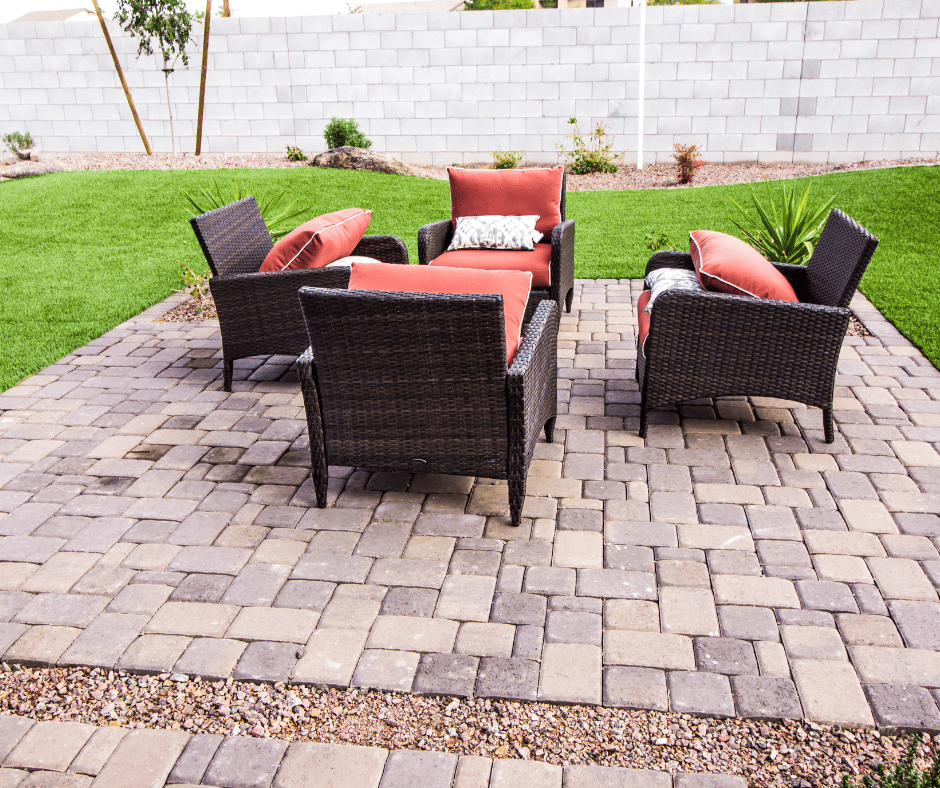
Interlocking concrete pavers are the strongest all-around option for many residential patio projects.
They provide:
- Numerous colors, sizes, textures, and patterns
- Designs that complement traditional and modern homes
- Individual-unit replacement
- Flexible layouts for curves and borders
- Compatibility with steps, walkways, walls, and fire features
- Product options designed for freeze-thaw exposure
- Options for conventional or permeable pavement systems
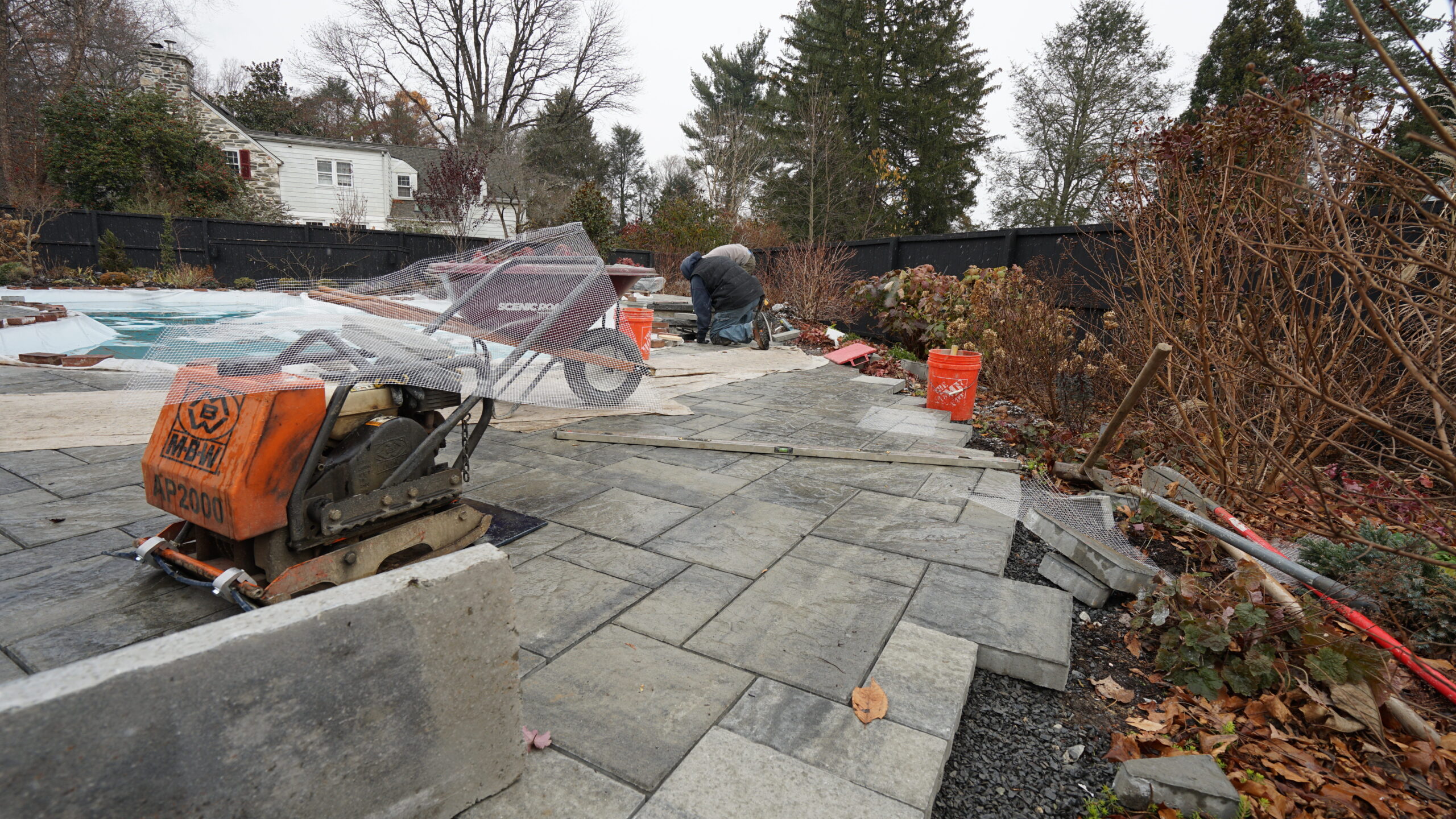
A paver patio is not durable simply because pavers were selected. Performance also depends on:
- Supporting soil
- Excavation
- Aggregate base
- Compaction
- Bedding
- Surface grading
- Edge restraints
- Joint material
- Drainage
- Installation around steps and structures
- Product quality
The Concrete Masonry & Hardscapes Association’s installation guidance treats all these components as part of the complete pavement system.
Concrete pavers may be best when you want:
- Broad design flexibility
- A repairable segmental surface
- Borders or custom patterns
- A patio coordinated with walls and walkways
- A balance between cost and premium appearance
- A product with documented exterior and freeze-thaw performance
Concrete pavers may not be best when:
- You strongly prefer authentic natural variation
- Your design requires a completely continuous surface
- You do not want joints requiring periodic maintenance
- The product selected lacks suitable technical documentation
- The contractor cannot explain the base and drainage design
Compare available manufacturers in our guide to the best paver brands for patios.
Natural Stone: Best for Premium Appearance
Natural stone is often the best material for homeowners who prioritize authentic character, architectural compatibility, and a high-end appearance.
Common patio stones may include:
- Pennsylvania bluestone
- Flagstone
- Granite
- Sandstone
- Limestone
- Travertine
These names describe broad stone families rather than identical products. Performance varies by quarry, geological composition, absorption, finish, thickness, and installation method.
Natural-stone advantages
- Each piece has natural variation
- It can complement historic brick and stone homes
- It creates a premium, handcrafted appearance
- Individual stones may be replaceable
- It works well with masonry walls, fireplaces, and steps
- Dimensional or irregular layouts are available
Natural-stone considerations
- Material and installation costs are often higher
- Irregular stone requires skilled fitting
- Some stones are more absorbent or vulnerable to freeze-thaw exposure
- Color and thickness naturally vary
- Certain finishes may become slippery when wet
- Replacement stone may not match exactly
- Mortared and dry-laid installations have different maintenance requirements
Not every stone sold for exterior use is equally appropriate for Pennsylvania winters. The exact stone should be selected according to climate exposure, test data, installation, drainage, and documented exterior performance.
The Natural Stone Institute notes that freeze-thaw, moisture, salt, traffic, and thermal exposure should be considered before selecting stone for an exterior application.
Natural stone may be best when you want:
- An authentic, one-of-a-kind surface
- A patio that complements an older stone or brick home
- A premium outdoor living space
- A material coordinated with stone walls, steps, or fireplaces
- Handcrafted rather than highly uniform results
Read everything you need to know about flagstone or compare pavers and natural stone directly.
Clay Brick Pavers: Best for Traditional Architecture
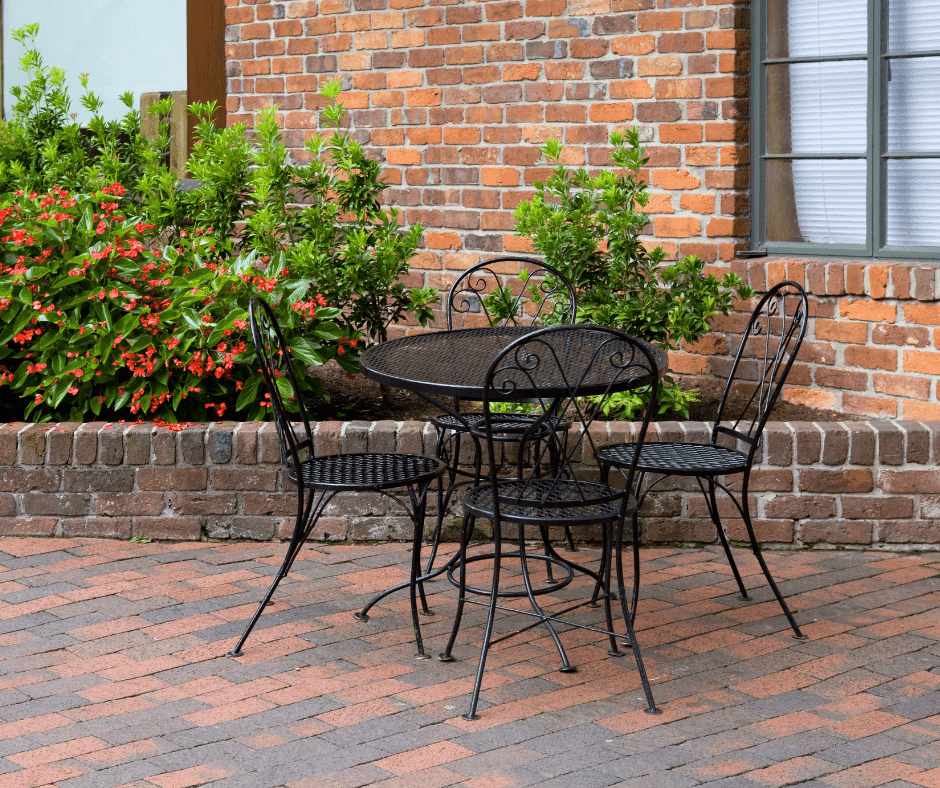
Clay brick pavers can be an excellent choice for Colonial, Federal, Georgian, and other traditional homes.
Their color comes from fired clay rather than a surface pigment, and they can develop an attractive weathered appearance over time.
Clay-brick advantages
- Classic architectural character
- Rich natural color
- Multiple laying patterns
- Individual-unit replacement in flexible systems
- Strong compatibility with traditional brick homes
- Long history of exterior paving use
Clay-brick considerations
- Initial cost may be higher than basic concrete
- Size and color may vary
- Some products are more suitable for paving than others
- Surface texture and winter traction should be evaluated
- Joint material may require maintenance
- Improper base preparation can cause settlement
- Deicing products should be selected carefully
Use paving brick rated for the application, not ordinary wall brick.
Also distinguish between the installation systems:
- Sand-set brick pavers have aggregate or sand-filled joints. They are not “repointed.”
- Mortar-set brick paving has mortared joints that may eventually require mortar repair.
The current article’s universal recommendation to repoint brick every 10 to 20 years should be removed.
Clay brick may be best when:
- The home already features traditional brick
- Historic character is important
- A herringbone, running-bond, or basket-weave pattern is desired
- Natural clay color is preferred over manufactured concrete finishes
Poured Concrete: Best for a Simple Continuous Surface
Poured concrete may provide a lower initial material and installation cost for a straightforward patio.
It can be installed as:
- Standard broom-finished concrete
- Colored concrete
- Exposed-aggregate concrete
- Stamped concrete
- Scored or patterned concrete
Concrete advantages
- Continuous surface
- Can form curves and custom outlines
- Relatively straightforward appearance
- Limited surface joints compared with unit paving
- Can support many furniture layouts
- Multiple finishes and colors are available
Concrete considerations
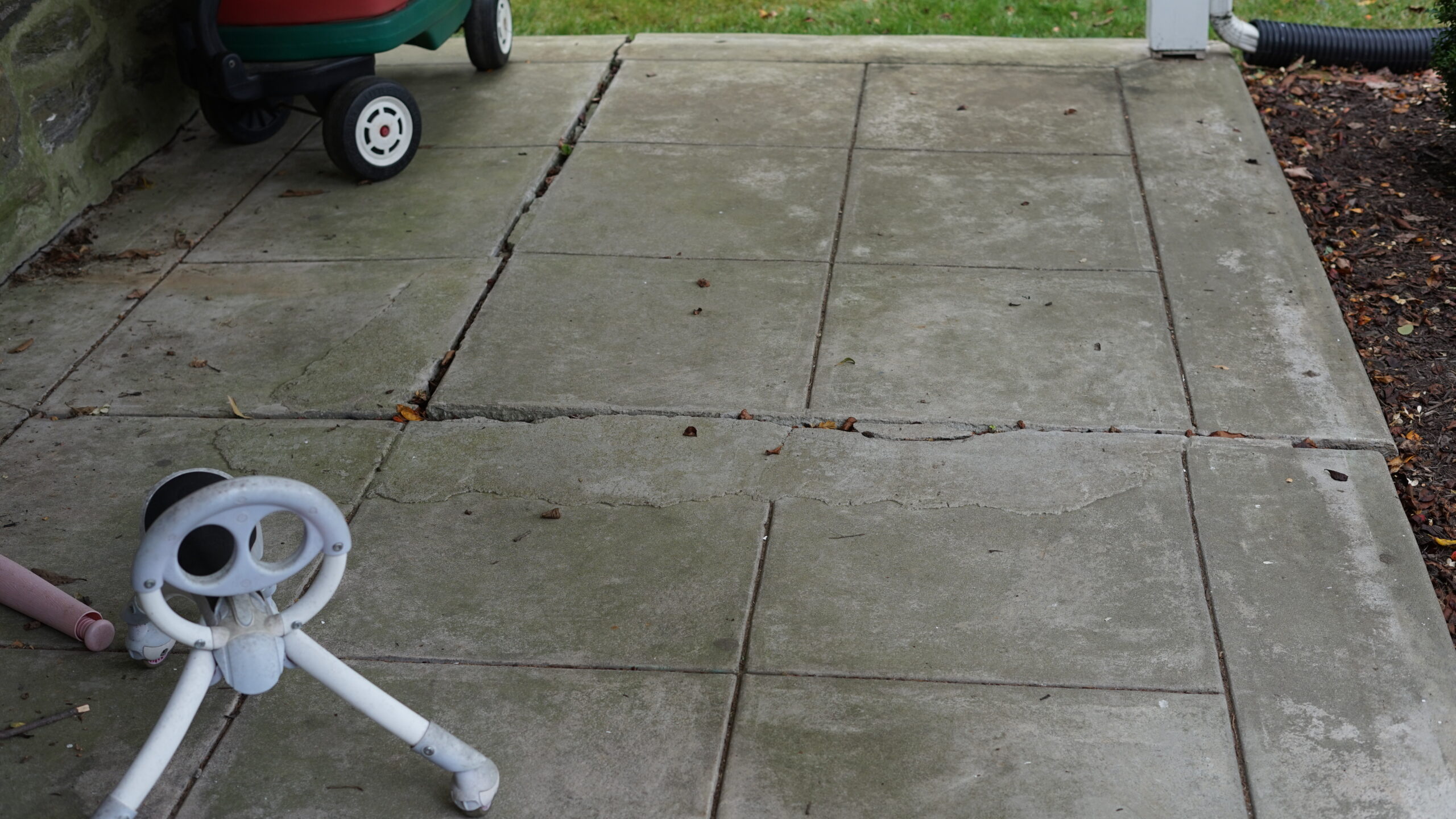
- Concrete can crack
- Control joints manage where cracking occurs but do not guarantee a crack-free patio
- Matched repairs can remain visible
- Settlement may require larger-area correction
- Stamped textures can affect traction
- Color may vary between placements and repairs
- Deicing salts and freeze-thaw exposure require suitable concrete design and maintenance
Concrete installation should not be described as simply “quick and easy.” Proper work requires attention to:
- Subgrade
- Compaction
- Slab thickness
- Reinforcement when specified
- Drainage
- Concrete mixture
- Placement
- finishing
- Control joints
- Curing
- Weather
The American Cement Association’s concrete guidance explains that contraction joints are used to control the location of cracking.
Concrete may be best when:
- A continuous surface is preferred
- The design is relatively simple
- Initial project cost is a major consideration
- Matching existing concrete is more important than using unit pavers
- The homeowner accepts the possibility of visible cracking and repairs
Read our complete review of concrete patio advantages, limitations, cost, and cracking.
Porcelain Pavers: Best for a Modern, Consistent Appearance
Exterior porcelain pavers can provide a clean, contemporary surface with consistent color, dimensions, and texture.
However, not every porcelain tile is suitable for a Pennsylvania patio.
The product should be:
- Rated by the manufacturer for exterior use
- Suitable for horizontal walking surfaces
- Appropriate for freeze-thaw exposure
- Compatible with the planned installation method
- Selected for wet-surface traction
- Installed with the required drainage and movement details
The Tile Council of North America advises confirming that the manufacturer rates the product for exterior use. Its guidance also explains that porcelain’s low water absorption often supports frost resistance, but porcelain is not automatically suitable for every exterior condition.
Even a frost-resistant product can fail when water remains in grout joints, voids, setting materials, or poorly drained assemblies.
Porcelain advantages
- Low water absorption
- Consistent sizes and finishes
- Resistance to many stains
- Modern appearance
- Stone-, concrete-, and wood-look designs
- Relatively easy surface cleaning
- Large-format options
Porcelain considerations
- Requires precise installation
- Edges can chip during handling or cutting
- Some products may feel hot in direct sun
- Slip resistance varies by finish
- Large units require suitable support
- Drainage and movement joints remain important
- Repairs require finding a matching replacement product
- Thin indoor tile should not be substituted for exterior pavers
Porcelain may be best when:
- A modern, highly consistent appearance is preferred
- Low absorption is important
- Large-format paving suits the design
- The contractor has experience with the specific exterior system
- The manufacturer provides clear technical documentation
The current article’s statement that porcelain is “not great for extreme climates” should be replaced with product- and installation-specific guidance.
Gravel: Best for Informal or Low-Use Spaces
Gravel can be appropriate for an informal garden seating area, secondary patio, or property where a loose natural surface fits the design.
Gravel advantages
- Lower initial material cost
- Informal appearance
- Simple shapes
- Water can move through the surface
- Easy to extend or alter
- Useful around gardens and rustic landscapes
Gravel considerations
- Material moves underfoot
- Furniture may become unstable
- Wheels and mobility devices can be difficult to use
- Gravel may migrate into lawns and planting beds
- Organic material can accumulate
- Snow removal is difficult
- Regular raking and replenishment may be needed
- Edging is important
Gravel should not automatically be described as an accessible, low-maintenance, or drainage-solving surface.
Gravel may be best when:
- The patio is secondary or lightly used
- An informal garden appearance is desired
- Furniture can be supported appropriately
- Loose-surface maintenance is acceptable
- Accessibility and snow removal are not major constraints
Permeable Pavers: Best When Stormwater Is a Design Priority
Permeable pavement is a complete stormwater-management system, not simply a patio with wider joints.
It may include:
- Permeable paving units
- Open-graded joint aggregate
- Bedding aggregate
- An open-graded reservoir base
- Geotextile where specified
- Underdrains
- Overflow structures
- Soil-infiltration testing
- Maintenance access
The U.S. Environmental Protection Agency recognizes permeable pavement as a stormwater-management practice that can capture and manage runoff through the pavement system.
Permeable pavers may be useful when:
- Runoff reduction is important
- Local impervious-coverage requirements affect the project
- The site has an appropriate outlet or infiltration capacity
- A qualified designer can develop the complete section
- The homeowner accepts periodic vacuuming or joint maintenance
They are not suitable for every soil, slope, foundation location, or drainage condition.
Read more about permeable paving systems.
Which Patio Material Is Best for Each Goal?
| Your priority | Strong option to consider |
|---|---|
| Best overall balance | Interlocking concrete pavers |
| Premium natural appearance | Bluestone or another suitable natural stone |
| Historic brick architecture | Clay brick pavers |
| Lower initial budget | Poured concrete or a simpler paver system |
| Modern large-format appearance | Exterior-rated porcelain pavers |
| Easy individual-unit repair | Concrete pavers, brick pavers, or dry-laid stone |
| Natural variation | Natural stone |
| Consistent color and size | Concrete or porcelain pavers |
| Stormwater management | Designed permeable pavement |
| Informal garden seating | Gravel |
| Stable furniture surface | Concrete, pavers, dimensional stone, or properly installed porcelain |
| Aging-in-place planning | Firm, stable, even surface with controlled joints and transitions |
This table is a starting point. Material alone does not determine patio performance.
What Matters More Than the Surface Material?
A premium patio material can still fail when the underlying system is poorly designed.
The most important construction factors include:
Soil and excavation
Weak, wet, disturbed, or poorly draining soils may require additional preparation.
Base design
Base material and thickness should be selected for the soil, drainage, loading, climate, and paving system.
Compaction
Inadequate or inconsistent compaction can contribute to settlement.
Drainage
The patio should direct water toward an appropriate outlet rather than toward the home, foundation, steps, or low areas.
Edge restraint
Segmental pavers require suitable restraint to limit spreading and joint loss.
Joint design
Joint width and material depend on the surface and installation system.
Material thickness
Stone, porcelain, and concrete paving units should have dimensions appropriate for the intended installation.
Transitions
Doors, steps, walkways, lawns, pools, walls, and drainage structures must be coordinated with the patio elevation.
Installation experience
Natural stone, concrete, porcelain, clay brick, and permeable paving require different skills. A contractor experienced with one material is not automatically qualified for every system.
How Does Pennsylvania Weather Affect Patio Materials?
Pennsylvania patios experience:
- Rain
- Snow
- Ice
- Freeze-thaw cycling
- Summer heat
- Shade and organic growth
- Deicing materials
- Seasonal soil moisture
Freeze-thaw damage becomes more likely when water enters a material or installation system and cannot drain before freezing.
For that reason, evaluate:
- Product freeze-thaw documentation
- Water absorption
- Base drainage
- Surface pitch
- Joint design
- Setting materials
- Low areas
- Downspouts
- Deicing-product compatibility
- Winter maintenance
Do not select a patio material from appearance alone.
Which Patio Surface Is Easiest to Repair?
Segmental surfaces are generally easier to repair locally than continuous slabs.
Individual concrete pavers, clay brick pavers, and selected dry-laid stones can often be removed to access the base or replace a damaged unit.
That does not mean every repair will be invisible. Challenges may include:
- Matching an older product
- Color changes from weathering
- Settled base
- Widespread movement
- Failed edging
- Drainage problems
- Discontinued sizes or finishes
Poured-concrete repairs often remain visible because the new concrete differs in age, color, texture, and weathering.
For existing surfaces, review Kelly Masonry’s patio and walkway repair services.
Which Patio Material Requires the Least Maintenance?
No exterior patio is maintenance-free.
Typical maintenance may include:
| Material | Possible maintenance |
|---|---|
| Concrete pavers | Cleaning, joint inspection, resetting isolated units, optional sealing |
| Natural stone | Cleaning, joint maintenance, resetting or mortar repair depending on installation, selective sealing |
| Clay brick pavers | Cleaning, joint maintenance, resetting, moss or organic-growth control |
| Poured concrete | Cleaning, crack monitoring, joint maintenance, selective sealing |
| Porcelain pavers | Cleaning, joint inspection, replacement of damaged units |
| Gravel | Raking, edging, replenishment, weed and debris removal |
| Permeable paving | Surface cleaning, joint-aggregate maintenance, vacuuming to preserve infiltration |
Not every material needs to be sealed. The decision should be based on the exact product, finish, exposure, desired appearance, stain risk, and manufacturer guidance.
Read our guide to preparing and maintaining a patio for winter.
How Much Does Patio Material Affect the Price?
Material affects price, but it is only one part of the complete patio investment.
Kelly Masonry currently publishes these planning levels:
| Patio level | Current planning range |
|---|---|
| Basic patio | Approximately $20,000 |
| Average patio | Approximately $40,000 |
| High-end custom patio | $60,000+ |
These are complete-project planning ranges rather than per-square-foot material prices.
Final cost depends on:
- Patio size
- Material and product line
- Demolition
- Site access
- Excavation
- Soil
- Base
- Drainage
- Curves and cuts
- Steps
- Walls
- Fire features
- Lighting
- Outdoor kitchens
- Permits
- Landscape restoration
Natural stone and complex porcelain systems frequently require more labor than a straightforward concrete-paver layout. However, difficult access or drainage can make a smaller patio cost more than a larger project on a simple site.
Review our guide to patio installation costs in the Main Line or view Kelly Masonry’s current project pricing.
Questions to Ask Before Choosing a Patio Material
Ask:
- Which material complements the home?
- Is the exact product rated for exterior freeze-thaw exposure?
- What installation system will be used?
- How will the patio drain?
- What base is proposed?
- Can individual areas be repaired?
- What routine maintenance is required?
- Will the surface remain comfortable and stable for intended users?
- How will steps, doors, walls, and walkways connect?
- Can the contractor show completed local projects using the same material?
- Is the selected product likely to remain available for future repairs?
- What manufacturer and workmanship warranties apply?
What Kelly Masonry Recommends
Kelly Masonry does not recommend one patio material without considering the home and property.
In general:
- Choose interlocking concrete pavers for the strongest all-around balance of design flexibility and local repair.
- Choose natural stone for premium character and compatibility with distinctive brick or stone architecture.
- Choose clay brick pavers for a traditional appearance.
- Choose poured concrete when a continuous surface and lower initial investment are priorities.
- Choose exterior-rated porcelain pavers for a clean, modern design supported by the correct installation system.
- Choose permeable paving when stormwater management is a major design goal.
- Choose gravel for informal, secondary spaces where movement and maintenance are acceptable.
The finished patio will only perform as well as its drainage, base, construction details, transitions, and maintenance.
Frequently Asked Questions
What is the best overall material for a patio?
For many residential projects, interlocking concrete pavers provide the best overall balance of appearance, repairability, product choice, and installation flexibility. Natural stone may be better for a premium, authentic appearance.
Are pavers better than concrete?
Pavers usually offer easier localized repair and more design options. Poured concrete creates a continuous surface and may have a lower initial cost. Either can perform poorly when the base, drainage, or installation is inadequate.
Are pavers better than natural stone?
Neither is universally better. Pavers provide consistent sizes and broad product options. Natural stone provides authentic variation and may complement historic architecture more naturally.
What is the least expensive patio material?
Gravel and straightforward poured concrete commonly have lower initial costs than premium pavers or natural stone. Complete project cost still depends heavily on excavation, access, base, drainage, size, and related features.
What is the most durable patio material?
Durability depends on the exact product and installation. Suitable concrete pavers, clay brick pavers, natural stone, porcelain pavers, and properly designed concrete can all perform well.
What is the easiest patio material to repair?
Segmental surfaces such as concrete pavers, clay brick pavers, and selected dry-laid stone are often easier to repair locally because individual units can be removed.
Do patio pavers crack?
Individual pavers can crack, although damaged units may be replaceable. Pavers can also settle or shift when the base, drainage, joints, or edge restraints fail.
Will a concrete patio crack?
Concrete can crack. Correct joints, subgrade preparation, drainage, mixture selection, placement, and curing help control cracking but cannot guarantee that no crack will occur.
Is porcelain suitable for Pennsylvania winters?
Some exterior-rated porcelain pavers are suitable for freeze-thaw climates. Verify the exact manufacturer’s rating, installation system, drainage requirements, and wet-surface performance.
Is flagstone good for patios?
Yes, when the exact stone, thickness, finish, base, drainage, and installation system are suitable for the project and climate.
Do brick patios need repointing?
Sand-set brick patios are not repointed because they do not have mortar joints. Mortar-set brick paving may eventually need mortar-joint repair depending on its condition.
Are permeable pavers the same as regular pavers?
No. A permeable pavement requires purpose-designed units or openings, open-graded joints, bedding, base, drainage, and ongoing maintenance.
Which patio surface is best for accessibility?
A firm, stable, relatively even surface with controlled joints and transitions is generally preferable. The complete route, slope, doors, steps, and clearances must also be considered.
How much does a new patio cost?
Kelly Masonry currently publishes planning levels of approximately $20,000 for a basic patio, $40,000 for an average patio, and $60,000 or more for a larger custom project.
About the Author
John Kelly is the founder of Kelly Masonry. Since 2002, Kelly Masonry has designed, installed, maintained, and repaired paver, brick, concrete, flagstone, bluestone, porcelain, and natural-stone patios throughout Delaware County, the Main Line, and surrounding Pennsylvania communities.
Originally published: November 15, 2021
Reviewed by: John Kelly
Last updated: July 30, 2026
Need Help Choosing a Patio Material?
Kelly Masonry can evaluate your home, property, drainage, intended use, preferred appearance, maintenance expectations, and budget before recommending a patio material and installation system.
Explore our patio construction services, browse our completed projects, review our current patio pricing, or request a consultation.