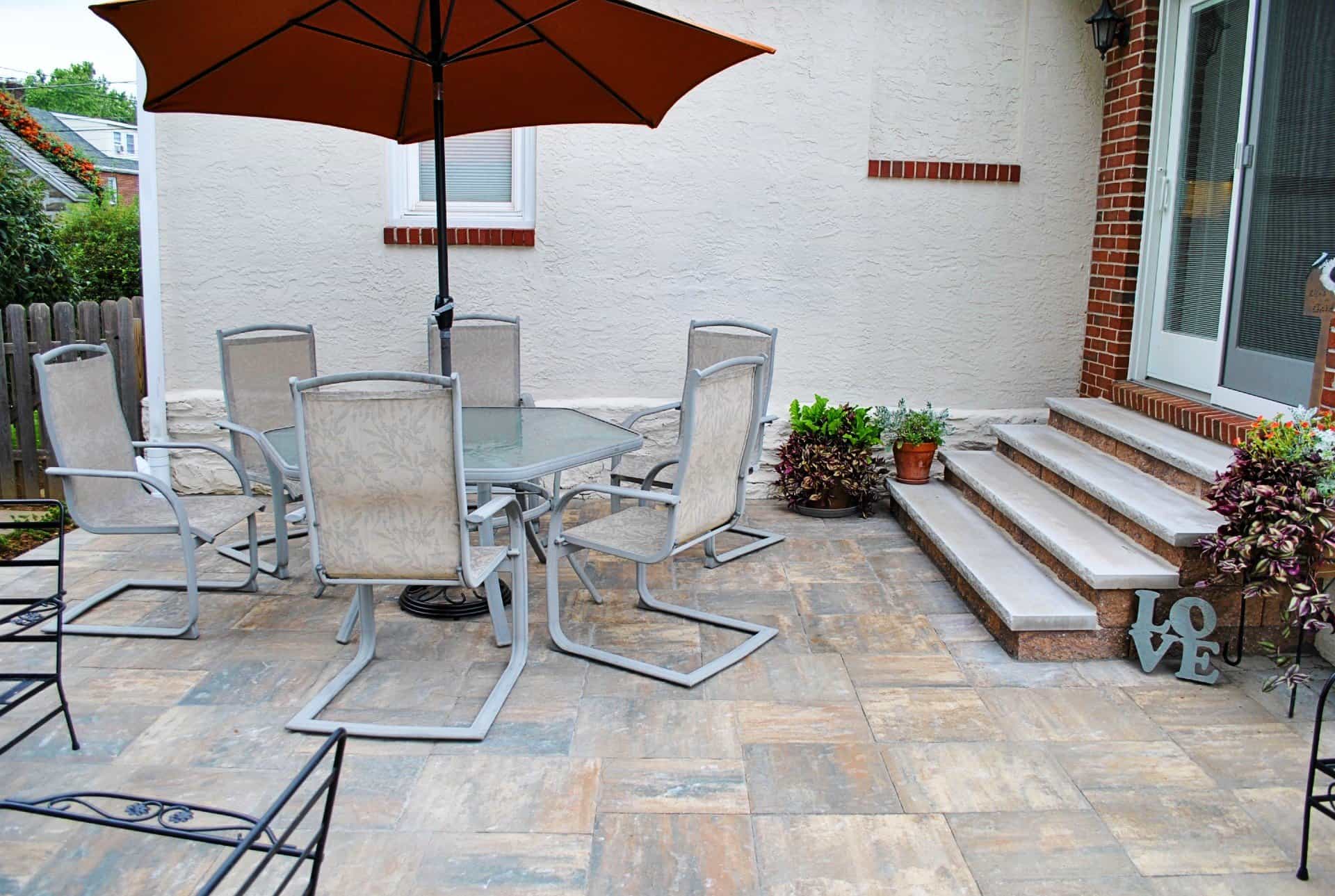

Permeable pavers can be a useful option when a Delaware County homeowner wants a patio, walkway, or selected driveway area that helps manage rain and snowmelt at the surface. Unlike a conventional impervious surface, a permeable-paver system is designed with joints and underlying aggregate layers that allow water to move downward under suitable site conditions.
That does not mean every property should use permeable pavers or that the surface will eliminate drainage problems. Performance depends on soil, slope, subgrade, aggregate reservoirs, joint material, design, installation, maintenance, and the amount of water entering the system. The decision should be based on the property’s stormwater pattern, not only on the environmental label.
What Are Permeable Pavers?
Permeable pavers are installed with joints and an underlying stone system that allow some rainwater and snowmelt to pass through the surface. The water may infiltrate into suitable soil or be managed through a designed base and drainage approach.
The surface is only one part of the system. A successful installation depends on the relationship between the pavers, joint material, bedding layer, open-graded aggregate, subgrade, surrounding grades, and any underdrain or overflow components. The visible pavers cannot compensate for an unsuitable or poorly prepared foundation.
The U.S. Environmental Protection Agency explains that permeable pavement can allow rain and snowmelt to seep through the surface into underlying soil and gravel and can help reduce runoff and filter pollutants. EPA also notes that its homeowner page is no longer being updated, so it should be treated as general background rather than a substitute for current local design review.
Why Homeowners Consider Permeable Paving
Managing runoff at the source
A permeable surface can help keep some rainfall from immediately running across the patio toward a low point, foundation, or drainage inlet. Pennsylvania’s transportation guidance describes pervious pavement as a stormwater technique that can reduce runoff and support groundwater recharge.
The actual result depends on the site. If the soil infiltrates slowly, the system is undersized, the area receives runoff from a larger slope, or the joints become clogged, the surface may not perform as expected. A design should identify where water goes during normal storms and what happens during heavier events.
Creating a more comfortable outdoor surface
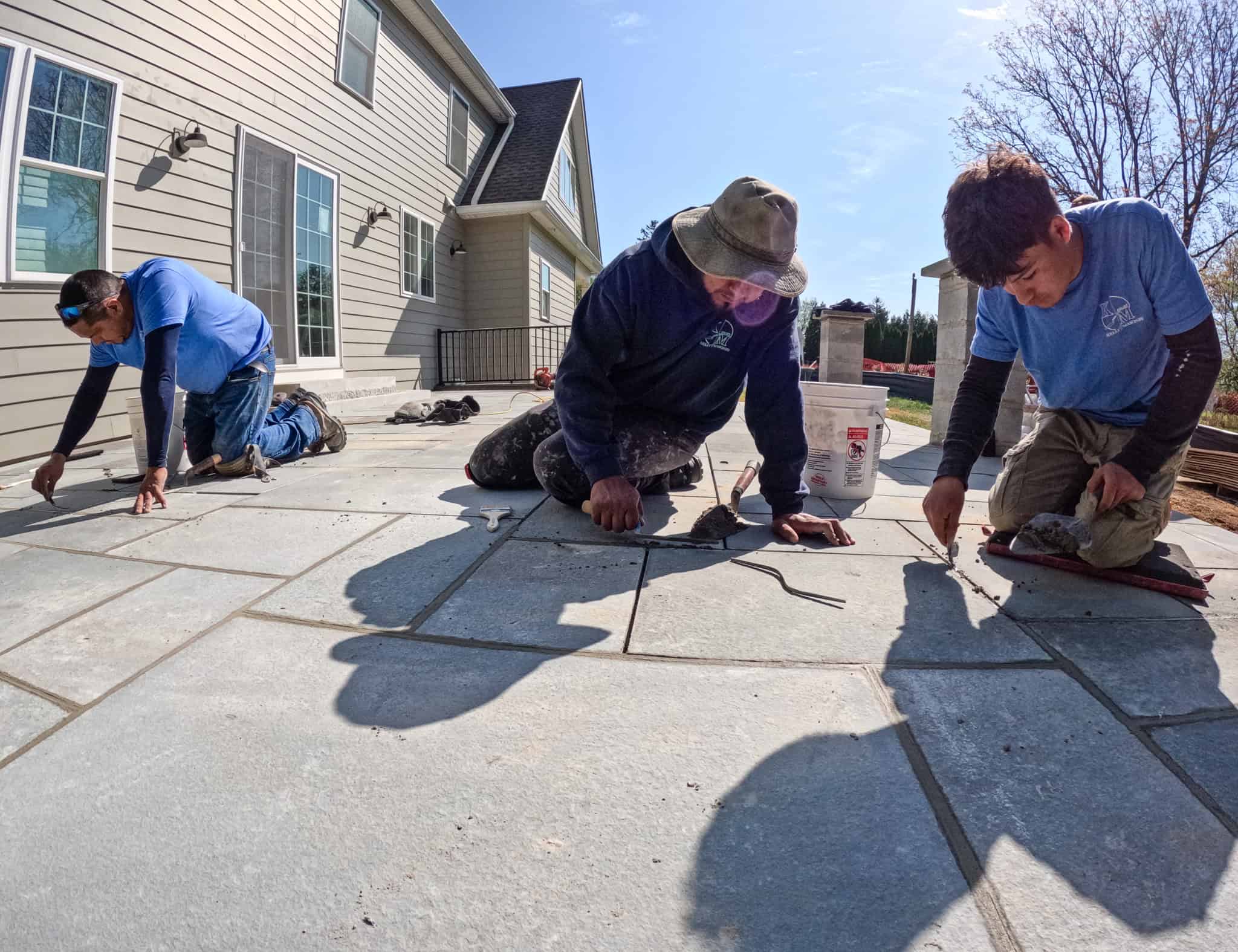
Permeable pavers can provide the appearance and flexibility of a paver patio while supporting a stormwater strategy. The surface can be laid in patterns and coordinated with steps, walls, planting beds, and walkways.
Permeability is not a guarantee that a patio will never puddle or become slippery. Slope, shade, leaves, snow, soil, maintenance, and the condition of the base still matter.
Supporting a broader hardscape plan
Permeable paving can be considered alongside downspout management, rain gardens, planting, grading, drainage, and reduced impervious coverage. It is most useful when it solves a real site problem or supports a clearly defined stormwater goal.
Where Permeable Pavers May Be a Good Fit
Potential applications include patios, garden paths, walkways, courtyards, selected parking areas, and other surfaces where the system can be designed for the expected load and drainage conditions.
| Application | Planning question |
|---|---|
| Patio | Can the base, slope, furniture, and adjacent planting be coordinated to receive and manage rainfall? |
| Walkway | Will the surface remain comfortable and stable through seasonal moisture and freeze-thaw conditions? |
| Driveway or parking area | Is the chosen system rated for the expected vehicle loads and turning movements? |
| Courtyard | Where will overflow go if the underlying soil is saturated? |
| Sloped property | Can runoff from above be intercepted or safely routed before it overwhelms the permeable surface? |
Permeable pavers are not a universal replacement for every patio, driveway, or drainage system. A site assessment should consider soil, groundwater, slope, utilities, tree roots, existing runoff, and the proposed use.
The Base and Subgrade Matter More Than the Surface Pattern
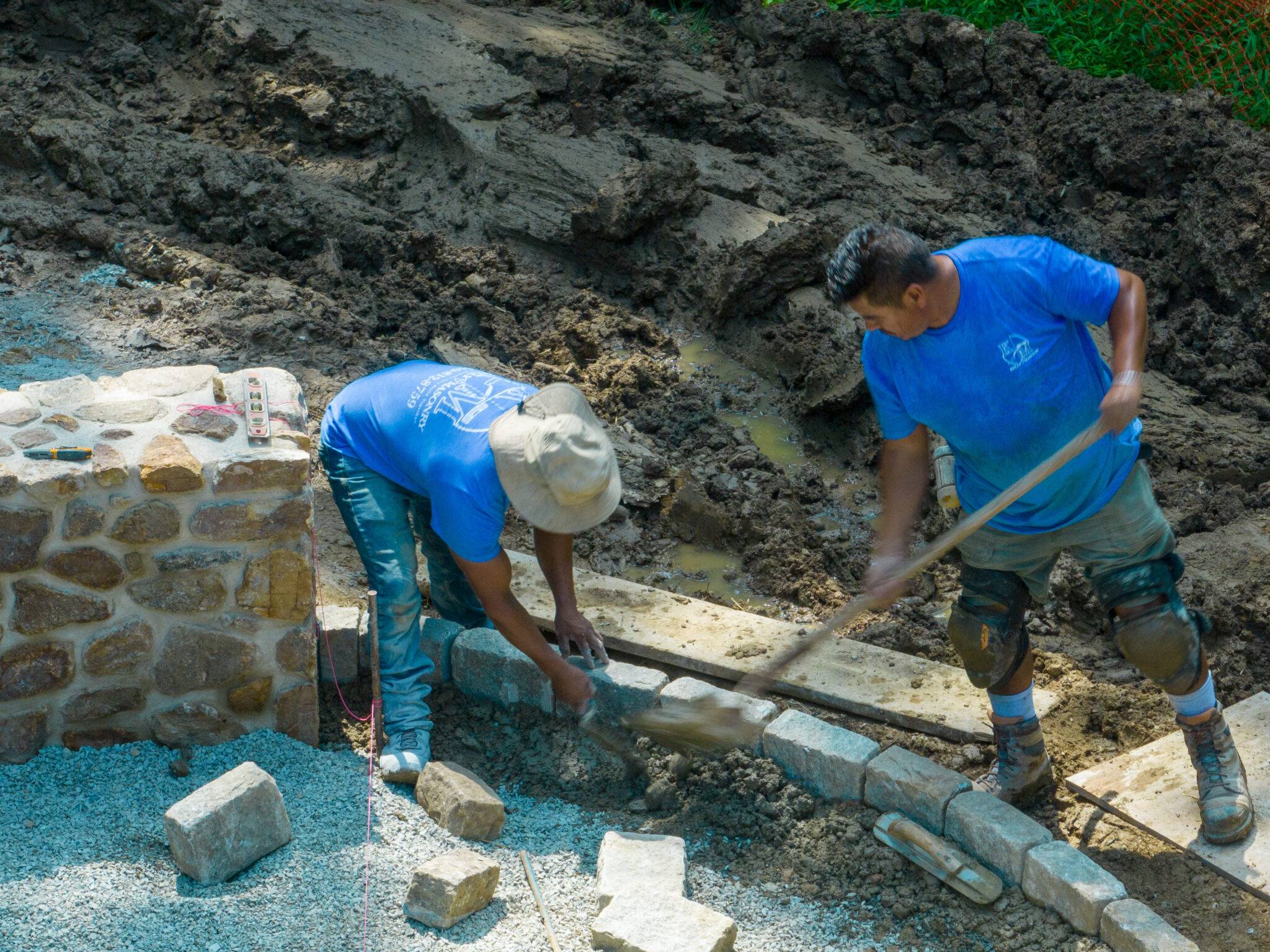
The most important part of a permeable-paver installation is often below the pavers. The system may require excavation, separation from the subgrade, open-graded aggregate, a carefully designed reservoir, edge restraint, appropriate joint material, and a plan for overflow or underdrain conditions.
A compacted base for a conventional paver surface is not automatically the correct base for a permeable system. The materials, gradations, voids, depth, and drainage path need to match the system and the manufacturer’s guidance.
Before construction, ask what the design assumes about infiltration and whether the site has a backup plan if the soil accepts water slowly. Ask how the edge will be restrained, how the surface will be cleaned, and how water will be kept away from the foundation.
Delaware County Site Conditions to Evaluate
A Delaware County property may include clay-heavy soil, slopes, mature trees, existing patios, downspouts, retaining walls, older drainage systems, and limited access. These conditions do not automatically rule out permeable pavers, but they affect the design.
Review the following before selecting the surface:
| Site condition | Why it matters |
|---|---|
| Soil infiltration | Determines whether water can move into the ground at the assumed rate |
| Existing grade | Controls where runoff travels before and after the project |
| Downspouts | Concentrated roof water can overload a surface if it is not redirected or managed |
| Foundation proximity | Water should not be directed toward the home without a complete drainage plan |
| Mature roots | Excavation and grade changes can affect trees and the paving system |
| Freeze-thaw exposure | Base preparation, drainage, and joint condition affect seasonal movement |
| Existing walls and steps | Transitions can trap or redirect water if elevations are not coordinated |
| Use and loading | A pedestrian path and vehicle surface have different structural requirements |
If the project connects to a retaining wall or patio, coordinate the surfaces rather than designing them independently. The related retaining-wall permit guide explains why grading, drainage, height, property lines, and local review can matter for wall projects.
Permeable Pavers Compared With Conventional Pavers
Both systems can be attractive and durable when properly designed. The difference is the way the surface and base are intended to handle water.
| Consideration | Permeable pavers | Conventional pavers |
|---|---|---|
| Stormwater intent | Designed to let water pass through joints into a prepared system | Usually directs water across the surface according to the finished slope |
| Base design | Often uses open-graded aggregate and a drainage strategy specific to the system | Uses a base designed for stability and surface drainage |
| Maintenance | Requires attention to joint cleanliness and infiltration performance | Requires joint and surface maintenance, with drainage handled mainly by grade |
| Site suitability | Depends strongly on soil, slope, water table, and system design | Also depends on base and drainage, but does not rely on infiltration in the same way |
| Best decision criterion | Whether the property benefits from and can support the infiltration strategy | Whether the surface, base, grade, and drainage meet the project’s use |
Neither option is automatically the more sustainable choice for every property. A poorly designed permeable system can underperform, while a conventional patio with thoughtful grading and separate stormwater controls may be the more appropriate solution in some locations.
Maintenance Is Part of the Environmental Performance
Permeable paver joints can collect soil, leaves, organic debris, and sediment. If the openings become clogged, infiltration may decline. Maintenance may include sweeping, removing debris, checking low points, correcting localized settlement, and following the paver and joint-material manufacturer’s recommendations.
Ask who will maintain the system and what equipment is appropriate. Do not assume that sealing, pressure washing, sanding, or deicing practices used on a conventional paver surface are automatically suitable for a permeable system.
Snow and ice management also deserves attention in Pennsylvania. Select products and maintenance methods that are compatible with the pavers, joint material, base, and manufacturer guidance. The goal is to protect both the surface and its ability to pass water.
What A Responsible Permeable-Paver Quote Should Explain
A quote should identify more than the paver color and total square footage. It should explain the intended stormwater behavior and the construction assumptions that support it.
| Quote item | What to look for |
|---|---|
| Site evaluation | Soil, grade, existing drainage, utilities, trees, and adjacent structures |
| System design | Paver type, joint material, bedding, base, edge restraint, and overflow plan |
| Excavation and disposal | Depth, unsuitable soil, removal, hauling, and protection of adjacent areas |
| Drainage components | Underdrain, outlet, overflow, downspout coordination, or other site-specific elements |
| Load rating | Confirmation that the system is appropriate for pedestrians, vehicles, or other use |
| Maintenance plan | Sweeping, inspection, joint care, snow and ice approach, and future repairs |
| Local review | Whether zoning, stormwater, building, or other approvals need to be verified |
Avoid a proposal that promises “no runoff” or “no maintenance.” Permeable paving can be a valuable tool, but it is still a constructed system exposed to weather, sediment, traffic, roots, and seasonal change.
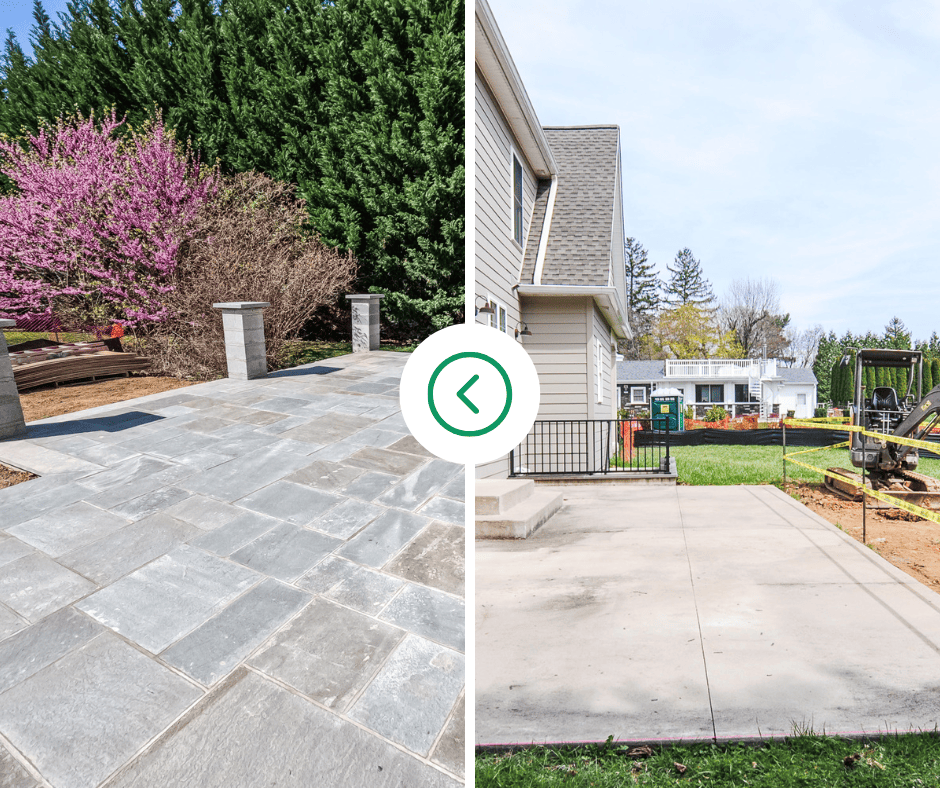
Refreshing an Existing Patio With Permeable Pavers
Replacing a conventional surface with permeable pavers is not simply a matter of removing the top layer and changing the stones. The base, grade, drainage route, edge conditions, and surrounding landscape may all need to be reconsidered.
A retrofit may involve lifting existing pavers, excavating additional material, adjusting downspouts or drainage, protecting a foundation, rebuilding the base, and reconnecting steps or walls. In some properties, the existing grade or soil makes a different stormwater strategy more appropriate.
Kelly Masonry’s existing patio maintenance and repair resources may help homeowners distinguish routine surface care from a larger foundation or drainage project. A site consultation is still necessary before selecting a retrofit approach.
A Practical Checklist for Delaware County Homeowners
Before selecting permeable paving, answer these questions:
- Where does water currently collect after rain?
- Does the site receive runoff from a roof, slope, driveway, or neighboring area?
- What does the soil and subgrade allow the system to do?
- Is the surface for walking, dining, vehicles, or mixed use?
- How will the edges connect to steps, walls, planting, and the house?
- What happens when the soil is saturated or rainfall exceeds the design condition?
- Who will maintain the joints and inspect the surface?
- What requirements apply in the local municipality?
- What will the completed system look like from the house and yard?
- What is included in the quote below the visible pavers?
The answers matter more than a generic claim that permeable paving is environmentally friendly.
A More Responsible Way to Think About Sustainability
Permeable pavers can support a sustainable hardscape plan when the system matches the site and is maintained. EPA and PennDOT both describe permeable or pervious pavement as a way to help manage runoff and support infiltration or groundwater recharge, but neither source turns the material into a universal solution for every residential property.
For a Delaware County homeowner, the sustainable decision may involve several coordinated elements: an appropriately sized patio, thoughtful grading, protected soil, managed downspouts, durable materials, planting, and a maintenance plan. The best design is the one that performs honestly under the conditions of the property.
Conclusion: Choose the System That Fits the Site
Permeable pavers can be an attractive option for an eco-friendly patio, walkway, or selected driveway area, but the success of the project depends on the layers below the surface. Evaluate soil, grade, water, load, maintenance, and local requirements before choosing the paving system.
Kelly Masonry can discuss how permeable paving might fit into a larger patio, walkway, retaining-wall, or outdoor-living plan. Contact Kelly Masonry to request a site-specific consultation rather than relying on a generic product promise.
FAQs
Do permeable pavers eliminate the need for drainage?
No. They can help manage water at the surface, but the system still needs a plan for soil infiltration, overflow, saturated conditions, downspouts, grades, and nearby foundations.
Are permeable pavers more expensive than conventional pavers?
The answer depends on excavation, base design, drainage components, materials, access, site conditions, and maintenance requirements. Compare complete system scopes rather than only the visible paver price.
Are permeable pavers suitable for a driveway?
They may be suitable when the selected system is designed and rated for vehicle loading and the site can support the required drainage approach. A pedestrian patio and a driveway should not be treated as the same application.