When homeowners think about improving curb appeal, they often focus on landscaping, lighting, or the front entry itself. But one feature that has a surprisingly big impact on both appearance and functionality is the front walkway.
A well-designed walkway does more than simply connect the driveway or sidewalk to the front door. It helps shape the experience of approaching the home, guides guests naturally through the landscape, and contributes to the overall feel of the property.
One of the most common questions homeowners ask during the planning process is:
“How wide should a front walkway be?”
The answer depends on the style of the home, how the walkway will be used, and the overall layout of the property. For homes throughout the Main Line and Delaware County, walkway width can make the difference between an entrance that feels welcoming and one that feels cramped or out of proportion.
Here’s what homeowners should know when planning a new front walkway.
Why Walkway Width Matters
Walkway width affects more than just appearance.
A walkway that is too narrow may feel awkward, difficult to walk on, or out of scale with the home. A walkway that is too wide can overwhelm the landscape or make the entrance feel overly formal.
The right width helps create:
- Comfortable walking space
- Better flow from the driveway or sidewalk
- Improved curb appeal
- A more balanced relationship with the home’s architecture
For many older homes in the Main Line area, proportion and material selection are especially important. A thoughtfully designed walkway should feel like it belongs with the home rather than appearing like an afterthought.
Standard Front Walkway Widths
Most front walkways typically fall between:
- 3 feet wide
- 4 feet wide
- 5 feet wide or more
Each width creates a different experience.
3-Foot Walkways
A 3-foot-wide walkway is generally considered the minimum practical width for a residential path.
This size works best for:
- Smaller homes
- Secondary garden paths
- Less frequently used walkways
While functional, a 3-foot walkway usually only allows one person to walk comfortably at a time.
For larger homes or main front entrances, this width can sometimes feel too narrow.
4-Foot Walkways
For many homes, especially throughout Delaware County and the Main Line, a 4-foot walkway is often the “sweet spot.”
A 4-foot width:
- Feels comfortable and welcoming
- Allows two people to walk side-by-side more easily
- Works well with a wide range of architectural styles
- Creates a balanced appearance for most front entrances
This is one of the most common walkway widths used in residential masonry projects because it provides both function and good visual proportion.
5-Foot and Wider Walkways
Larger homes or more formal entrances may benefit from wider walkways.
A 5-foot or wider walkway can:
- Create a more grand or elegant entrance
- Improve flow for higher-traffic areas
- Better complement large front facades
- Provide additional space around landscaping features
For estate properties or homes with expansive front yards, wider walkways often feel more appropriate and proportional to the scale of the property.
How Architecture Influences Walkway Width
One of the biggest factors in choosing the right walkway width is the style and scale of the home.
For example:
Historic Main Line Homes
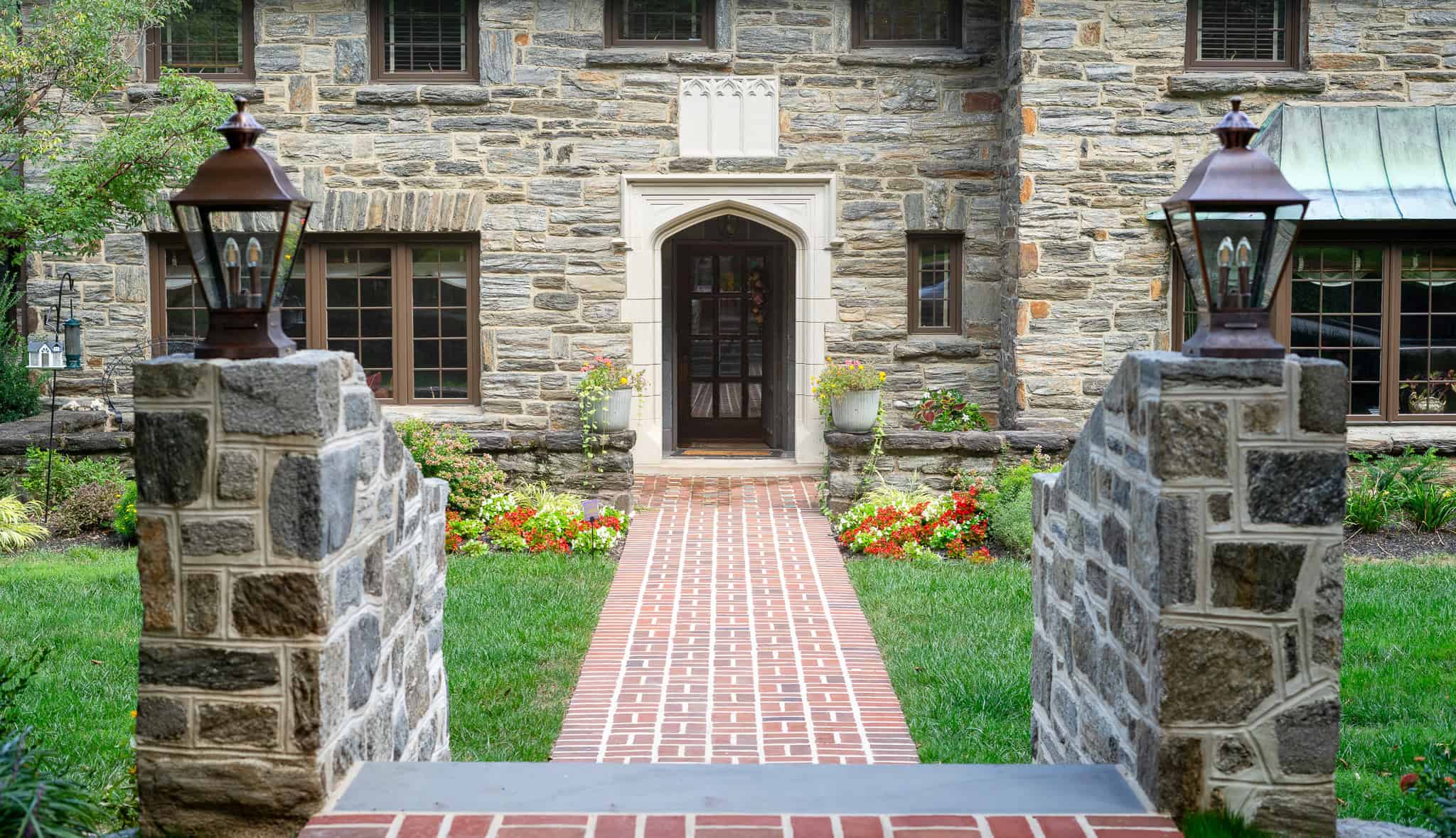
Many older stone or brick homes throughout the Main Line benefit from walkways that feel timeless and balanced.
Materials like:
- Reclaimed brick
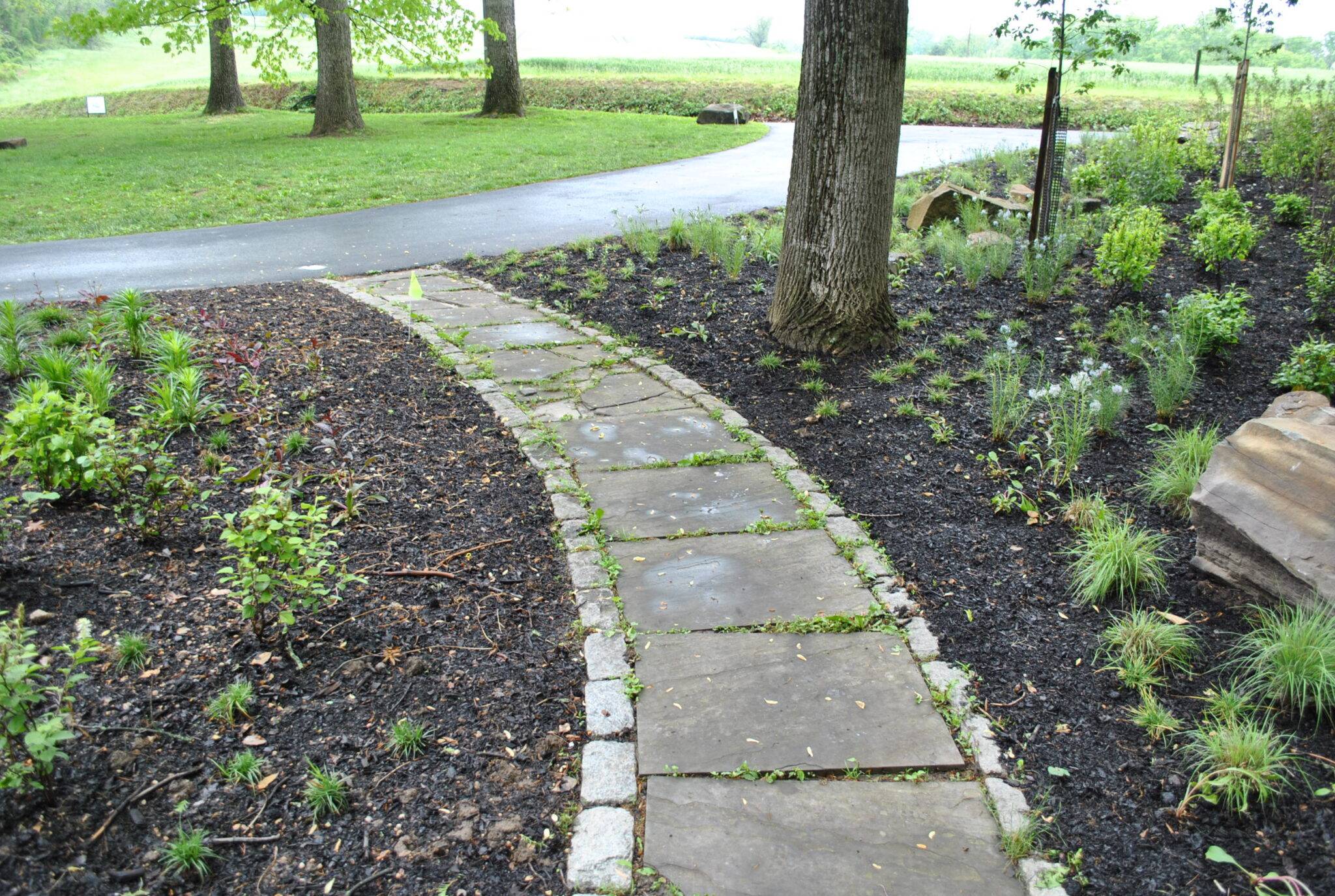
- Bluestone
- Natural flagstone
often pair well with widths that complement the traditional architecture without overpowering the landscape.
A walkway that is too wide can sometimes feel out of character for an older home.
Contemporary Homes
Modern homes often feature cleaner lines and more expansive layouts.
These homes may work well with:
- Wider walkways
- Large-format pavers
- Geometric layouts
The architecture itself usually guides the scale of the walkway.
Walkway Width and Landscaping
Landscaping also plays an important role in determining the ideal width.
A narrow path surrounded by mature plantings may feel enclosed or crowded over time. On the other hand, a slightly wider walkway can help create breathing room and improve flow through the landscape.
When planning a walkway, it’s important to think about:
- Future plant growth
- Retaining walls or edging
- Lighting placement
- Drainage and grading
The walkway should work together with the surrounding landscape rather than competing with it.
Why Curves and Layout Matter Too
Width is important, but so is the overall layout of the walkway.
A straight walkway often creates a more formal appearance, while curved paths can feel softer and more natural within the landscape.
The best walkway designs consider:
- The home’s architecture
- The slope of the property
- Existing landscaping
- How people naturally move through the space
For homes with elevation changes or sloped front yards, curves and gradual transitions can help create a more comfortable walking experience.
Materials Can Affect the Feel of the Walkway
The material you choose also influences how wide the walkway feels visually.
For example:
Brick Walkways
Brick naturally creates texture and pattern, which can make a walkway feel warm and inviting even at narrower widths.
Brick is especially popular for:
- Historic homes
- Colonial-style architecture
- Traditional front entrances
Bluestone Walkways
Bluestone often creates a cleaner, more spacious feel due to its larger surface areas and natural color variation.
This material works well for:
- Formal entrances
- Stone homes
- Transitional outdoor spaces
Natural Flagstone Paths
Flagstone walkways tend to feel more organic and relaxed, especially when integrated into landscaping.
These paths often work beautifully in garden settings or along sloped properties.
Don’t Forget About Functionality
A beautiful walkway still needs to function well in daily life.
When planning width, homeowners should consider:
- Carrying groceries or packages
- Walking side-by-side with guests
- Snow removal during winter
- Accessibility and ease of use
A walkway may look great on paper, but if it feels uncomfortable to use every day, the design may not be practical.
Common Mistakes Homeowners Make
Some of the most common walkway design mistakes include:
Choosing a Walkway That’s Too Narrow
This often happens when homeowners try to minimize cost or preserve landscaping space.
Unfortunately, narrow walkways can feel restrictive and less welcoming.
Ignoring Proportion
A small walkway leading to a large front entrance can look visually unbalanced.
The scale of the walkway should complement the scale of the home.
Focusing Only on Materials
While material selection matters, layout, grading, and proportion are just as important to the final result.
Final Thoughts
So, how wide should a front walkway be?
For most homes, the ideal width is typically between 4 and 5 feet, depending on the style of the home, the layout of the property, and how the space will be used.
The best walkway designs balance:
- Functionality
- Proportion
- Architecture
- Landscaping
- Material selection
A front walkway may seem like a small part of the property, but it has a major impact on curb appeal and the overall experience of arriving home.
When thoughtfully designed and properly built, a walkway becomes more than just a path—it becomes part of the character of the home itself.
Frequently Asked Questions
Is two feet wide enough for a walkway?
Two feet is generally too narrow for a primary residential walkway. It may work only for a constrained garden or maintenance path used by one person at a time.
Is three feet wide enough for a walkway?
Three feet can be adequate for a secondary or space-constrained path. A primary front walkway is usually more comfortable at approximately four to five feet wide.