Polymeric sand can reduce weed growth between pavers, but it cannot guarantee a permanently weed-free patio.
Many weeds begin when windblown seeds settle in dirt, pollen, leaves, or other organic material that has collected on top of the joints. Weeds may also appear where joint material is missing, cracked, shallow, improperly installed, or affected by movement and drainage problems.
The long-term solution is not simply to remove the visible plant. The paver joints, surface drainage, organic buildup, and stability of the patio must also be evaluated.
For a broader explanation of weeds in all types of paver joints, read why weeds keep coming back between pavers.
Polymeric Sand and Weeds at a Glance
| Question | Direct answer |
|---|---|
| Does polymeric sand prevent all weeds? | No. It helps resist weed growth but cannot prevent seeds and organic material from collecting on the surface. |
| Do weeds grow up through the paver base? | Some can, but many begin when airborne seeds germinate in debris inside or above the joints. |
| Can missing sand be topped off? | Sometimes, a thin surface layer over failed material may not last. The existing joint depth and condition must be evaluated. |
| Should polymeric sand be replaced on a schedule? | Inspect it periodically and repair it when joints are low, cracked, loose, contaminated, or missing. |
| Can pressure washing damage the joints? | Yes. Excessive pressure or directing the spray into joints can remove joint material. |
| Does sealing stop weeds? | No. A sealer does not replace missing joint material or correct drainage and movement problems. |
| Is resin jointing material always better? | No. Each joint product has specific applications, joint dimensions, base requirements, and installation instructions. |
| Should polymeric sand be used in permeable pavers? | Generally not unless the complete permeable system and joint product specifically permit it. |
What Is Polymeric Sand?
Polymeric sand is a blend of graded sand and binding additives designed for the joints between compatible pavers and slabs.
After the product is installed, compacted when required, and activated according to its instructions, it becomes firmer than ordinary loose joint sand. This can help stabilize the joints and resist erosion, insects, and weed growth.
Polymeric sand does not replace:
- A stable paver base
- Proper bedding material
- Edge restraints
- Correct joint widths
- Surface grading
- Drainage
- Proper compaction
- Routine cleaning and maintenance
The joint product is only one part of the complete pavement system.
Manufacturers such as Alliance Gator specify exact requirements for joint depth, joint width, surface dryness, compaction, water activation, drainage, temperature, and curing. The instructions for the selected product should always control the installation.
Why Do Weeds Grow in Polymeric Sand?
Airborne seeds settle in the joints
Weed seeds can arrive through wind, rain, birds, foot traffic, lawn mowing, and surrounding landscaping.
When seeds settle in organic debris and remain moist, they may germinate even when polymeric sand is present beneath them.
Leaves and soil create a growing layer
Leaves, grass clippings, pollen, mulch, dust, and soil can collect between pavers. As this material decomposes, it creates a shallow growing medium above the hardened joint.
Regularly removing organic debris is therefore one of the most effective maintenance steps.
The joint material is low or missing
Polymeric sand may erode, crack, loosen, or be removed by cleaning, traffic, movement, or an unsuitable installation.
Low joints create more space for dirt and seeds to collect.
The original installation was incomplete
Polymeric sand must reach the joint depth required by the selected product. A shallow layer placed only near the surface may crack, detach, or wash away.
Installation problems may include:
- Inadequate joint depth
- Incomplete compaction
- Pavers or joints being damp during installation
- Too little or too much activation water
- Sand residue remaining on the paver surface
- Incorrect weather conditions
- An incompatible joint width
- Using the wrong product for the paving system
Pavers are moving
Polymeric sand cannot correct an unstable base, failed edge restraint, settlement, or moving pavers.
Movement may cause the hardened joint material to separate from the sides of the pavers or crack into loose pieces. Replacing the sand without correcting the movement can lead to another failure.
Read about why patio pavers sink and how the underlying problem is repaired.
Water is collecting in the area
Standing water, low spots, blocked drainage, or runoff from adjacent surfaces can support organic growth and contribute to joint deterioration.
Drainage problems should be corrected before repeatedly replacing the same failed joint material. Learn more about patio drainage and water-management systems.
Shade and moisture encourage moss and organic growth
Moss, mold, and similar growth are affected by site conditions such as moisture, shade, limited airflow, poor cleaning, and accumulated organic material.
Changing the joint product alone may not solve a problem caused primarily by the surrounding environment.
How Can You Tell What Is Causing the Weeds?
Begin by inspecting the entire patio rather than only the plants.
The issue may be routine surface maintenance when:
- The pavers remain level and stable
- The joints are still substantially filled
- Only a small number of weeds are present
- Dirt or leaves are visible on the surface
- Water drains normally
- There are no widespread cracks or loose joint material
The joints may need restoration when:
- Sand is visibly low or missing
- The joint material is loose or powdery
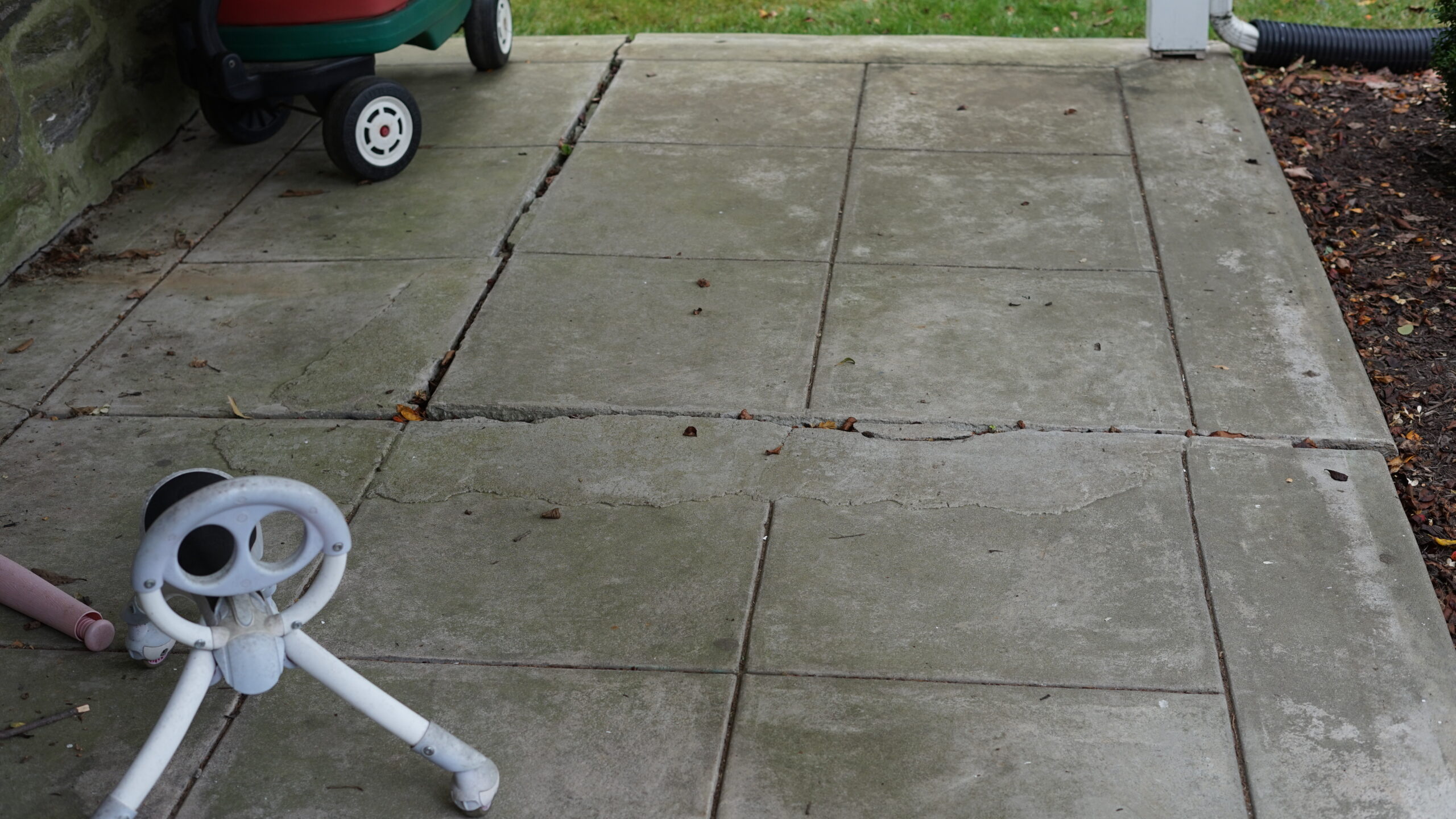
- Sections have cracked or separated
- Pressure washing removed material
- Weeds appear throughout large portions of the patio
- Dirt has accumulated deep in the joints
- Previous surface-only repairs failed
The patio may need more than joint maintenance when:
- Pavers rock or move underfoot
- Multiple pavers have settled
- Joint widths are expanding
- Edges are moving outward
- Water remains on the surface
- The same sections repeatedly fail
- Tree roots or soil movement are affecting the installation
- The patio has significant low spots or trip hazards
In those cases, replacing polymeric sand alone may hide the symptom without correcting the cause.
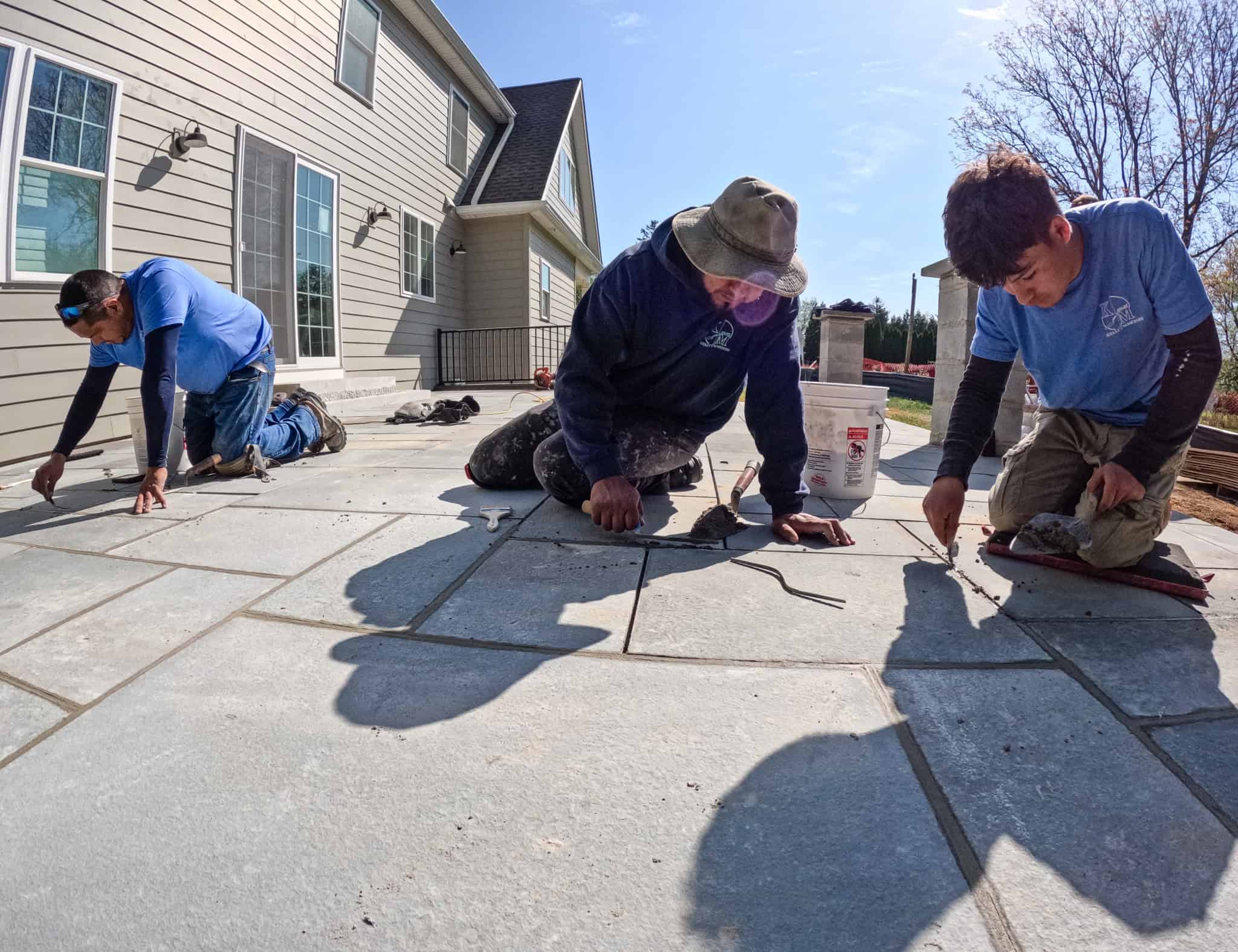
Kelly Masonry provides patio and walkway repair for settled pavers, damaged joints, drainage issues, and other hardscape problems.
How to Reduce Weed Growth in Polymeric-Sand Joints
Keep organic debris off the patio
Sweep or blow leaves, grass clippings, soil, pollen, and mulch from the surface before they settle into the joints.
Pay particular attention to:
- Shaded areas
- Patio edges
- Areas beneath trees
- Spaces beside planting beds
- Drainage paths
- Low sections where debris collects
Remove isolated weeds before they spread
Remove small plants and as much of the root material as practical without damaging the surrounding joints.
After removal, inspect the joint. A weed may reveal that the polymeric sand is low, loose, cracked, or missing.
Use controlled cleaning
A garden hose, broom, or carefully controlled low-pressure cleaning may be sufficient for routine debris.
Do not direct concentrated high pressure into the joints. Aggressive pressure washing can remove joint material and turn a minor weed issue into a larger joint-restoration project.
The Concrete Masonry and Hardscapes Association’s paver-maintenance guidance recommends routine sweeping and notes that low-pressure washing may be used carefully.
Maintain drainage
Keep drains, outlets, downspouts, and surface-flow paths clear.
Correct low areas and water sources that repeatedly saturate the same paver joints.
Inspect the joints regularly
Look for:
- Low sand
- Gaps
- Cracks
- Loose pieces
- Separation from paver edges
- Organic buildup
- Movement
- Washout near downspouts or slopes
Repairing a limited failure early may prevent a more extensive restoration later.
Read more about routine paver-patio maintenance.
Can You Add New Polymeric Sand Over Old Sand?
A small amount of missing material should not automatically be corrected by sweeping a thin layer over the surface.
Polymeric sand performs best when the joint is cleaned to the depth required by the selected product and the new material can be properly consolidated.
A surface-only layer may:
- Be too shallow to remain stable
- Fail to bond to the old material
- Trap dirt or loose particles beneath it
- Crack as the pavers move
- Wash away during rain or cleaning
- Create an inconsistent joint appearance
Sakrete’s guidance for existing patios recommends removing old joint material to the full paver depth before installing new polymeric sand.
The exact preparation should follow the technical data sheet for the chosen product.
How Is Failed Polymeric Sand Replaced?
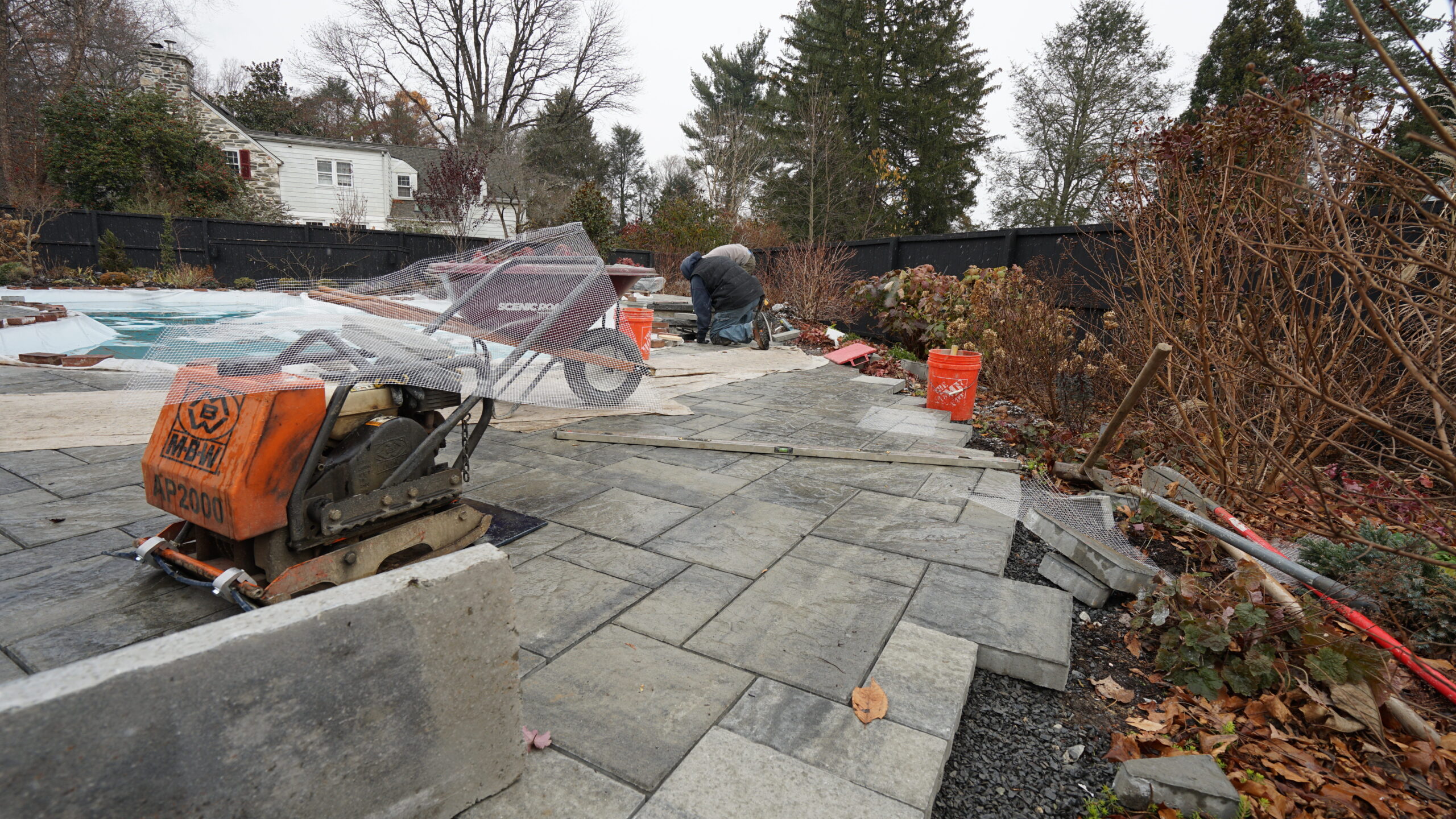
A professional joint-restoration process generally includes:
- Inspecting the pavement: Check paver movement, settlement, edge restraints, drainage, joint width, and the condition of the existing material.
- Removing weeds and debris: Clear plants, roots, dirt, and loose organic material.
- Removing failed joint material: Clean the joints to the depth required by the replacement product.
- Correcting movement or drainage: Reset unstable pavers and address underlying causes before installing new joint material.
- Selecting a compatible product: Match the joint product to the paver type, joint dimensions, traffic, base, exposure, and installation method.
- Allowing required drying: Many polymeric-sand products require completely dry pavers and joints before application.
- Filling and consolidating the joints: Install the material to the manufacturer’s required depth and compact it when the system requires compaction.
- Removing surface residue: Clear remaining dust before activation to reduce the risk of haze.
- Activating the material correctly: Follow the selected manufacturer’s exact watering process.
- Protecting the surface during curing: Observe the required temperature, rain, and traffic restrictions.
Do not use one universal watering method, compactor, joint depth, or curing period for every polymeric-sand product.
Can You Pressure Wash Polymeric Sand?
Pressure washing can remove joint material when the pressure is excessive or the spray is aimed directly into the joints.
Before cleaning:
- Determine whether the existing sand is stable
- Check the equipment pressure
- Use an appropriate nozzle and distance
- Test an inconspicuous area
- Avoid concentrating the spray between pavers
- Follow the paver and joint-product manufacturers’ recommendations
If cleaning removes substantial joint material, the joints may need full preparation and replacement rather than a light surface refill.
Does Sealing Prevent Weeds?
A paver sealer is not a substitute for sound joints and routine maintenance.
Sealing may be appropriate for some concrete pavers, clay pavers, and joint systems. It may help with surface protection or joint stabilization when the sealer and joint product are compatible.
However, sealer will not correct:
- Missing joint material
- Loose pavers
- Settlement
- Failed edge restraints
- Standing water
- Dirt already inside the joints
- Widespread organic buildup
Do not seal newly installed polymeric sand until the joint and sealer manufacturers’ required curing periods have passed.
Sealers and polymeric sand should generally not be used in a permeable-paver system unless the system designer and product manufacturers specifically allow them.
Is There a Better Alternative to Polymeric Sand?
No single jointing material is best for every patio.
The correct choice depends on the paving material, joint width, joint depth, base, traffic, movement, drainage, compaction method, and desired appearance.
| Jointing material | Possible application | Important limitations |
|---|---|---|
| Polymeric sand | Compatible interlocking concrete, clay, or natural-stone paving | Requires product-specific joint dimensions, preparation, compaction, activation, and curing |
| Resin-based jointing compound | Some concrete pavers, slabs, natural stone, wet-cast stone, or porcelain systems | May require wider joints, a drainage base, stable paving, and product-specific depths |
| No-compaction polymeric compound | Some flagstone, natural-stone, slab, and wide-joint installations | Must be selected for the stone, base, joint dimensions, and installation method |
| Clean graded joint aggregate | Purpose-designed permeable-paver systems | Must preserve infiltration and be maintained to prevent clogging |
| Mortar or cementitious joint | Rigid, properly designed mortared masonry installations | Not interchangeable with polymeric sand in a standard sand-set paver patio |
Resin-based jointing materials
Products such as Gator Nitro are ready-to-use resin and aggregate compounds intended for specific paving systems.
Gator Nitro requires product-specific joint widths and depths and must be installed over an approved drainage base. The manufacturer also notes that paving movement can cause cracking or separation.
That makes it an option for appropriate projects, not a universal upgrade for every patio.
No-compaction products for wider joints
Products such as Techniseal NOCO are designed for certain flagstone and wide-joint applications where conventional mechanical compaction may not be appropriate.
The product must still be matched to the paving material, joint width, base, traffic, and exposure.
Permeable-paver joint aggregate
A permeable pavement relies on open, clean aggregate joints to allow water to enter the system.
The Concrete Masonry and Hardscapes Association advises against using polymeric sand or sealers in permeable-paver joints because those materials can restrict infiltration.
How Often Should Polymeric Sand Be Replaced?
There is no universal replacement schedule.
Inspect the joints and act when conditions indicate that maintenance is needed.
Replacement may be appropriate when:
- Sand is substantially missing
- Joints are contaminated with soil
- The material is loose or powdery
- Cracks are widespread
- The product has separated from the pavers
- Weeds repeatedly return throughout the area
- Previous surface repairs have failed
- Cleaning removed a significant amount of joint material
A stable patio may need only routine cleaning for an extended period. Another patio may need earlier restoration because of movement, runoff, shade, traffic, installation problems, or aggressive cleaning.
Kelly Masonry offers customized masonry and hardscape maintenance plans for homeowners who prefer professional inspection and care.
When Should You Call a Professional?
Professional evaluation is advisable when:
- Pavers are sinking or moving
- Joint widths are changing
- Large areas of polymeric sand have failed
- Water remains on the patio
- Weeds return throughout the surface
- A previous joint replacement failed
- The installation includes natural stone or unusually wide joints
- The paving is installed over concrete
- The patio is intended to be permeable
- Edge restraints are damaged
- You are unsure which joint product was originally used
The goal should be to identify why the joints failed before choosing a replacement product.
Frequently Asked Questions
Why are weeds growing even though I have polymeric sand?
Weeds can grow when seeds and organic debris collect above the joints. They may also appear where the sand is missing, shallow, cracked, loose, or affected by movement and drainage problems.
Does polymeric sand completely stop weeds?
No. It helps resist weed growth but does not prevent windblown seeds, soil, leaves, or moss from collecting on the surface.
Can weeds grow from beneath pavers?
Some established plants or roots may emerge from below, particularly where joints are open or the installation is heavily contaminated. However, many weeds begin when seeds germinate in debris that has accumulated above the joint material.
Can I sweep new polymeric sand over the old sand?
A thin surface layer may not last. The existing joint material should be evaluated and may need to be removed to the depth required by the replacement product.
Should I remove all the old polymeric sand?
Full removal may be necessary when the material is contaminated, loose, cracked, shallow, or incompatible with the replacement product. Follow the selected manufacturer’s preparation requirements.
Can I pressure wash polymeric sand?
Yes, with caution. Excessive pressure or a concentrated spray can remove joint material. Use controlled cleaning and avoid directing the spray into the joints.
Does polymeric sand need to be sealed?
Not necessarily. Sealing depends on the paver, sand, exposure, and product compatibility. A sealer is not a weed-control substitute.
Why is my polymeric sand still soft?
Possible causes include incomplete activation, wet installation conditions, inadequate joint depth, incompatible temperatures, insufficient compaction, or product-specific curing conditions. Check the technical instructions for the installed product.
Why is polymeric sand cracking?
Cracking may result from shallow material, moving pavers, inadequate compaction, unsuitable joint dimensions, base failure, or an incompatible product.
Can polymeric sand be used between flagstones?
Some polymeric or resin jointing products are designed for natural stone and wider joints, but ordinary paver sand is not suitable for every flagstone installation. Select a product approved for the stone, joint width, depth, and base.
Can polymeric sand be used in permeable pavers?
Traditional polymeric sand is generally not appropriate for a purpose-designed permeable-paver system because it can restrict infiltration. Use the specified clean joint aggregate for the complete system.
How long does polymeric sand last?
There is no single lifespan. Performance depends on the product, installation, base stability, drainage, traffic, cleaning, climate, and maintenance.
About the Author
John Kelly is the founder of Kelly Masonry and has more than 25 years of masonry and hardscape experience. His team installs, maintains, and repairs paver patios, walkways, natural stone, drainage systems, and outdoor living spaces throughout Delaware County, the Main Line, and surrounding Pennsylvania communities.
Reviewed by: John Kelly
Last updated: July 29, 2026
Need Help With Weeds or Failing Paver Joints?
Kelly Masonry can evaluate the condition of your pavers, joints, base, edge restraints, and drainage before recommending maintenance or repair.
Review our patio and walkway repair services, explore our maintenance plans, browse completed outdoor projects, or request a consultation.