The right way to fix settling pavers depends on why they moved. A small isolated dip may be repairable by lifting the affected pavers, correcting the base, and reinstalling them. Widespread settling, recurring puddles, edge movement, or a patio that pitches toward the house may require a larger foundation and drainage repair.
The important point is that pavers are usually not the root cause. The visible stones are often showing what happened beneath them: inadequate compaction, washed-out bedding material, unstable soil, drainage problems, tree-root movement, or freeze-thaw stress. This guide explains how to evaluate the problem before choosing a repair.
First Diagnose the Pattern, Not Just the Lowest Stone
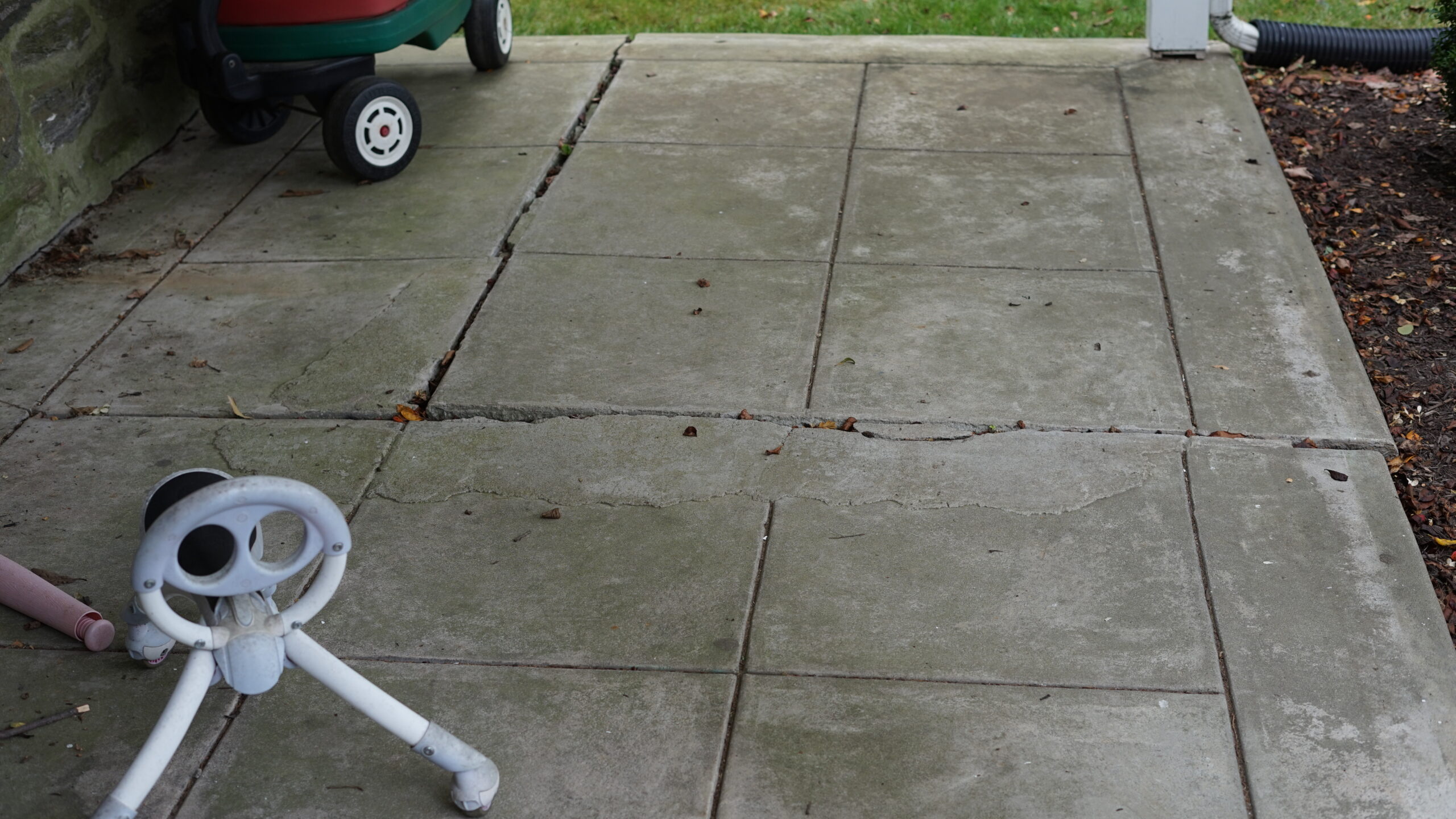
Walk the entire patio, walkway, or driveway before removing anything. Mark low spots, raised edges, cracked joints, loose border units, puddles, and areas that feel unstable underfoot. Note whether the movement is near a downspout, foundation wall, step, tree, edge restraint, or transition to another surface.
A single low paver and a broad depression do not point to the same repair. The pattern helps determine whether the problem is localized or whether the supporting base has changed across a larger area.
| What you observe | What it may suggest | What to investigate |
|---|---|---|
| One or two low pavers | Local base loss or isolated disturbance | Bedding layer, joint condition, and nearby water flow |
| A broad settled area | Base compaction or subgrade failure | Excavation depth, aggregate condition, soil, and drainage |
| Raised and lowered areas after winter | Frost-related movement or trapped water | Drainage, base composition, and wet subgrade |
| Puddles that remain after rain | Low grade or poor drainage | Surface pitch, downspouts, outlets, and infiltration |
| Edge pavers spreading | Failed edge restraint or lateral movement | Restraint, compacted base, and traffic loading |
| Settling beside the house | Drainage or foundation-adjacent issue | Downspouts, foundation grade, and water entry risk |
Kelly Masonry’s existing page on why patio pavers sink explains that base preparation, compaction, drainage, soil, and frost movement can all contribute to settling. This repair guide focuses on what to do after those possibilities are identified.
The Common Causes of Uneven Pavers
Inadequate base preparation
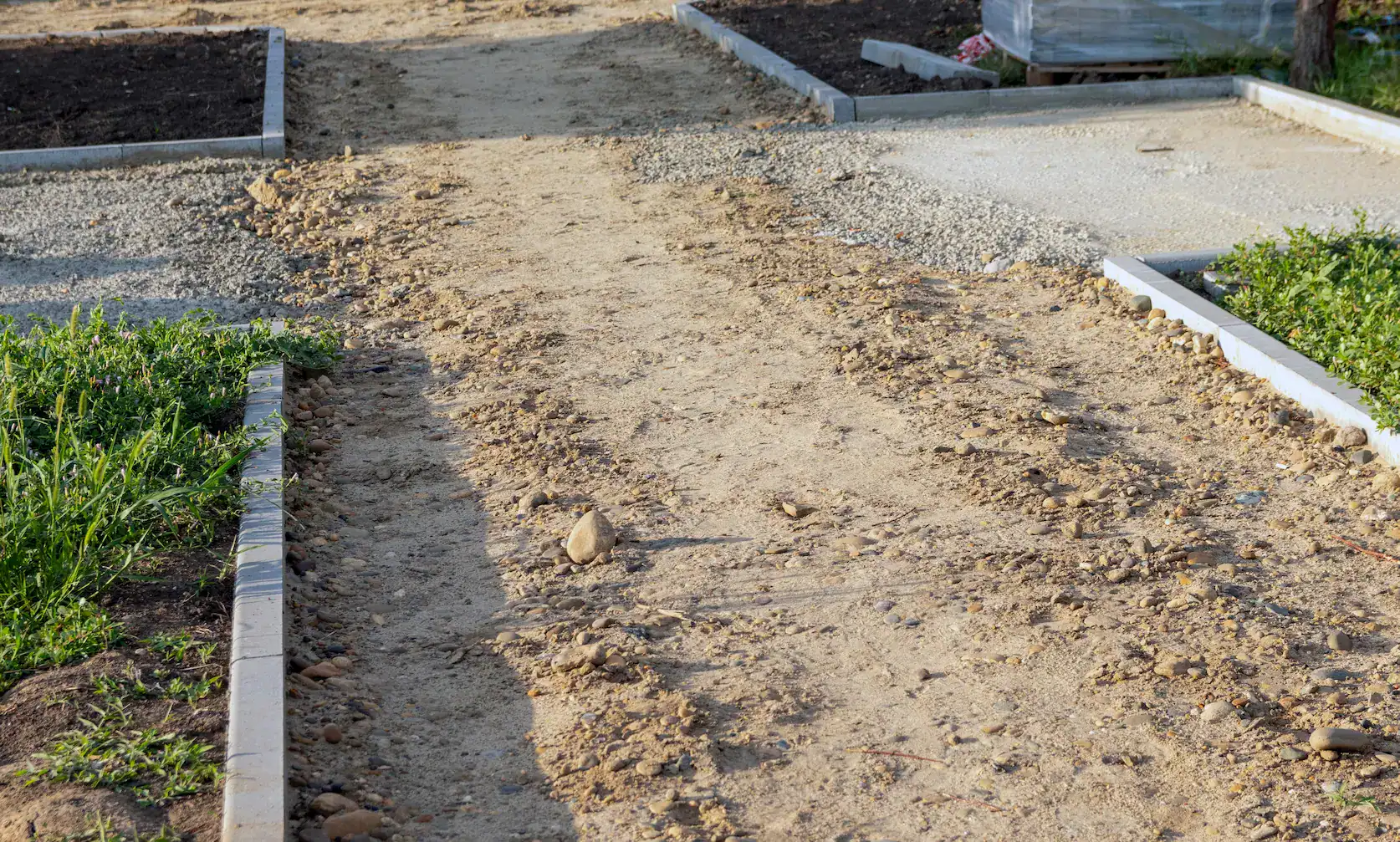
A paver surface depends on the compacted layers beneath it. If the original installer excavated too shallowly, used unsuitable aggregate, or compacted too much material at once, the base may compress later under weather, water, furniture, vehicles, or foot traffic.
Water moving through or beneath the surface
Water can wash fines from an edge, soften subgrade, carry bedding material away, or remain trapped during freezing weather. Downspouts that discharge beside the patio can create a recurring problem even if the original paver installation was sound.
Soil movement and freeze-thaw cycles
Clay-heavy or wet soils can change volume as moisture and temperature change. In winter, water that freezes beneath the surface can lift pavers. When the ice melts, the units may settle into a different position.
Failed edge restraint
Pavers rely on stable edges to resist spreading. If the restraint is missing, damaged, or installed on an unstable base, traffic and seasonal movement can open joints and allow the field to migrate.
Roots, utilities, or later excavation
Tree roots can lift pavers, while utility work, drainage repairs, and additions can disturb a previously stable base. A repair should identify the cause rather than simply disguise the high spot.
Can You Fix a Small Settled Area?
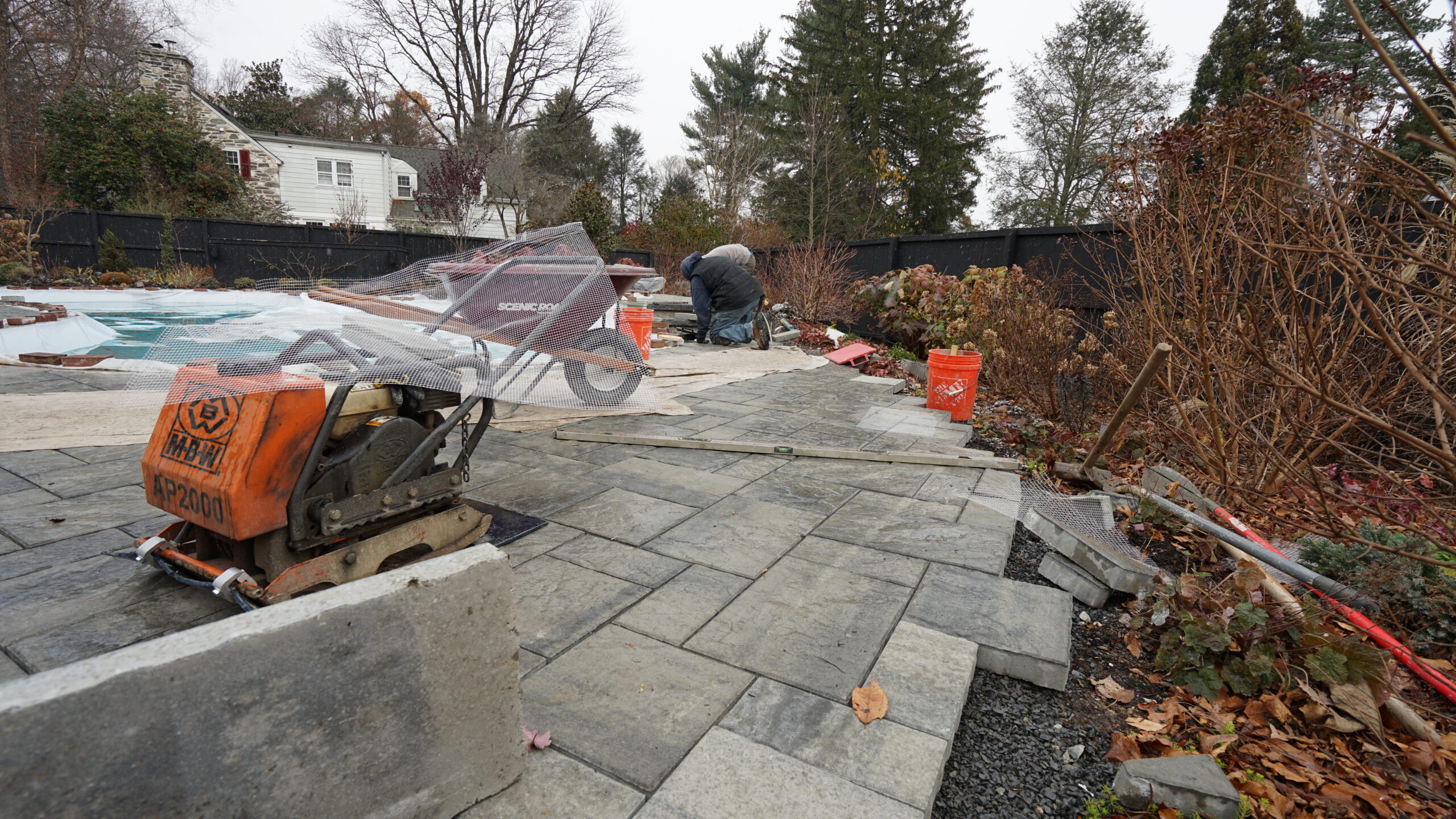
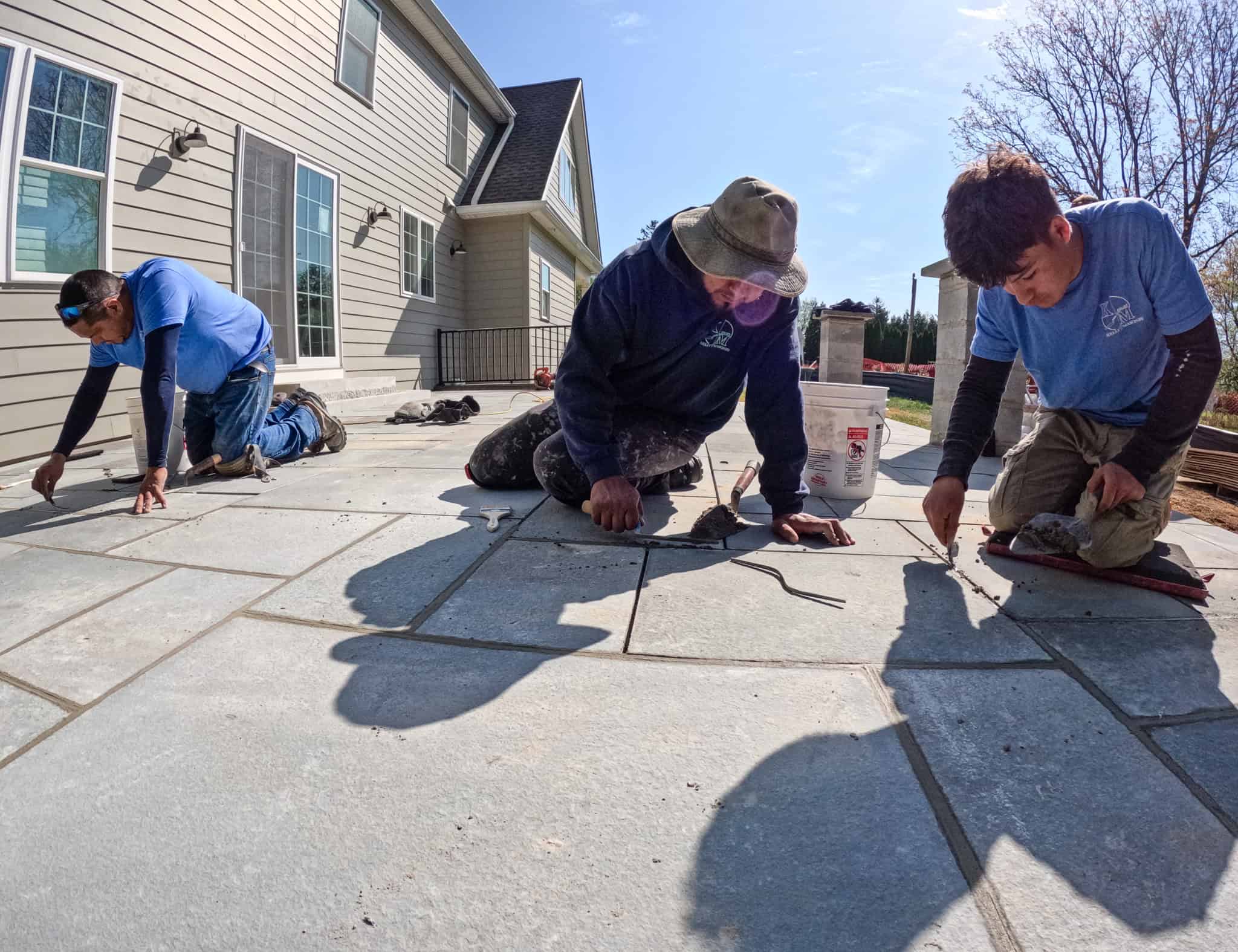
A localized repair may be reasonable when the surrounding field is stable, drainage is functioning, the edge is secure, and the affected area is genuinely small. The typical sequence is to remove the pavers, clean and inspect them, correct the base or bedding layer, compact the repair area, reinstall the stones, and restore the joints.
The repair should match the existing pattern and elevation. Adding loose sand under the stones without correcting the base may improve the appearance briefly but does not create a durable foundation. The same is true of adding material on top of a wet or contaminated subgrade.
Do not begin with a shovel if you cannot explain why the area settled. First determine whether the low spot is caused by soil, water, edge failure, or a larger base problem.
When a Foundation Rebuild Is the Better Repair
A larger repair may be appropriate when the patio has widespread unevenness, recurring puddles, multiple frost-related movements, open edges, or a slope toward the house. A foundation rebuild may involve lifting and storing usable pavers, excavating failed material, correcting drainage, rebuilding the aggregate base in compacted layers, reinstalling the surface, and restoring edges and joints.
The pavers may be reusable if their surfaces and edges remain in good condition. Reuse is not automatic, however. Stones that are cracked, severely chipped, stained by an underlying problem, or dimensionally inconsistent may not be suitable for every portion of the rebuilt area.
| Repair approach | Best fit | Main limitation |
|---|---|---|
| Localized lift and reset | Small isolated dip with stable surrounding base | Will not solve widespread foundation or drainage failure |
| Edge repair | Spreading border or loose perimeter | The adjacent base may still need excavation and compaction |
| Drainage correction | Puddles, downspout discharge, or wet subgrade | May require work beyond the visible paver area |
| Partial foundation rebuild | One defined section has failed | The transition to stable areas must be carefully tied together |
| Full rebuild and reinstall | Broad settling, recurring movement, or failed base | Larger scope, but it addresses more of the underlying problem |
How to Handle a Patio That Is Sinking Toward the House
Treat water that moves toward the home as a priority. A low patio can direct runoff against the foundation, door threshold, window well, or basement wall. The appropriate response may involve regrading, downspout changes, drainage collection, a rebuilt base, or a combination of measures.
Do not assume that adding joint sand will change the slope. Joint material can help stabilize the surface after proper installation, but it does not replace grading or structural base work.
If you see water entering the basement, erosion beside the foundation, or a downspout discharging into the settled area, document it before the repair consultation. Photos taken during and after rain can be more useful than a dry-weather image.
A Real Customer Review, Without Overgeneralizing It
The user-supplied Google review from Kyle Duffy describes a paver repair experience with Kelly Masonry. The reviewer wrote: “Searched for over a year for someone to come out and fix our loose pavers. Kelly Masonry was out within a week and had the issues fixed. Very professional company and would recommend and use in future.” The review displays five stars.
That review records one customer’s experience, including the timing reported by that customer. It is not a promise that every repair will begin within a week. The scope, access, weather, materials, and scheduling conditions need to be evaluated for each property.
Get the Right Paver Repair for the Problem
Uneven or settling pavers are usually a sign of an underlying issue, not just a surface problem. The right repair should address what caused the movement, whether that is base failure, drainage, edge restraint, or another site condition.
Before moving forward, make sure the repair plan considers the surrounding patio, driveway, retaining walls, landscaping, and drainage so the problem is less likely to return.
If your pavers are loose, uneven, sinking, or creating a trip hazard, contact Kelly Masonry to have the area evaluated and discuss the best repair approach for your property.
Planning a larger patio project instead? Compare your options in our guide to paver patios vs. concrete.
Paver Repair FAQs
Can I fix settling pavers by adding sand?
Sometimes a very small bedding correction is part of a proper repair, but loose sand alone does not fix a failed base, drainage problem, frost movement, or unstable soil. Diagnose the cause before selecting the repair.
Should I replace the pavers or rebuild the base?
If the pavers are structurally sound, they may be reusable after the base is corrected. Replacement is more likely when units are damaged, unavailable, severely worn, or incompatible with the repaired area.
How do I know whether the entire patio needs to be rebuilt?
Look for widespread settling, recurring puddles, movement across several areas, failed edges, severe winter displacement, or a grade that directs water toward the house. A site inspection can distinguish a local repair from a broader rebuild.