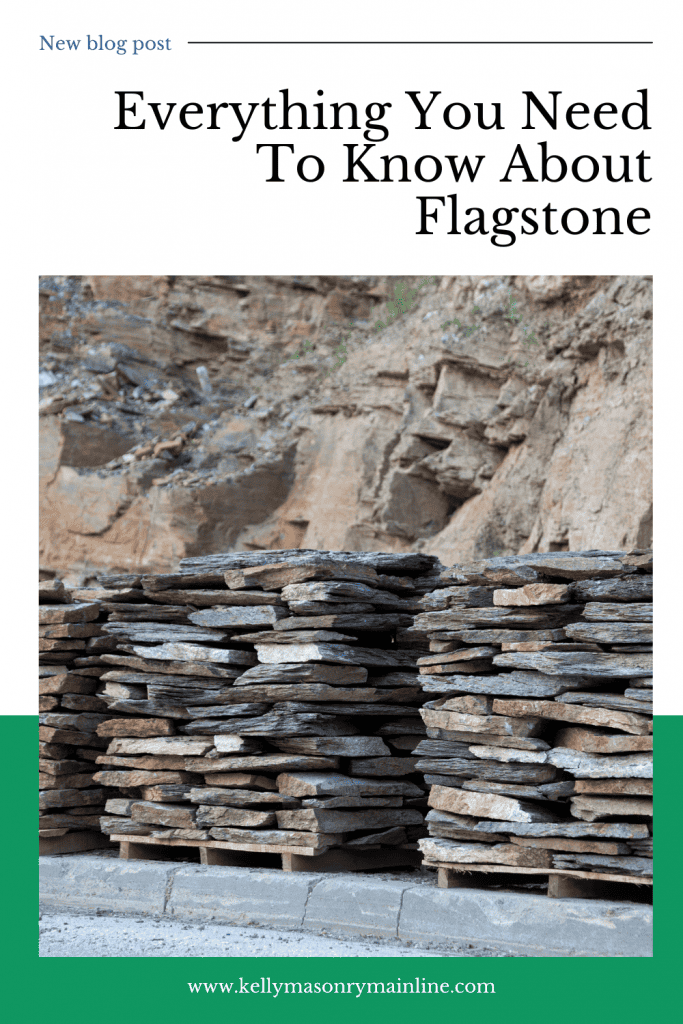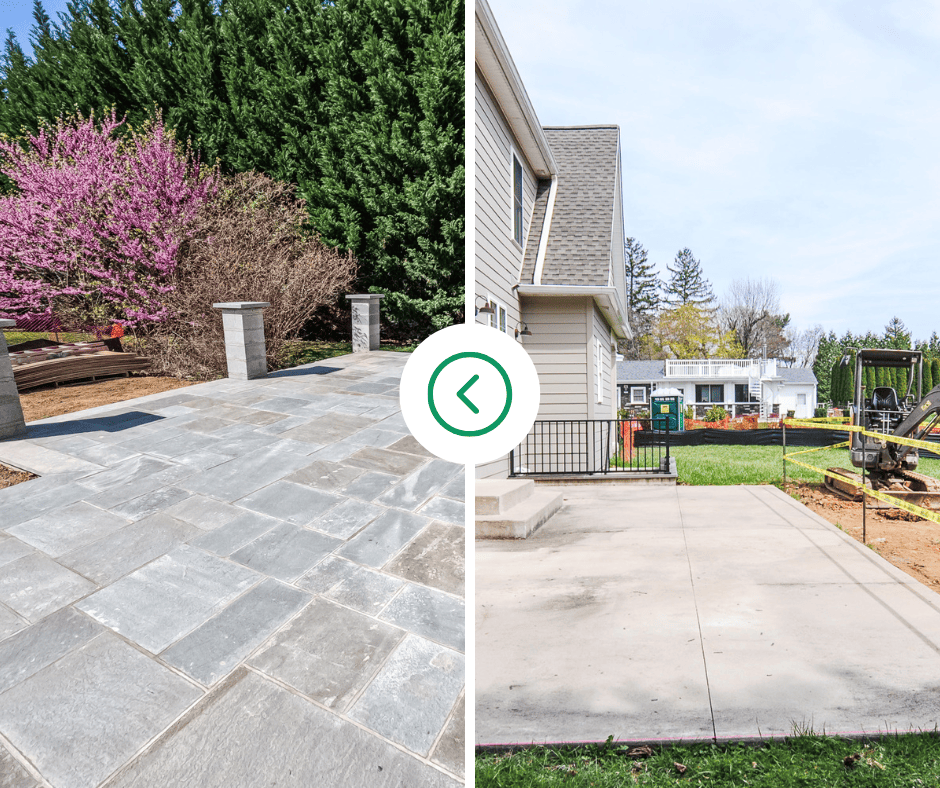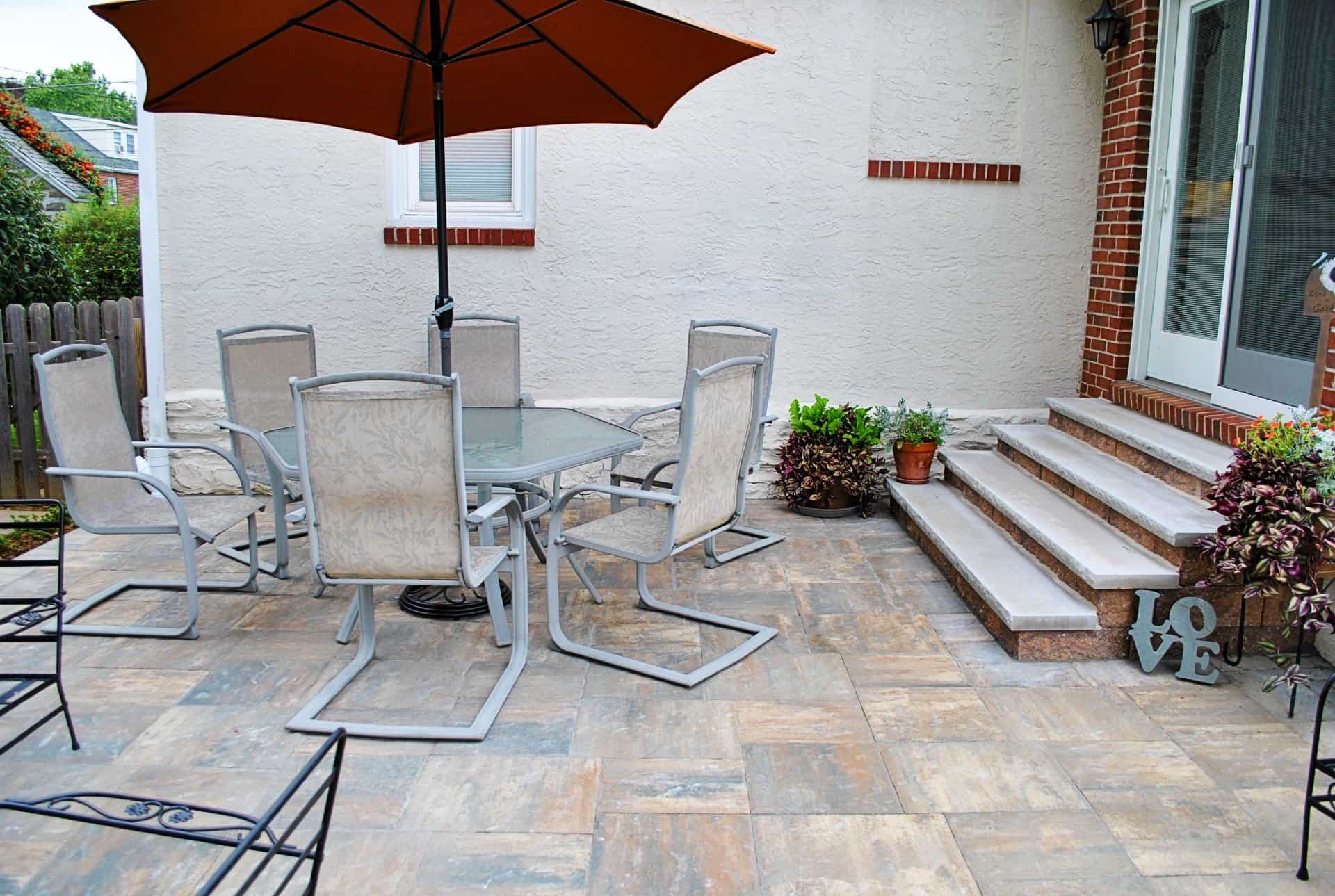

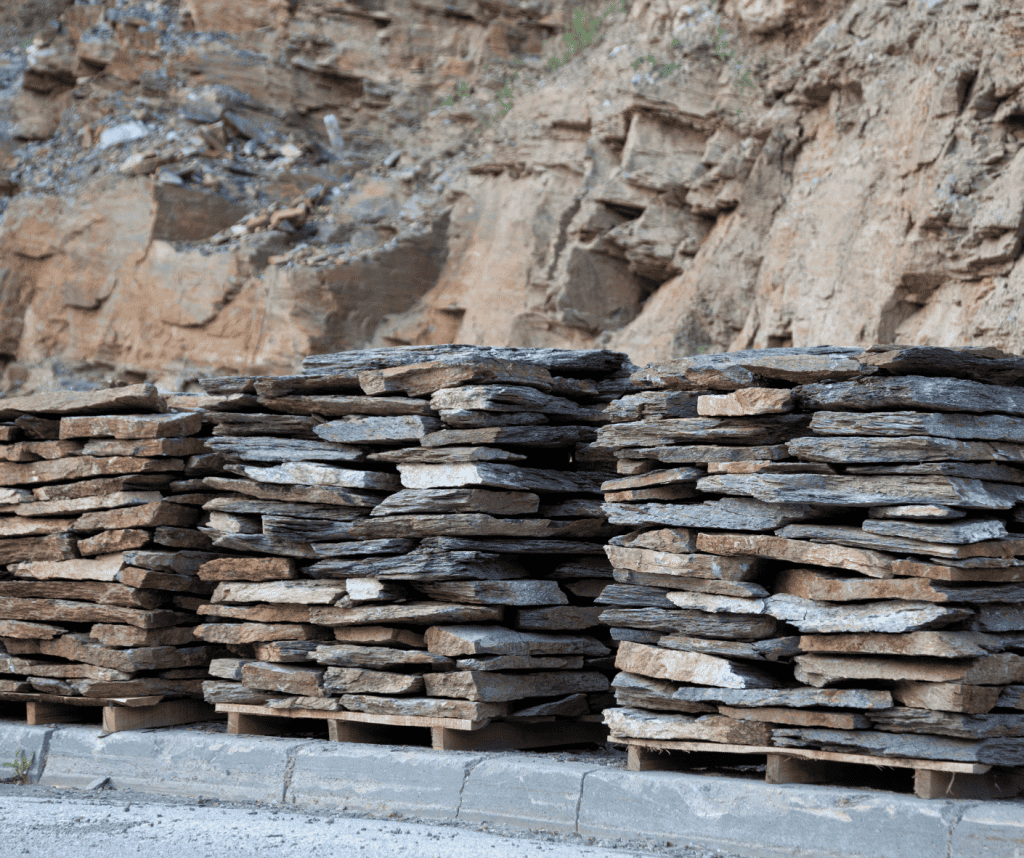
Flagstone is a general term for flat pieces of natural stone used to build patios, walkways, stepping-stone paths, pool surrounds, and other landscape features. It is not one specific geological type of stone.
Products sold as flagstone may include sandstone, slate, limestone, quartzite, Pennsylvania bluestone, and other natural stones. Each material has different characteristics, so homeowners should evaluate the specific stone rather than assuming every flagstone product will perform the same way.
This guide explains flagstone types, costs, installation systems, drainage, maintenance, repairs, and how natural stone compares with manufactured pavers.
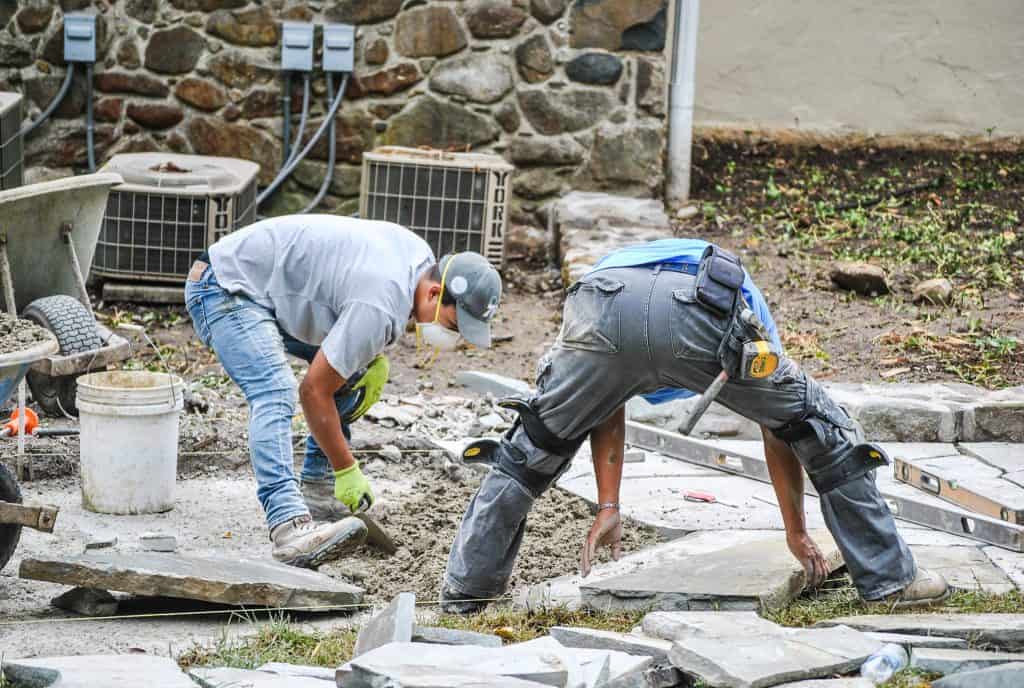
Homeowners planning a new project can explore Kelly Masonry’s professional patio installation services or request a consultation.
Flagstone at a Glance
| Question | Direct answer |
|---|---|
| What is flagstone? | Flat pieces of natural stone used for paving and landscape construction |
| Is flagstone one type of rock? | No. Flagstone may be made from sandstone, slate, limestone, quartzite, bluestone, or another suitable natural stone |
| Where is flagstone used? | Patios, walkways, steps, pool surrounds, garden paths, walls, and outdoor living spaces |
| Is flagstone suitable for Pennsylvania? | It can be, but the selected stone and installation system must be appropriate for local freeze-thaw exposure |
| Does flagstone need sealing? | Not always. Sealing depends on the stone, exposure, stain risk, finish, and selected product |
| Is flagstone slippery? | It depends on the stone, surface finish, slope, maintenance, and whether the surface is wet |
| Is flagstone more expensive than pavers? | It is often a premium option because individual stones require additional fitting, leveling, and cutting |
| Can damaged flagstone be repaired? | Often, depending on the condition of the stone, joints, base, drainage, and surrounding installation |
What Is Flagstone?
Flagstone is a construction and landscape term for natural stone supplied in relatively flat pieces. It describes the stone’s form and use—not one mineral composition or geological category.
The Natural Stone Institute groups natural stone into several commercial categories, including sandstone, quartzite, limestone, and slate. Materials from more than one of these categories can be supplied as flagstone.
Flagstone may be sold as:
- Irregular pieces with natural edges
- Rectangular or square pattern stone
- Uniform thermal-finished pieces
- Large stepping stones
- Treads and coping
- Thin or thick paving units
The correct product depends on the application, installation system, climate, traffic, and desired appearance.
Is Flagstone the Same as Bluestone?
No. Flagstone is a broad paving format, while bluestone is a commercial name used for certain natural stone products.
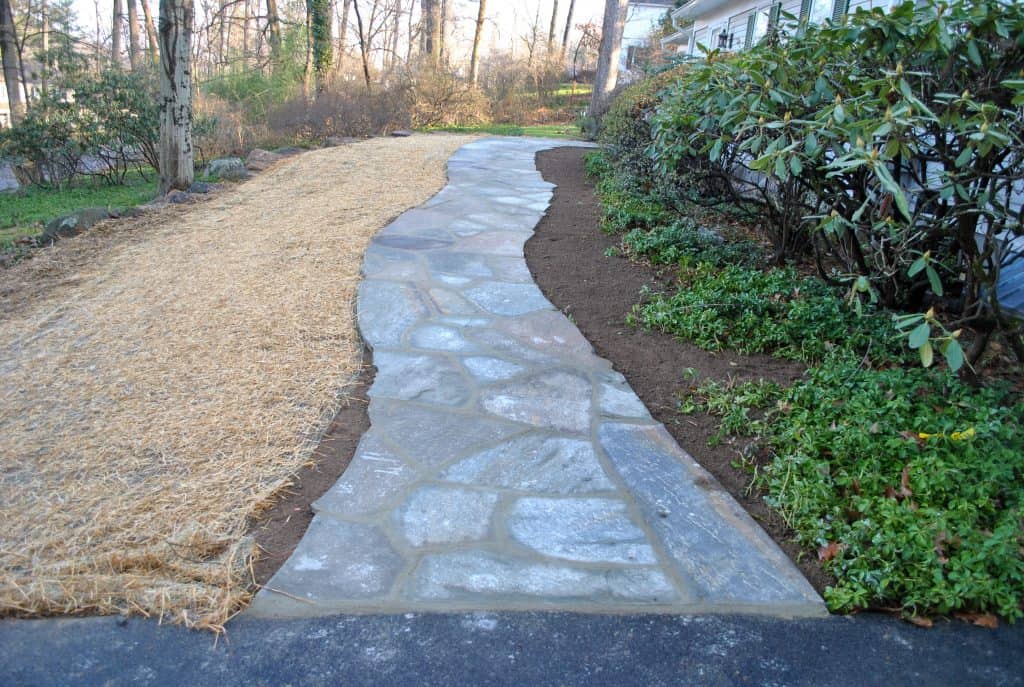
Pennsylvania bluestone is commonly available in blue-gray, green, brown, lilac, and mixed “full-color” ranges. It may be supplied as irregular flagstone, rectangular pattern stone, treads, coping, or dimensional pieces.
A homeowner asking for “flagstone” may therefore be considering Pennsylvania bluestone, sandstone, quartzite, limestone, slate, or another flat natural stone.
The stone’s quarry source, geological properties, surface finish, thickness, and installation method matter more than the general flagstone label.
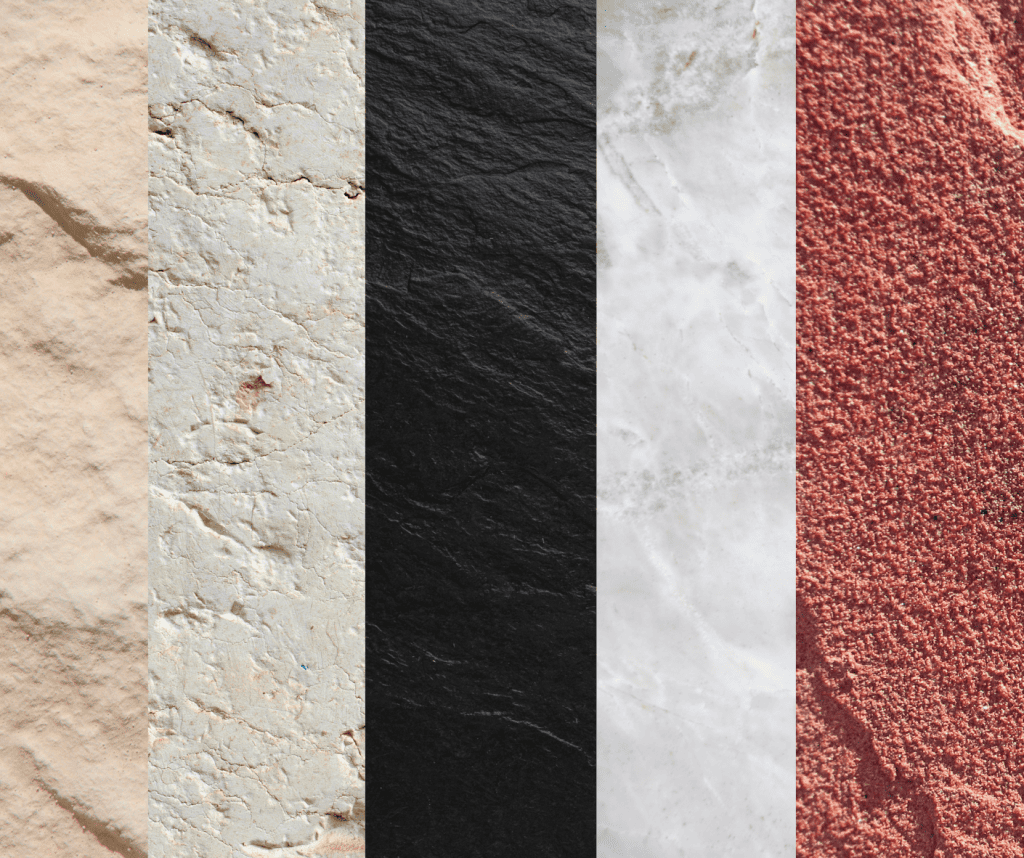
Common Types of Flagstone
| Stone | Typical characteristics | Important considerations |
| Pennsylvania bluestone | Traditional blue-gray or full-color appearance that complements many Main Line homes | Color, surface texture, thickness, and finish vary by product |
| Sandstone | Available in many warm and neutral colors with naturally varied texture | Density and weathering performance depend on the specific sandstone |
| Quartzite | Dense, hard natural stone with strong abrasion and weathering resistance | Can require more cutting labor and may carry a premium material cost |
| Slate | Distinctive layered texture and colors ranging from gray and black to green and purple | Some slate varieties can cleave or flake; exterior suitability must be verified |
| Limestone | Refined appearance with several neutral color options | Not every limestone is appropriate for exterior paving in a freeze-thaw climate |
| Other regional stones | Appearance and properties vary by quarry and stone type | Request technical information and evidence of successful use in comparable conditions |
The Natural Stone Institute’s sandstone and quartzite guide explains that sandstone properties depend heavily on the material binding its grains, while quartzite is a metamorphic stone known for greater density and hardness.
The Institute also notes that relatively few limestone varieties have a proven record in exterior paving exposed to freeze-thaw conditions. That does not make all limestone unsuitable, but it makes product-specific selection especially important.
What Is the Best Flagstone for Pennsylvania?
There is no single best flagstone for every Pennsylvania property.
The selected stone should have a successful record in exterior paving exposed to:
- Freeze-thaw cycles
- Rain and snow
- Deicing products used nearby
- Foot traffic
- Pool or water exposure
- The planned installation system
- The desired surface finish
Before purchasing stone, ask:
- What type of natural stone is it?
- Where is it quarried?
- Is it recommended for exterior horizontal paving?
- Does it have a successful freeze-thaw history?
- What thickness is recommended for the planned installation?
- Is the surface appropriate for wet foot traffic?
- Does the supplier recommend sealing?
- Are matching replacement pieces likely to remain available?
The Natural Stone Institute’s exterior-paving guidance emphasizes evaluating the stone, climate, application, detailing, and complete installation system together.
What Are the Benefits of Flagstone?
Natural appearance
Every piece of natural stone has variations in color, texture, shape, and mineral pattern. This gives flagstone patios and walkways a less uniform appearance than manufactured concrete products.
Compatibility with older homes
Flagstone and Pennsylvania bluestone can complement historic stone, brick, and traditional architecture found throughout the Main Line and Delaware County.
Design flexibility
Flagstone can be installed in irregular layouts, rectangular patterns, garden paths, borders, steps, patios, and combinations with other masonry materials.
Repair potential
Individual stones can often be lifted, reset, or replaced when the surrounding installation remains serviceable. The difficulty of the repair depends on whether the stone is dry-laid or mortared.
Long service life
A suitable natural stone can provide decades of use when the stone, base, drainage, joints, and installation method are appropriate for the property.
What Are the Drawbacks of Flagstone?
Higher installation labor
Natural pieces vary in shape and thickness. Each stone may need to be selected, positioned, leveled, fitted, and cut individually.
Uneven surfaces when poorly installed
Irregular thickness or inadequate base preparation can create rocking stones, lippage, low spots, and trip hazards.
Material-specific performance
Not every stone sold as flagstone is equally appropriate for exterior use, pools, freeze-thaw climates, or high-traffic areas.
Repairs may require matching stone
Natural color and texture vary by quarry and production run. Matching an older patio can become difficult when the original stone is no longer available.
Possible staining or weathering
Some stones absorb moisture or staining materials more readily than others. Surface treatments must be compatible with the specific stone.
Joint maintenance
Dry-laid joints may need replenishment or repair. Mortared joints can crack when the base, drainage, joint design, or movement conditions are inadequate.
Is Flagstone Slippery?
Flagstone is not automatically slip-resistant or slippery.
Traction depends on:
- The stone type
- Surface texture and finish
- Slope
- Standing water
- Moss, algae, leaves, grease, or other contamination
- Sealer or coating
- Wear
- Joint and drainage conditions
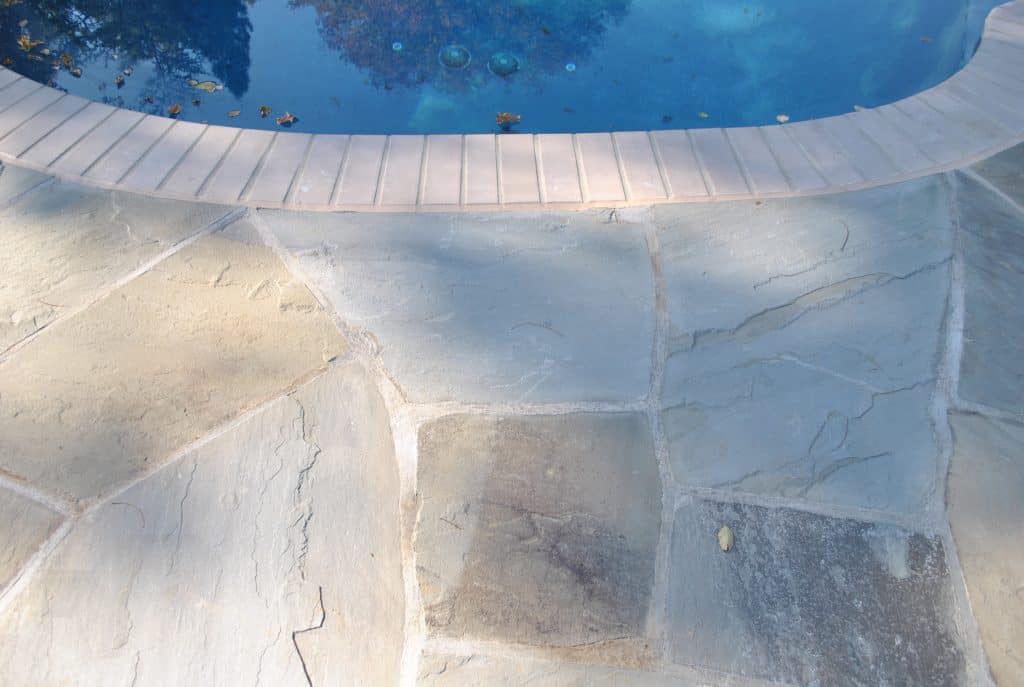
A rough natural-cleft surface may provide more texture than a smooth or polished surface, but the actual product and exposure should be evaluated.
The Natural Stone Institute’s overview of ASTM stone standards explains that exterior paving should be evaluated for appropriate slip resistance rather than assuming every natural stone surface performs the same way.
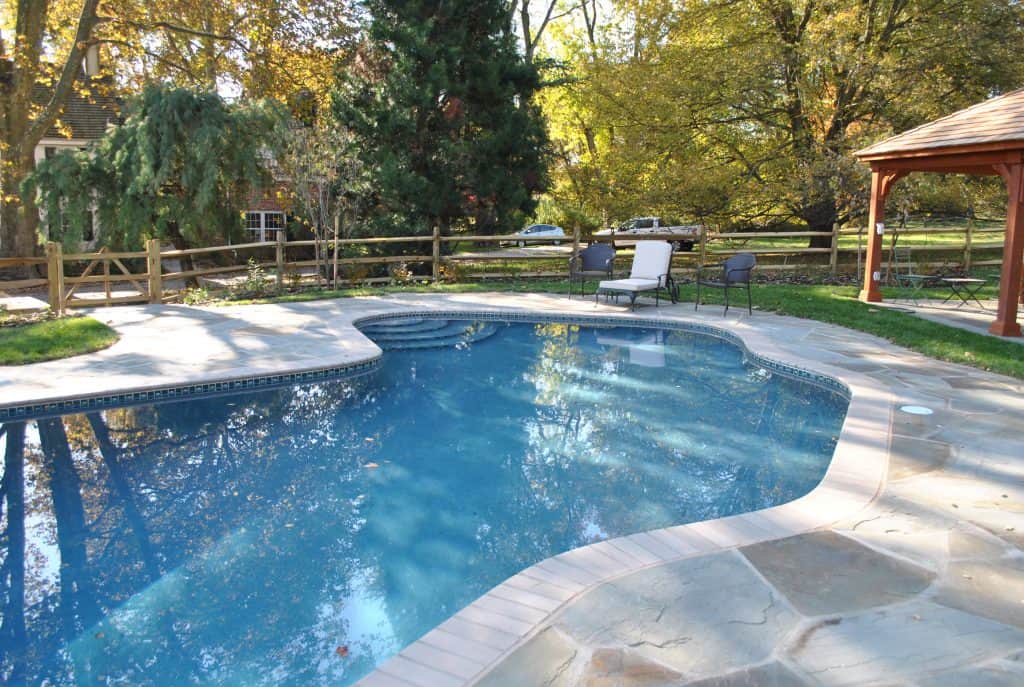
Pool surrounds, steps, sloped walks, and shaded areas require particular attention to traction and drainage.
Dry-Laid vs. Mortared Flagstone
Flagstone can be installed using different systems. The correct system depends on the stone, intended use, existing conditions, design, drainage, and budget.
Dry-laid flagstone
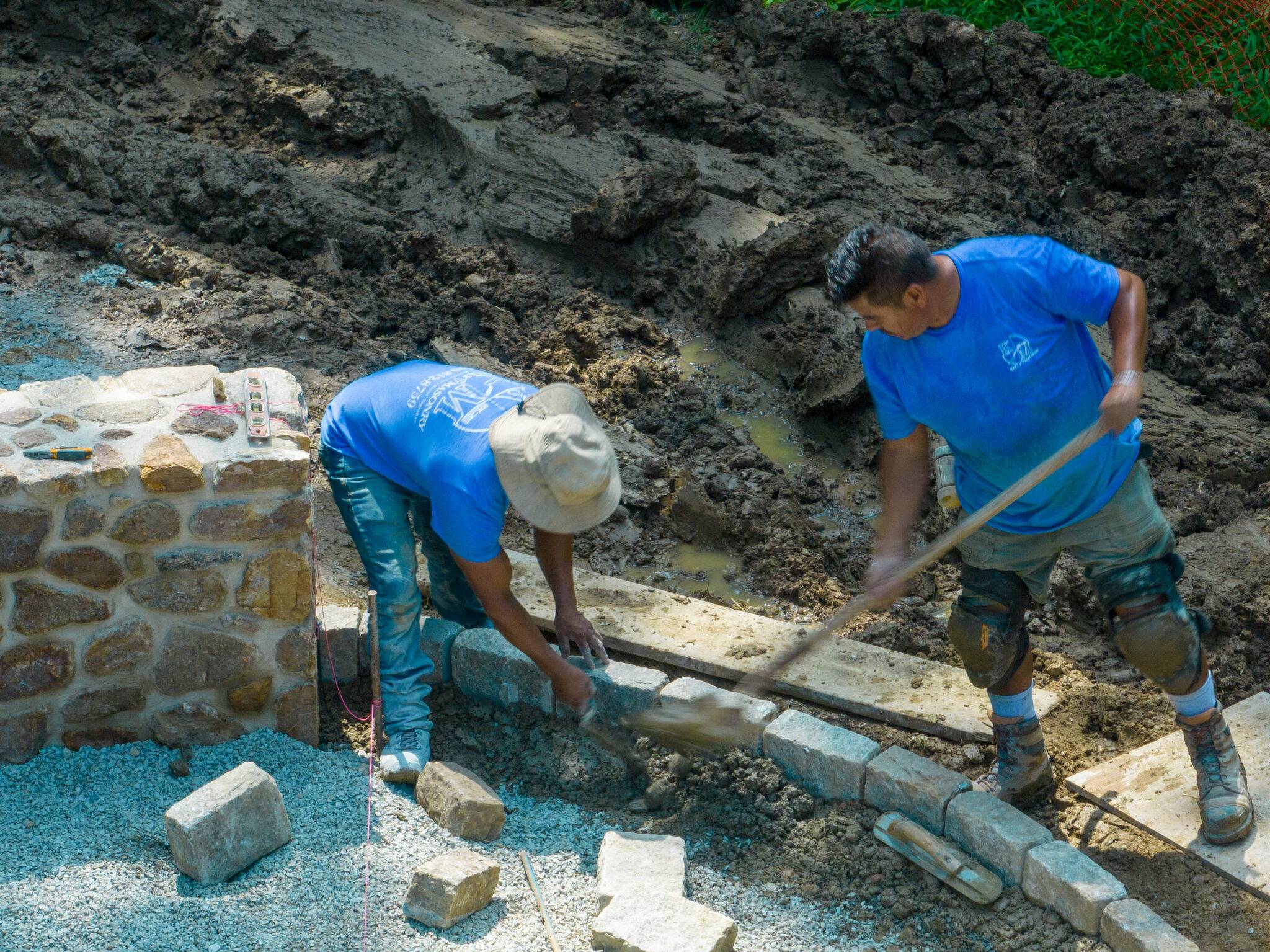
In a dry-laid installation, the stone is placed over a properly prepared aggregate base rather than being permanently mortared to a concrete slab.
Possible advantages include:
- A more informal appearance
- Individual stones may be easier to reset
- Joints can support a permeable-style design when the complete system is designed for it
- Less risk of rigid mortar joints cracking from movement
Possible considerations include:
- Stones can shift when the base is inadequate
- Joint material may need maintenance
- Weeds can appear when organic debris accumulates in joints
- Irregular pieces require careful fitting and leveling
Mortared flagstone
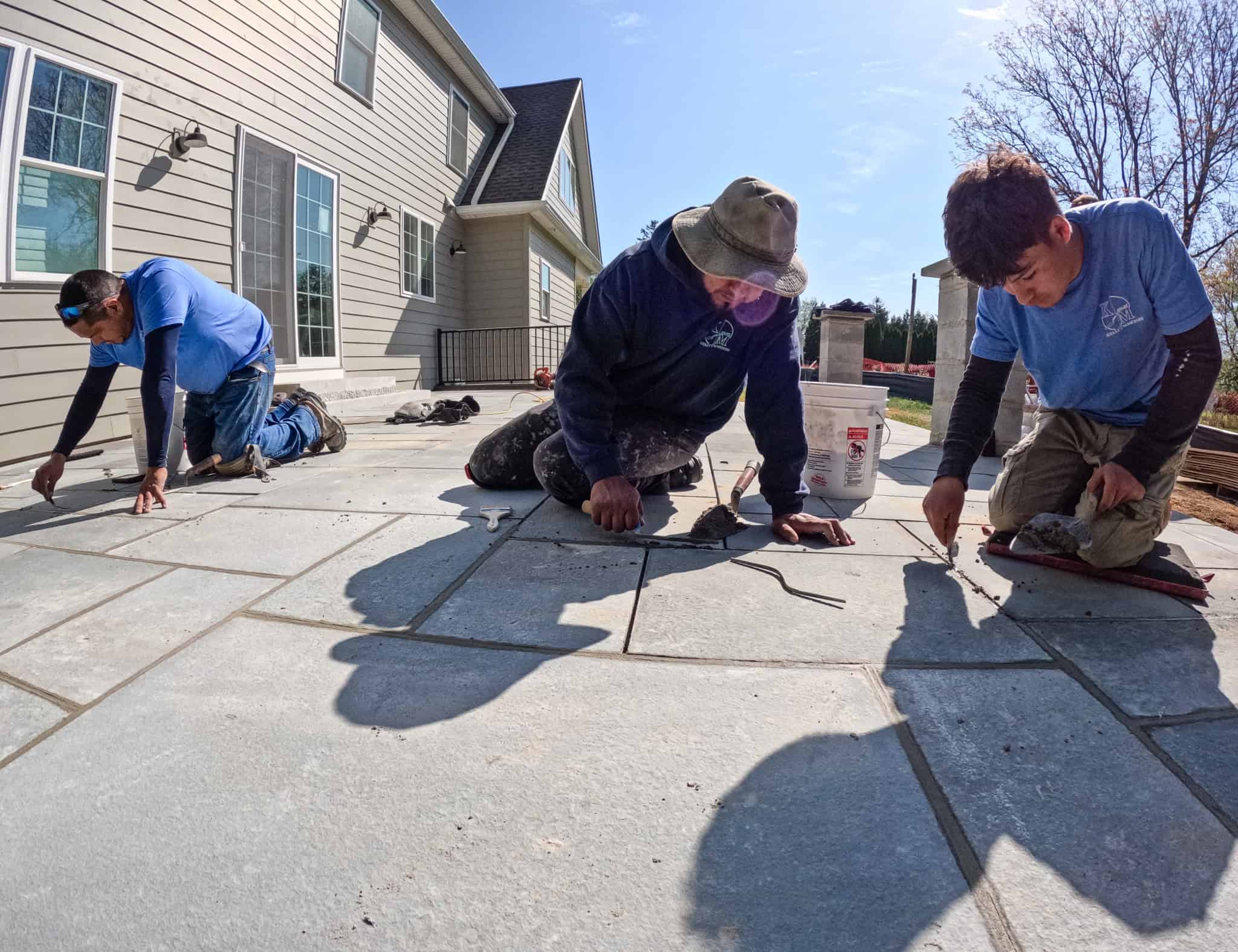
In a mortared installation, flagstone is bonded to a suitable rigid base and the joints are typically filled with compatible mortar.
Possible advantages include:
- A formal, finished appearance
- Firm joints
- Easier movement of chairs and wheeled equipment across narrow joints
- Greater control over a consistent finished elevation
Possible considerations include:
- The concrete base, bonding system, mortar, drainage, and movement details must work together
- Cracked joints can be more involved to repair
- Water trapped within an unsuitable assembly can contribute to freeze-thaw damage
- An existing concrete slab must be evaluated before it is covered
There is no universal base depth, stone thickness, mortar mix, or joint material for every flagstone project. The specifications should reflect the selected stone, installation system, soil, climate, use, and manufacturer or design requirements.
For a separate look at walkway planning, read our guide to building a flagstone walkway.
Why Drainage Matters
Flagstone itself does not guarantee that a patio will drain correctly.
Water movement depends on:
- Finished surface pitch
- Soil and grading
- Base material
- Joint design
- Downspouts
- Adjacent walls and structures
- Drainage pipes or inlets
- Whether the installation is permeable, dry-laid, or mortared
Poor drainage can contribute to standing water, settlement, loose stones, joint deterioration, staining, and freeze-thaw damage.
Read our guide to patio drainage in Delaware County and the Main Line before choosing the final patio elevation and installation system.
How Much Does a Flagstone Patio Cost?
Kelly Masonry’s published 2026 patio planning ranges are:
| Patio level | Typical Kelly Masonry planning range |
| Basic patio | Around $20,000 |
| Average patio | Around $40,000 |
| High-end custom patio | $60,000+ |
These are general patio-project ranges rather than fixed flagstone prices.
Flagstone commonly falls toward the middle or upper part of the range because individual natural stones require additional fitting, leveling, cutting, and craftsmanship.
The final investment depends on:
- Patio size
- Stone type and source
- Stone size and pattern
- Dry-laid or mortared installation
- Demolition
- Access
- Excavation and base preparation
- Drainage
- Curves and cuts
- Steps and grade changes
- Borders and inlays
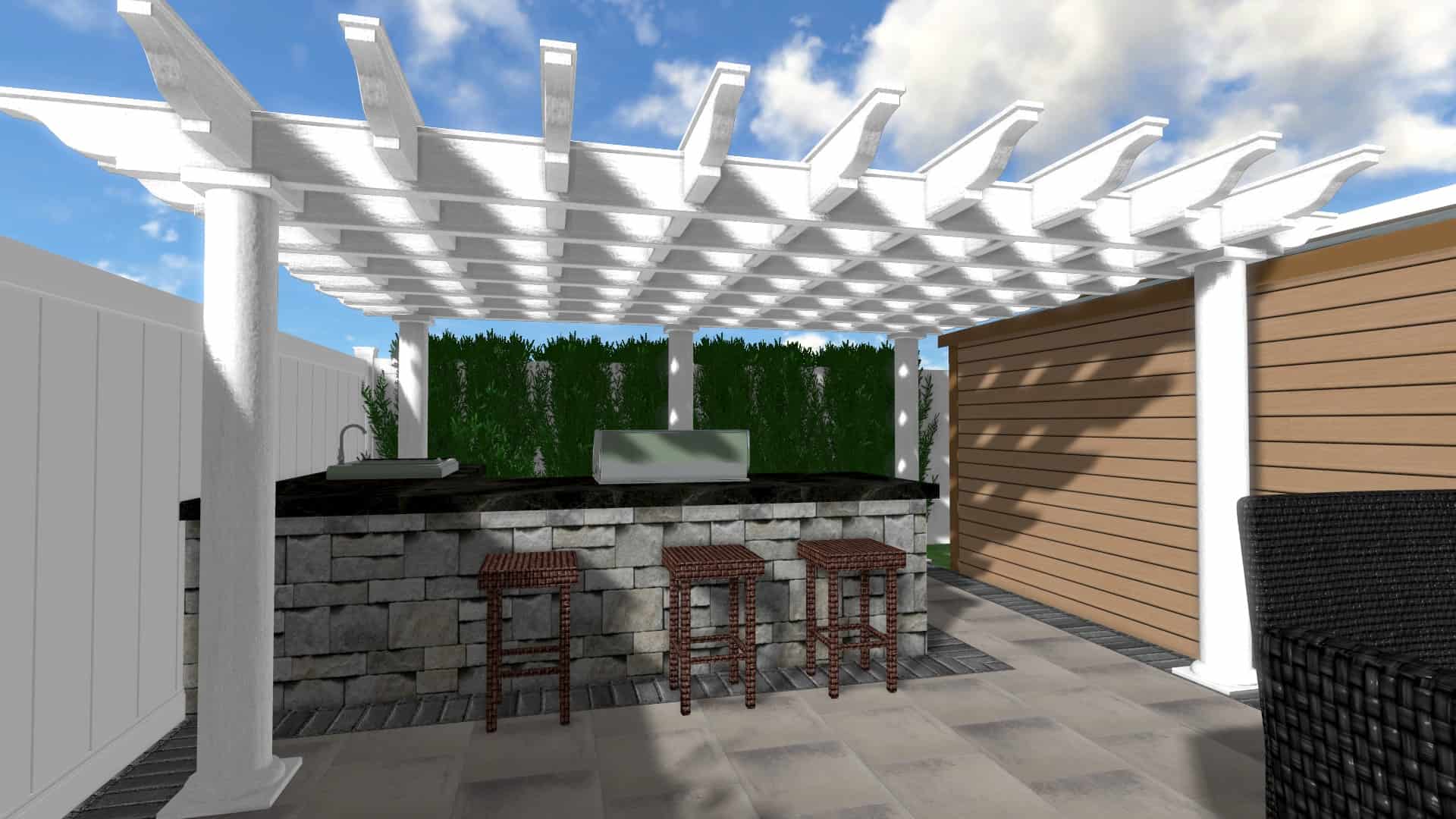
- Fire features, sitting walls, lighting, or outdoor kitchens
- Material availability
Review our complete 2026 patio installation cost guide or use the Kelly Masonry project pricing calculator for initial planning.
An on-site evaluation is required before an exact flagstone proposal can be prepared.
Flagstone vs. Pavers
| Factor | Flagstone | Manufactured pavers |
| Appearance | Natural variation in color, texture, shape, and thickness | Consistent manufactured sizes, colors, and patterns |
| Installation | More hand fitting, leveling, and cutting | Repeating units can make layout more predictable |
| Price | Often a premium material and installation | Frequently more budget-friendly |
| Repairs | Matching older natural stone can be difficult | Individual replacement units may be easier to source |
| Design style | Organic, traditional, or premium natural appearance | Broad range from traditional to modern |
| Surface consistency | Varies by stone and installation | Usually more uniform |
| Maintenance | Depends on stone, joints, base, and installation | Depends on paver quality, joints, base, and installation |
Choose flagstone when natural variation and a handcrafted appearance are priorities. Choose pavers when predictable sizing, pattern consistency, and easier unit replacement are more important.
Read our complete comparison of pavers versus natural stone.
Does Flagstone Need to Be Sealed?
Not every flagstone surface needs sealing.
The decision depends on:
- Stone type
- Porosity
- Surface finish
- Stain exposure
- Pool or cooking-area use
- Existing treatments
- Appearance preferences
- Manufacturer recommendations
- Whether a product could reduce traction
A suitable penetrating treatment may help some stones resist certain stains. Other stones may not benefit from sealing, and an incompatible coating can change the stone’s color, sheen, moisture behavior, or traction.
Before treating an entire patio:
- Identify the stone.
- Determine whether it has already been treated.
- Confirm that the product is intended for that stone and exterior use.
- Test it in a small, inconspicuous area.
- Follow the manufacturer’s preparation and application instructions.
- Confirm that the treatment will not create an unsafe surface.
Do not state that every flagstone patio must be sealed or that no flagstone patio ever needs sealing.
How Do You Maintain Flagstone?
Routine care depends on the stone and installation, but homeowners should generally:
- Sweep leaves, soil, and debris from the surface
- Keep drains and drainage paths open
- Address standing water
- Remove organic growth using a stone-compatible method
- Avoid unverified acidic or harsh cleaners
- Inspect loose or rocking stones
- Check cracked or missing joints
- Monitor changes in settlement
- Repair drainage problems before resetting repeatedly affected stones
- Follow product-specific instructions for sealers and cleaners
The Natural Stone Institute’s stain and stone-care guidance recommends identifying the stain and stone before choosing a treatment. It also notes that recurring efflorescence can indicate an unresolved moisture source.
Kelly Masonry offers patio and walkway repair when stones become loose, uneven, damaged, or affected by base and drainage problems.
Can an Existing Flagstone Patio Be Repaired?
Many flagstone patios can be repaired without complete replacement.
Possible repairs include:
- Resetting loose stones
- Correcting isolated low areas
- Replacing cracked or deteriorated pieces
- Repairing failed mortar joints
- Rebuilding affected edges or steps
- Correcting localized base problems
- Improving drainage
- Cleaning or treating appropriate staining
- Matching replacement stone where available
Replacement may be more practical when:
- Large portions of the patio have settled
- The original base is inadequate
- Drainage problems affect the entire area
- Mortar failure is widespread
- The stone is extensively deteriorated
- The layout or elevation no longer works with the property
- A matching stone is unavailable and appearance is a priority
A repair consultation should determine why the damage occurred before the visible symptoms are corrected.
What We Evaluate During a Flagstone Consultation
Kelly Masonry evaluates:
- The intended use of the patio or walkway
- Existing home and landscape materials
- Stone type, finish, thickness, and availability
- Dry-laid versus mortared installation
- Patio size and layout
- Soil and grade conditions
- Drainage
- Access
- Steps and elevation changes
- Existing concrete or hardscape
- Freeze-thaw exposure
- Maintenance expectations
- Project budget
- Future features such as lighting, walls, kitchens, or fireplaces
Read about Kelly Masonry’s design and construction process or browse our completed outdoor living projects.
Frequently Asked Questions
Is flagstone a type of sedimentary rock?
Not necessarily. Flagstone describes flat natural stone used for paving. Some flagstone is sandstone or limestone, which are sedimentary stones. Other flagstone products may be slate or quartzite, which are metamorphic.
Is bluestone the same as flagstone?
Bluestone is a natural stone product that may be supplied in flagstone, pattern, tread, coping, and dimensional formats. Flagstone is the broader term.
How thick should flagstone be?
There is no universal thickness. The required stone thickness depends on the stone, piece size, traffic, installation method, base, support conditions, and supplier recommendations.
Is flagstone suitable for Pennsylvania winters?
Some flagstone products have a strong history in freeze-thaw climates, while others do not. Confirm that the selected stone is suitable for exterior horizontal paving in comparable conditions.
Does flagstone absorb water?
Absorption varies by stone. Sandstone, limestone, slate, quartzite, and bluestone products do not all absorb water at the same rate.
Does flagstone allow water to drain through a patio?
Not by itself. Drainage depends on the joints, base, grading, surrounding soil, and complete installation system.
Is flagstone slippery around a pool?
It can be appropriate for some pool surrounds, but surface texture, slope, stone selection, wet traction, heat, maintenance, and pool chemistry must be evaluated.
Can flagstone be installed over existing concrete?
Sometimes. The slab must be evaluated for stability, cracks, drainage, elevation, movement, and compatibility with the proposed installation system.
Should flagstone joints contain mortar, sand, gravel, or plants?
The joint material depends on whether the installation is mortared, dry-laid, permeable-style, or designed as garden stepping stones. One joint treatment is not suitable for every application.
Why do weeds grow between flagstones?
Weeds commonly grow when seeds and organic material collect in joints. Base and joint conditions can influence the problem, but weeds do not necessarily grow upward from the original soil.
Why does flagstone crack or become loose?
Possible causes include unsuitable stone, an inadequate base, movement, trapped water, freeze-thaw exposure, failed joints, settlement, impact, or poor support beneath individual pieces.
How long does a flagstone patio last?
There is no single lifespan. Longevity depends on stone suitability, installation, base preparation, drainage, exposure, traffic, maintenance, and timely repairs.
How long does flagstone installation take?
The timeline depends on patio size, access, demolition, design, installation system, stone fitting, drainage work, weather, and curing requirements. Kelly Masonry provides a project-specific schedule after the scope is established.
About the Author
John Kelly is the founder of Kelly Masonry and has more than 25 years of masonry experience. His team designs, installs, maintains, and repairs flagstone, bluestone, brick, natural stone, and paver patios throughout Delaware County, the Main Line, and surrounding Pennsylvania communities.
Reviewed by: John Kelly
Last updated: July 29, 2026
Planning a Flagstone Patio or Walkway?
Kelly Masonry can help compare stone options, evaluate your property, plan the installation system, address drainage, and develop a patio or walkway that complements your home.
View our patio installation services, explore our outdoor living portfolio, use our project pricing calculator, or request a consultation.