For many homeowners in Delaware County and the Main Line, interlocking concrete pavers offer the best all-around balance of design flexibility, repairability, and performance. But they are not automatically the right choice for every property.
If your priority is a more natural, architectural appearance, Pennsylvania bluestone may be the better fit. If you want consistent sizes, many pattern options, and the ability to replace individual units, pavers may make more sense. The correct answer depends on the home, site, drainage, installation system, budget, and how you plan to use the patio.
This guide focuses on the decision homeowners ask most often: Should you choose a bluestone patio or a paver patio in Pennsylvania? It also explains how brick, poured concrete, porcelain, gravel, and permeable paving compare.
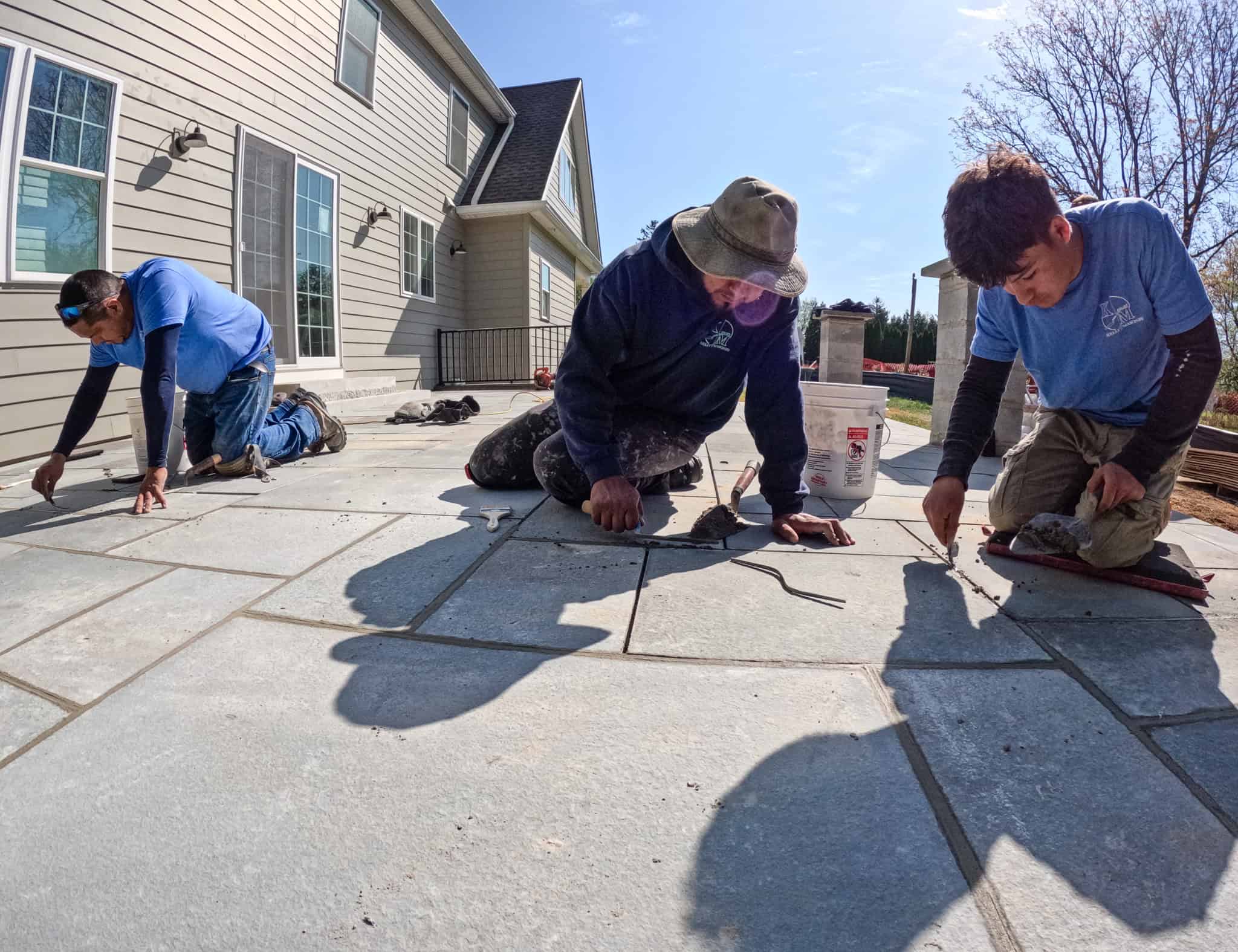
Kelly Masonry designs and builds custom patios throughout Delaware County and the Main Line.
Bluestone vs. Pavers: The Short Answer
Choose bluestone when you want authentic natural variation, a strong connection to a stone or brick home, and a premium architectural appearance. Choose interlocking concrete pavers when you want more predictable sizing, broader pattern flexibility, easier localized repairs, and a wide selection of colors and textures.
Neither material is inherently better. A well-built patio depends on the complete system beneath and around the surface. Excavation, soil conditions, base preparation, compaction, grading, drainage, joints, edges, transitions, and workmanship all affect the result.
| Decision factor | Bluestone | Interlocking concrete pavers |
| Appearance | Natural variation and one-of-a-kind character | Consistent colors, sizes, textures, and patterns |
| Architectural fit | Especially strong with stone, brick, and traditional homes | Adaptable to traditional, transitional, and modern homes |
| Installation | Requires careful fitting, leveling, and material selection | Requires accurate layout, compaction, joints, and edge restraint |
| Local repair | Individual stones may be removable depending on the system | Individual units are generally straightforward to remove and replace |
| Cost position | Often a premium material and labor investment | Broad range, from practical to high-end product lines |
| Winter performance | Depends on the exact stone, thickness, drainage, and installation | Depends on product rating, base, drainage, joints, and installation |
| Best fit | Natural, handcrafted, architecturally integrated patios | Flexible, repairable, pattern-driven patios |
Bluestone Patios: Best for Natural Character and Architectural Fit
Bluestone is a natural stone used for patios, walkways, steps, pool surrounds, and other hardscape applications. It may be installed as more regular dimensional pieces or in layouts with greater natural variation, depending on the product and design.
Its appeal is visual as much as practical. Color, cleft, edge character, and natural variation can make the patio feel connected to the property rather than placed on top of it.
Why homeowners choose bluestone
Bluestone may be the right material when you want:
•A natural, non-uniform surface
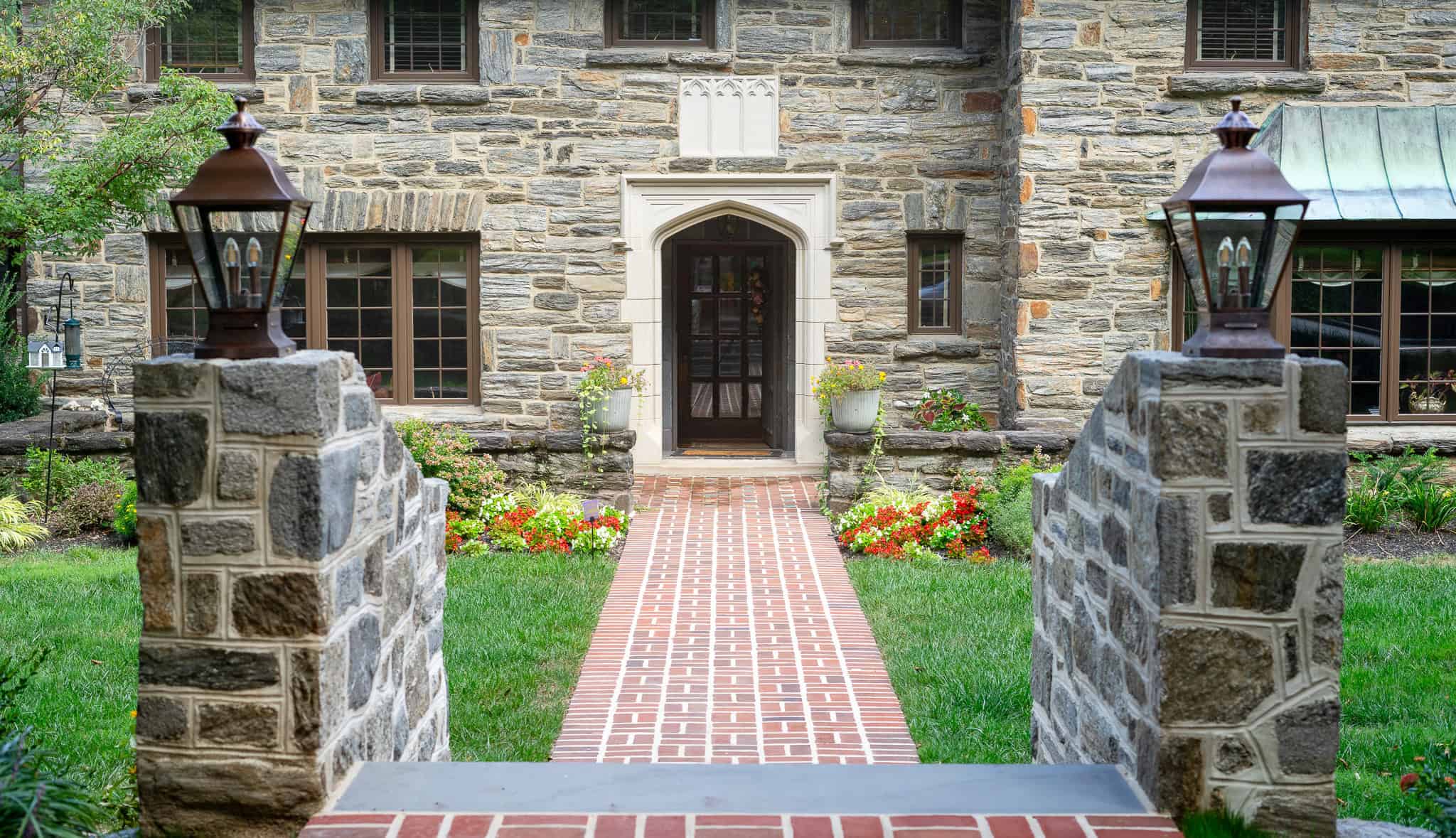
•A premium appearance that complements stone or brick architecture
•A patio coordinated with stone walls, steps, or a fireplace
•A material that can support a formal or informal outdoor design
•A surface with a handcrafted rather than manufactured look
Bluestone can work especially well on properties where the patio should feel like part of the home’s architecture. The best result is not always the most colorful or expensive stone. It is the material whose tone, thickness, finish, joint treatment, and layout make sense with the house and surrounding landscape.
Bluestone considerations in Pennsylvania
Natural stone should not be selected from a photograph or color sample alone. The exact product matters. Ask about its intended exterior use, thickness, finish, water exposure, and performance information where available.
Pennsylvania patios face rain, snow, ice, seasonal moisture, summer heat, organic growth, and repeated freeze-thaw cycles. Water that enters a material or installation assembly and cannot drain before freezing can increase the risk of damage.
For a bluestone patio, the design review should include:
•The exact stone product and thickness
•Surface finish and wet traction
•Whether the layout is dry-laid or set with mortar or another system
•Base and drainage requirements
•Slope away from the home and other structures
•Joint material and joint width
•Transitions at doors, steps, walls, and walkways
•Deicing practices and winter maintenance
A natural-stone patio also requires realistic expectations about variation. Pieces may differ in tone, texture, thickness, and edge character. Future replacement stones may not match an older installation perfectly, especially if the original product is no longer available.
Paver Patios: Best for Flexibility and Local Repair
Interlocking concrete pavers are manufactured paving units designed to work together in a segmental pavement system. They come in many colors, sizes, textures, laying patterns, and border combinations.
Pavers may be the better choice when you want a more predictable layout, a broad design menu, or the ability to remove and replace individual units if a localized repair becomes necessary.
Why homeowners choose pavers
Pavers may be the right material when you want:
•Many color, size, texture, and pattern options
•Curves, borders, inlays, or coordinated walkways
•A patio that connects to steps, walls, fire features, or an outdoor kitchen
•Individual-unit repair rather than a continuous slab repair
•A balance between practical cost and premium appearance
•A conventional or purpose-designed permeable pavement system
Pavers are not durable simply because pavers were selected. Their performance depends on the supporting soil, excavation, aggregate base, compaction, bedding, surface grading, edge restraint, joint material, drainage, and product quality.
When those elements are not addressed, pavers can settle, spread, lose joint material, or develop low areas. In other words, a paver patio is a complete pavement system, not just a collection of blocks placed on the ground.
When pavers may not be the best fit
Pavers may not be the best choice when:
•You strongly prefer authentic natural variation
•A continuous surface is more important than a segmental surface
•You do not want to maintain joints
•The selected product lacks appropriate exterior or freeze-thaw documentation
•The installer cannot explain the base, drainage, edge, and repair plan
For a more detailed comparison, read Pavers vs. Natural Stone: Which Is Best for Your Backyard Patio?.
Bluestone or Pavers for a Main Line Home?
The home’s architecture should influence the decision, but it should not be the only factor.
Bluestone can complement older stone, brick, and traditional homes when the design uses appropriate proportions and transitions. Pavers can also work well in those settings when their color, scale, border, and pattern are selected carefully. A manufactured material does not have to look generic, and a natural stone does not automatically look appropriate.
Consider these questions:
1.Should the patio feel formal, relaxed, rustic, or contemporary?
2.Does the home already use brick, fieldstone, bluestone, or another dominant exterior material?
3.Will the patio connect to a walkway, porch, steps, wall, pool, fire feature, or outdoor kitchen?
4.Do you prefer natural variation or consistent sizing?
5.How important is localized repair if one area settles or becomes damaged?
6.Will furniture, grills, or mobility needs require a relatively even surface?
7.How will water move away from the house and through the patio assembly?
A hybrid design can also be reasonable. For example, a project may use pavers for a large field and natural stone for a border, landing, step, or feature area. The materials should still be compatible in thickness, transitions, drainage, and overall design.
What We Can Document from Kelly Masonry’s Public Reviews
Experience-based content should stay within the evidence that is actually available. Kelly Masonry’s public Google reviews document patio and masonry work, but they do not provide a complete technical case study for a specific bluestone-versus-paver installation.
One reviewer, Mary McCabe, wrote that Kelly Masonry built a “beautiful new flagstone patio, walkway, and porch” and praised the crew’s work, the company’s communication, and the fact that the project stayed within budget. That review supports the existence of a customer-reported flagstone project and those specific service observations. It does not establish the property’s location, square footage, base depth, installation method, timeline, or exact stone product.
Other public reviews mention a retaining wall, a walkway repair, communication, prompt estimates, polite crews, and weather-related schedule updates. Those comments can help a homeowner understand the type of customer experience reviewers reported. They should not be presented as proof of a particular material specification or a universal project outcome.
For that reason, this article does not invent a named homeowner, address, project dimensions, construction timeline, or performance claim. If you are comparing materials, ask to see completed examples using the same or similar products and installation systems proposed for your home.
Pennsylvania Freeze-Thaw: What Matters More Than the Material Name
Freeze-thaw exposure affects both bluestone and paver patios. The important question is not simply whether a material is called “stone” or “paver.” The question is whether the selected product and complete installation system are appropriate for the site.
Review:
•Product documentation for exterior and freeze-thaw use
•Water absorption and moisture exposure
•Soil conditions and excavation depth
•Aggregate base design
•Compaction of each required layer
•Surface pitch and low areas
•Downspouts and roof runoff
•Joint design and joint material
•Edges and transitions
•Deicing practices
•Maintenance access
The Concrete Masonry & Hardscapes Association installation guidance treats the paver assembly as more than the surface units. The same principle applies to stone: the visible slab or stone is only one part of the outdoor floor.
A patio can also experience problems that are not caused by freeze-thaw alone. Poor drainage, disturbed soil, inadequate compaction, uncontrolled runoff, tree roots, access limitations, and settlement can all affect the finished surface.
Other Patio Materials to Consider
Bluestone and pavers are the main comparison for many Main Line homeowners, but they are not the only choices.
Clay brick pavers
Clay brick pavers can suit Colonial, Federal, Georgian, and other traditional homes. Their color comes from fired clay, and their appearance can develop character over time.
Use paving brick rated for the application, not ordinary wall brick. Also distinguish between systems. Sand-set brick pavers have sand or aggregate-filled joints and are not repointed. Mortar-set brick paving has mortared joints that may eventually need repair.
Poured concrete
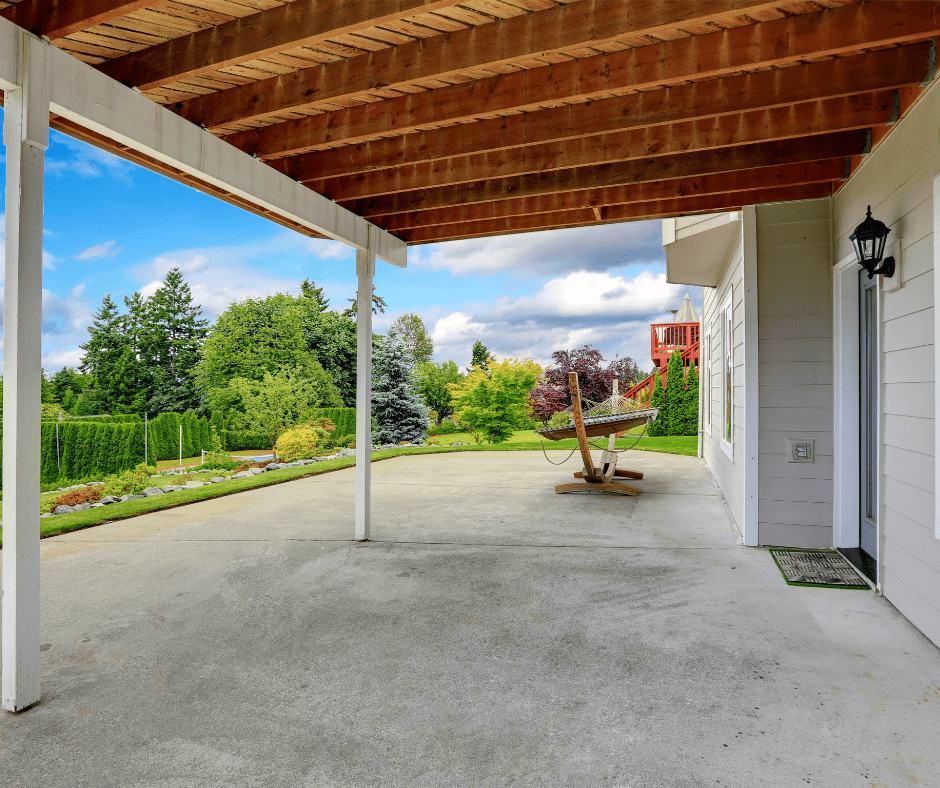
Poured concrete can provide a continuous surface and may have a lower initial investment for a simple layout. It can be broom-finished, colored, exposed-aggregate, stamped, scored, or patterned.
Concrete can crack. Control joints help manage where cracking occurs, but they do not guarantee a crack-free patio. Subgrade preparation, drainage, mixture, reinforcement when specified, placement, finishing, curing, and weather all matter.
See Concrete Patio Pros and Cons: Cost, Cracking, and Pennsylvania Performance for a separate comparison.
Exterior porcelain pavers
Exterior porcelain pavers can create a highly consistent modern appearance. The exact product should be rated for exterior use, horizontal walking surfaces, freeze-thaw exposure, and the planned installation method. Wet-surface traction, drainage, movement details, edge treatment, and support remain important.
Indoor tile should not be substituted for exterior paving units.
Gravel
Gravel can suit an informal garden seating area or lightly used secondary space. It is less stable under furniture and foot traffic than a firm paved surface, can migrate into planting beds, and may require raking, edging, and replenishment.
Permeable paving
Permeable paving is a complete stormwater-management system, not simply a regular patio with wider joints. It may include purpose-designed units, open-graded joint aggregate, a reservoir base, infiltration testing, drainage structures, underdrains, and a maintenance plan.
Read The Benefits of Permeable Pavers if runoff management is one of your primary goals.
Which Patio Material Is Easiest to Repair?
Segmental surfaces are generally easier to repair locally than continuous slabs. Individual concrete pavers, clay brick pavers, and selected dry-laid stones may be removed to reach the base or replace a damaged unit.
That does not mean every repair will be invisible. Color changes, discontinued products, widespread movement, failed edging, and underlying drainage problems can complicate the work.
Poured-concrete repairs often remain visible because new concrete differs from older concrete in color, texture, age, and weathering.
If an existing patio has settled, shifted, or developed drainage problems, review patio and walkway repair services before deciding whether a surface replacement is necessary.
How Much Does the Material Affect Patio Cost?
Material affects price, but it is only one part of the complete investment. Kelly Masonry’s published planning levels are approximately:
•Basic patio: approximately $20,000
•Average patio: approximately $40,000
•High-end custom patio: $60,000 or more
These are complete-project planning ranges, not per-square-foot material prices. Final cost can change with patio size, material and product line, demolition, access, excavation, soil, base, drainage, curves, cuts, steps, walls, fire features, lighting, outdoor kitchens, permits, and landscape restoration.
Bluestone often requires a premium material and more skilled fitting. Pavers can range from practical to high-end depending on the manufacturer, pattern, cuts, borders, product line, and installation system. A smaller patio with difficult access or drainage work can cost more than a larger patio on a simple site.
See How Much Does a Patio Installation Cost in the Main Line Area? for the current planning ranges and cost factors.
Maintenance Expectations
No exterior patio is maintenance-free.
| Material | Possible maintenance |
| Bluestone | Cleaning, joint maintenance, resetting or mortar repair depending on system, selective sealing when appropriate |
| Concrete pavers | Cleaning, joint inspection, resetting isolated units, optional sealing based on the product and exposure |
| Clay brick pavers | Cleaning, joint maintenance, resetting, and organic-growth control |
| Poured concrete | Cleaning, crack monitoring, joint maintenance, and selective sealing |
| Porcelain pavers | Cleaning, joint inspection, and replacement of damaged units |
| Gravel | Raking, edging, replenishment, and weed or debris removal |
| Permeable paving | Surface cleaning, joint-aggregate maintenance, and vacuuming when required to preserve infiltration |
Sealing should not be automatic. The decision depends on the exact product, finish, exposure, stain risk, appearance goals, and manufacturer guidance.
Read How Do I Prepare My Patio for Winter? for seasonal maintenance considerations.
Questions to Ask a Patio Builder
Before selecting bluestone, pavers, or another patio material, ask:
1.What exact product and thickness are you proposing?
2.Is the product rated for exterior freeze-thaw exposure?
3.What installation system will be used?
4.How will water drain away from the home?
5.What soil, excavation, and base conditions are anticipated?
6.How will each layer be compacted?
7.What edge restraint and joint material are proposed?
8.How will doors, steps, walls, walkways, and lawns transition into the patio?
9.Can individual areas be repaired later?
10.Can you show completed projects using the same or similar material?
11.Is the product likely to remain available for future repairs?
12.What maintenance does the manufacturer recommend?
13.Which warranties apply to the product and workmanship?
14.What site conditions could change the estimate?
The answers should be specific enough for you to understand what is being built beneath the visible surface.
What Kelly Masonry Recommends
Kelly Masonry does not recommend one patio material without considering the home and property.
In general:
•Choose interlocking concrete pavers for design flexibility, pattern options, and easier localized repair.
•Choose bluestone or another suitable natural stone for authentic character and compatibility with distinctive stone or brick architecture.
•Choose clay brick pavers for traditional color and architectural continuity.
•Choose poured concrete when a continuous surface and lower initial investment are priorities.
•Choose exterior-rated porcelain pavers for a modern, consistent design supported by the correct installation system.
•Choose permeable paving when stormwater management is a central design goal.
•Choose gravel for informal, secondary spaces where movement and loose-surface maintenance are acceptable.
The finished patio will perform only as well as its drainage, base, transitions, material selection, construction details, and maintenance plan.
Frequently Asked Questions
Is bluestone better than pavers for a Pennsylvania patio?
Not universally. Bluestone offers natural variation and a premium architectural appearance. Pavers offer consistent sizing, broad design flexibility, and generally easier localized replacement. Both require an appropriate product and complete installation system.
Are pavers more affordable than bluestone?
Pavers often provide a broader range of product and installation options, while bluestone is commonly positioned as a premium natural-stone choice. Complete cost depends on the product, size, access, excavation, base, drainage, cuts, transitions, and related features.
Does bluestone crack in winter?
Any exterior stone should be selected and installed for the site and climate. Review the exact stone, thickness, finish, drainage, joints, base, and exposure rather than assuming that every bluestone product will perform identically.
Do pavers crack?
Individual pavers can crack, and pavers can settle or shift when the base, drainage, joints, or edge restraints are inadequate. A damaged unit may be replaceable, but widespread movement requires investigation of the underlying system.
Which patio material is easiest to repair?
Segmental materials such as concrete pavers, clay brick pavers, and selected dry-laid stone are often easier to repair locally because individual units can be removed. Matching older material can still be difficult.
Is poured concrete a better choice for a simple patio?
It may be appropriate when a continuous surface and straightforward design are priorities. Concrete can crack, and repairs may remain visible. Proper subgrade, drainage, concrete design, joints, placement, and curing are important.
Is porcelain suitable for Pennsylvania winters?
Some exterior-rated porcelain pavers are suitable for freeze-thaw climates. Verify the exact manufacturer’s rating, installation system, drainage requirements, wet-surface performance, and support details.
How much does a new patio cost?
Kelly Masonry currently publishes planning levels of approximately $20,000 for a basic patio, $40,000 for an average patio, and $60,000 or more for a larger custom project. These figures are planning ranges, not a quote for a particular property.
Need Help Choosing a Patio Material?
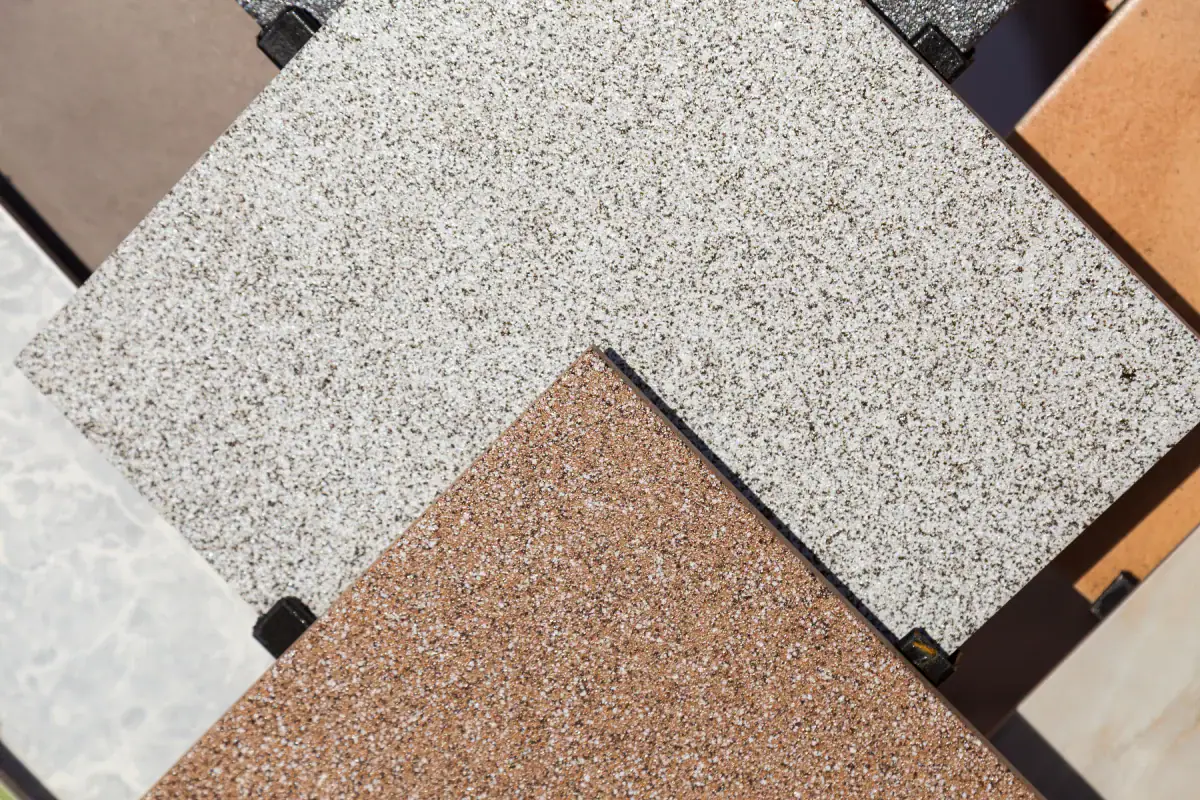
A patio consultation should address more than the surface sample. The design team should evaluate the home, property, drainage, intended use, preferred appearance, maintenance expectations, access, and budget before recommending bluestone, pavers, or another material.
If you are comparing a bluestone patio builder with a paver patio builder in Delaware County or the Main Line, contact Kelly Masonry to discuss your project. You can also explore patio construction services, review published patio pricing, and browse completed work in the portfolio.