When planning a new patio, homeowners naturally spend a lot of time choosing what they will see: pavers, flagstone, bluestone, borders, colors, and patterns.
But some of the most important work happens where you won’t see it.
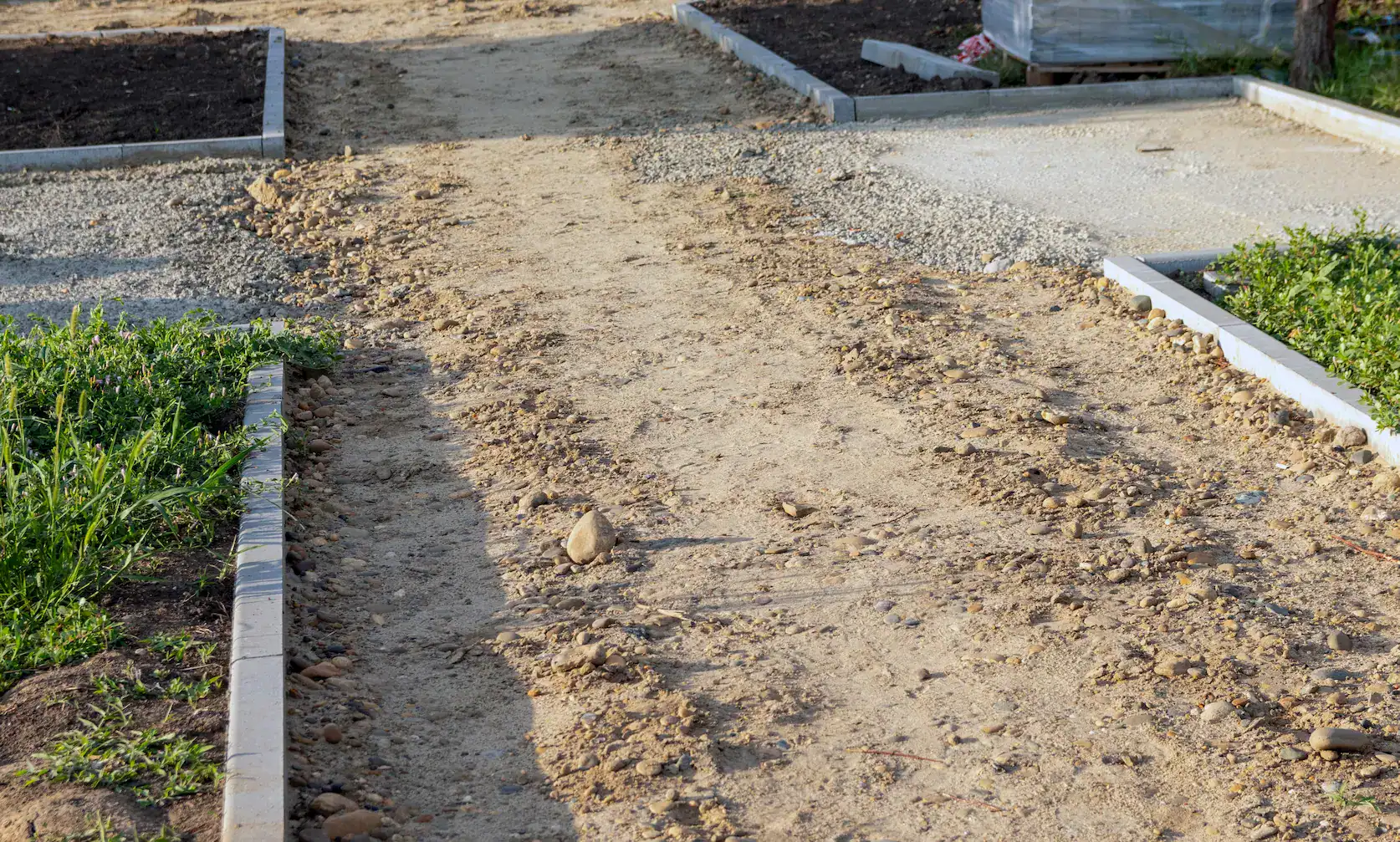
A patio needs a properly prepared foundation beneath the finished surface. Excavation, subgrade conditions, base material, compaction, drainage, and final elevations all affect how the patio performs over time.
An expensive paver or natural stone cannot compensate for an unsuitable foundation.
That’s why at Kelly Masonry, patio construction starts with the property and what needs to happen underneath the finished surface—not just which material goes on top.
We design and build custom patios throughout Delaware County and the Main Line.
What Goes Under a Patio?
The exact patio foundation depends on the material, installation method, soil, drainage, and conditions on the property.
For many flexible patio installations, the system can include:
- Prepared subgrade
- Geotextile or stabilization material where appropriate
- Compacted aggregate base
- Bedding or setting layer
- Pavers or stone
- Joint material
- Edge restraint or another designed edge condition
A mortar-set natural-stone patio uses a different foundation and setting system than a flexible paver installation.
There is no single patio-base specification that is correct for every property and every material.
The foundation should be designed for the patio being built and the conditions underneath it.
Patio Base Preparation at a Glance
| Stage | Purpose |
| Site evaluation | Understand soil, grade, drainage, access, and existing conditions |
| Excavation | Create room for the complete patio system |
| Subgrade preparation | Establish suitable support beneath the patio |
| Stabilization | Separate or reinforce layers when appropriate |
| Aggregate base | Create a stable supporting layer |
| Compaction | Reduce movement within the base |
| Drainage and pitch | Control where surface water travels |
| Bedding or setting system | Prepare for the selected surface |
| Edge treatment | Maintain the designed patio boundary |
| Surface installation | Install the selected pavers or stone |
A properly built patio is a complete system. The visible material is only the top layer.
1. Start With the Property, Not the Pavers
Before determining how the patio base should be built, the site needs to be understood.
Important conditions can include:
- Existing grade
- Soil conditions
- Water movement
- Downspouts
- Nearby foundations
- Existing concrete or paving
- Retaining walls
- Steps
- Trees and roots
- Utilities
- Equipment access
- Proposed patio elevation
- Connections to doors and walkways
These conditions can change the construction approach.
A relatively level backyard with good access is different from a sloped property with drainage problems, existing hardscape, and limited equipment access.
This evaluation should happen before the patio-base system is finalized.
2. Excavate for the Complete Patio System
A patio is not installed by removing a small amount of soil and covering the area with stone.
Excavation needs to create room for the entire installation system, including the foundation and finished surface.
How much excavation is appropriate depends on factors such as:
- Selected patio material
- Installation method
- Existing soil
- Drainage conditions
- Finished elevation
- Existing fill
- Adjacent structures
- Intended use
Excavation can also reveal conditions that were impossible to see from the surface.
These may include:
- Soft soil
- Organic material
- Construction debris
- Old concrete
- Roots
- Saturated areas
- Previously disturbed soil
- Unexpected fill
When unsuitable conditions are found, they should be evaluated before the patio base is installed.
Simply covering a problem with aggregate does not necessarily correct it.
3. Prepare the Subgrade
The subgrade is the soil beneath the constructed patio system.
It ultimately supports everything above it.
The goal at this stage is to establish suitable and reasonably consistent support for the new foundation.
Potential concerns include:
- Soft areas
- Wet or saturated soil
- Organic material
- Unstable fill
- Previously disturbed areas
- Significant differences across the site
What needs to be done depends on what is found.
This is one reason we don’t recommend applying one universal patio-foundation specification to every backyard.
4. Use Geotextile or Stabilization Where Appropriate
Depending on the installation and site conditions, a suitable geotextile may be incorporated into the patio foundation.
One possible purpose is separating the prepared soil from aggregate layers.
But geotextile should not be treated as a shortcut.
It does not eliminate the need to address:
- Unsuitable soil
- Poor excavation
- Drainage problems
- Proper base material
- Compaction
And ordinary landscape fabric should not automatically be assumed to perform the same function as a product selected for a hardscape installation.
The material should match the intended purpose and patio system.
5. Build the Aggregate Base
For many patio systems, compacted aggregate creates the primary supporting layer beneath the surface.
This is one of the most important stages of construction because the finished patio depends on the stability of the layers below it.
The base should be installed according to the requirements of the patio system and the conditions found on site.
Rather than treating the base as simply filling a hole with stone, the installation needs to account for:
- Appropriate aggregate
- Required base thickness
- Compaction
- Finished elevations
- Drainage
- Edges
- Transitions
- Areas disturbed by utilities or drainage
Kelly Masonry’s patio installation cost guide explains how excavation and base preparation contribute to the overall cost of a patio project.
6. Compact the Base
Placing aggregate and properly compacting it are two different things.
Compaction helps create a stable supporting layer and reduces voids within the base.
Depending on the installation, aggregate may be placed and compacted in controlled layers rather than attempting to compact a large depth of loose material only from the surface.
Certain areas deserve additional attention, including:
- Edges
- Utility trenches
- Drainage trenches
- Previously disturbed soil
- Areas where old hardscape was removed
- Transitions around steps or structures
This work is largely invisible once the patio is complete, but it is an important part of the installation.
7. Plan Patio Drainage Before Installing the Surface
Base preparation and drainage should not be treated as unrelated parts of the project.
Before the finished patio is installed, there should be a plan for where water will go.
That may involve:
- Surface pitch
- Surrounding grading
- Downspout management
- Drainage pipes
- Area drains
- Channel drains
- Other site-specific drainage measures
Not every patio needs a separate drainage system.
On some properties, appropriate grading and surface pitch can manage water effectively. Other properties have conditions that require additional drainage work.
The important thing is to answer the drainage question before the finished patio is installed.
For a deeper explanation, read our guide to patio drainage and when a drainage system may be needed.
8. Prepare the Bedding or Setting Layer
After the primary foundation has been prepared, the patio needs a bedding or setting system appropriate for the selected material.
This is where the installation method matters.
Manufactured pavers, dry-laid natural stone, and mortar-set stone should not automatically be installed over identical systems.
The selected surface and installation method determine what needs to happen beneath it.
That’s another reason to choose the patio material before construction begins rather than building a generic foundation and deciding on the surface afterward.
9. Install the Finished Patio
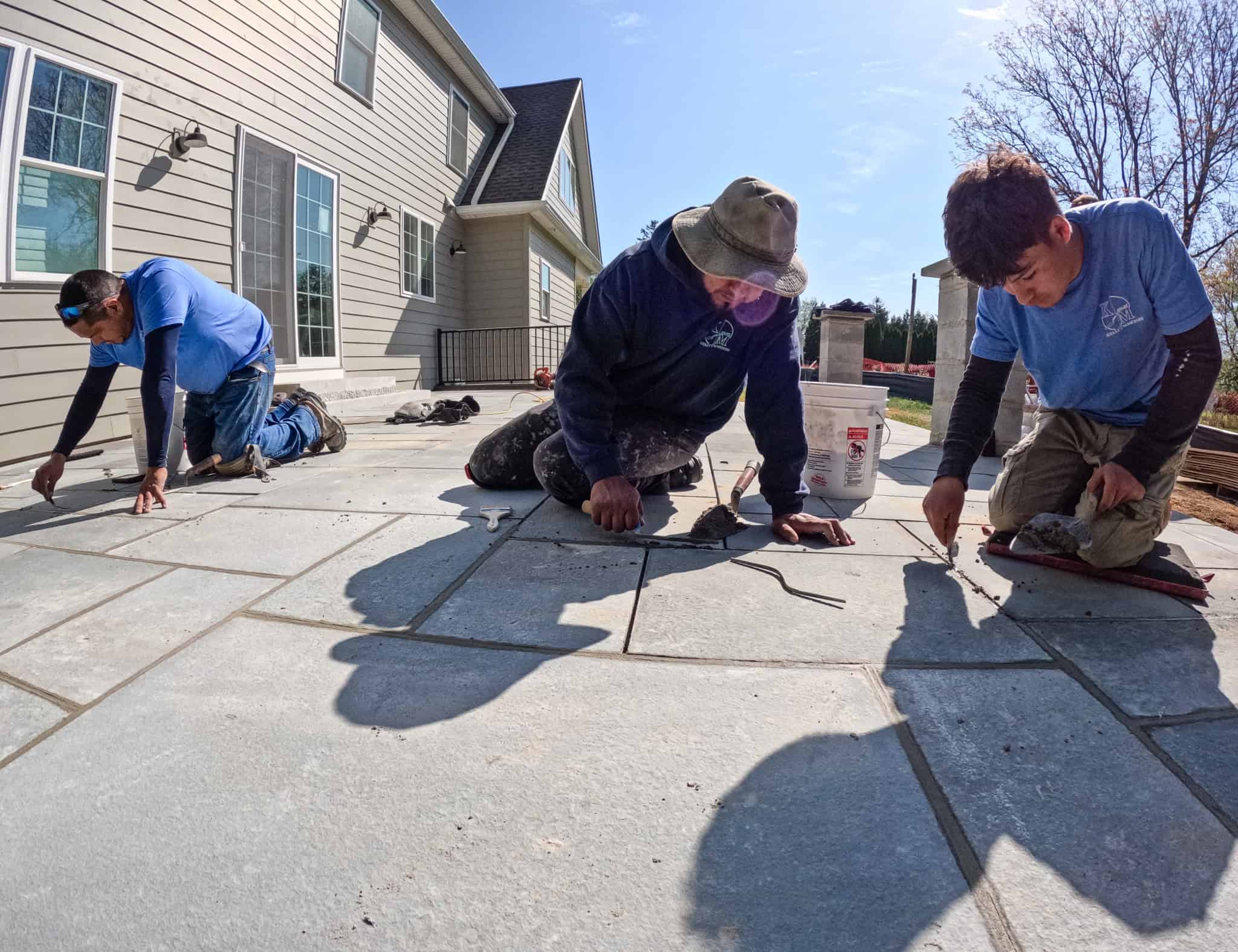
Only after the underlying system is ready does the visible part of the patio begin to take shape.
Depending on the project, this stage may involve:
- Laying pavers
- Fitting natural stone
- Establishing patterns
- Making cuts
- Building borders
- Creating transitions
- Checking elevations
- Completing joints
- Finishing edges
The surface material still matters. It affects appearance, maintenance, installation, and budget.
But much of the work that supports that finished surface has already happened underneath it.
Is the Patio Base More Important Than the Pavers?
Both matter, but they perform different jobs.
The surface determines much of what you see and how the patio feels. The foundation helps determine how well that surface is supported.
Choosing a premium paver does not eliminate the need for proper excavation, drainage, base material, and compaction.
When comparing patio proposals, don’t compare only the brand or price of the paver.
Ask what you’re getting underneath it.
Does the Patio Material Change the Foundation?
Yes.
Different patio systems have different foundation and setting requirements.
Concrete pavers
Manufactured pavers are commonly installed as part of a flexible pavement system over prepared supporting layers.
Dry-laid natural stone
Natural stone can also be installed using flexible systems, but variations in thickness, size, and shape can affect preparation, bedding, and installation.
Mortar-set natural stone
A mortar-set installation is a different type of construction and requires a foundation and setting system appropriate for a rigid assembly.
There isn’t one foundation that should automatically be used for all three.
If you haven’t selected a surface yet, our guide to choosing the best patio material explains the differences between common options.
How Does Pennsylvania Weather Affect a Patio Foundation?
Patios in Delaware County and the Main Line are exposed to:
- Rain
- Snow
- Freezing temperatures
- Thawing
- Seasonal moisture changes
Water, soil, drainage, and the patio foundation all interact with these conditions.
That makes water management and appropriate base preparation especially important.
The goal isn’t to make a patio immune to weather. It’s to build a patio system appropriate for the property and local conditions.
What Can Happen When the Patio Foundation Has a Problem?
Problems underneath a patio can eventually become visible at the surface.
You may notice:
- Settlement
- Uneven areas
- Movement
- Low spots
- Drainage problems
However, the visible symptom does not automatically identify the cause.
A sinking area, for example, could involve several different conditions underneath the patio.
If you already have an existing patio showing problems, the next step is diagnosis rather than assuming the original base was built incorrectly.
Read our guide to common patio problems and what they can mean.
Is More Patio Base Always Better?
No.
More material does not automatically create a better foundation.
Additional aggregate cannot, by itself, correct:
- Unsuitable soil
- Poor drainage
- Inadequate compaction
- Incorrect elevations
- Inappropriate materials
- Failed edge conditions
The goal is not to put the greatest possible amount of stone beneath the patio.
The goal is to build the appropriate foundation for that patio and property.
How Can You Compare Patio Base Preparation Between Contractors?
This is one of the most useful conversations to have when comparing patio proposals.
Ask:
What will you evaluate before excavation?
The contractor should be able to explain how soil, grade, drainage, access, and surrounding conditions affect the project.
What happens if you uncover unsuitable soil?
Unexpected conditions are possible. Ask how they would be evaluated and addressed.
What foundation system will you use?
The answer should relate to your selected patio material and installation method.
How will the aggregate be installed and compacted?
Ask about the process, not simply whether stone will be placed underneath.
How will drainage be handled?
You should understand where surface water is intended to travel.
How will the patio meet the house, lawn, steps, and walkways?
Elevations and transitions should be planned before the finished surface is installed.
These questions tell you much more about a patio proposal than comparing paver brands alone.
Does Proper Patio Base Preparation Affect Cost?
Yes.
Excavation, disposal, aggregate, compaction, drainage, equipment, access, and labor are all real parts of patio construction.
That’s one reason two proposals for patios with the same square footage and same surface material can have different prices.
Instead of asking only:
“How much does this paver cost?”
also ask:
“What complete installation am I getting underneath it?”
For budgeting information, read our patio installation cost guide.
Frequently Asked Questions
What goes under a patio?
It depends on the patio material and installation system. A flexible patio may include prepared subgrade, stabilization where appropriate, compacted aggregate, a bedding layer, and the finished pavers or stone.
What is the base layer of a patio?
For many flexible patio systems, compacted aggregate forms the primary supporting base beneath the bedding layer and finished surface.
How deep should a patio base be?
There isn’t one depth appropriate for every patio. Excavation and base requirements depend on the installation system, surface material, soil, drainage, site conditions, and intended use.
Do pavers need a stone base?
Flexible paver installations generally require a properly prepared supporting foundation. The specific aggregate and construction method should be appropriate for the selected paver system and site.
Do you need landscape fabric under patio pavers?
A suitable geotextile may be used for separation or stabilization in some patio systems. Ordinary landscape fabric should not automatically be considered interchangeable with a geotextile selected for hardscape construction.
Is drainage part of patio base preparation?
Yes. Patio elevations, surface pitch, surrounding grade, downspouts, and any required drainage infrastructure should be considered before the surface is installed.
Can you install a patio over an existing patio?
Sometimes an existing structure can be incorporated into a new design, but its condition, drainage, elevations, and suitability for the proposed installation need to be evaluated first.
Why does patio base preparation matter?
The base supports the finished surface. Problems with the soil, drainage, foundation, or compaction can eventually contribute to movement or uneven areas at the surface.
About the Author
John Kelly is the founder of Kelly Masonry. Since 2002, Kelly Masonry has designed and built patios, masonry, and outdoor-living spaces throughout Delaware County, the Main Line, and surrounding Pennsylvania communities.
Published: August 2026
Reviewed by: John Kelly
Planning a New Patio?
When comparing patio options, look beyond the surface material.
The foundation, drainage, elevations, site conditions, and installation method should all be considered before the first paver or stone is installed.
Explore our patio services, read our patio installation cost guide, learn about patio drainage, browse our completed projects, or request a consultation.