If you’re planning to install a new patio at your home in the Main Line, PA area, one of the first questions you’re probably asking is:
“How much does a patio installation cost?”
This is, without question, one of the most common questions we receive at Kelly Masonry. And we believe the only way to help homeowners make smart decisions is to be completely transparent about pricing — what affects it, what you can expect to invest, and what separates a cheap patio from one that lasts 20+ years.
So in this 2026 Edition, we’re breaking down exactly what patios cost in our region, using our real prices published on our Pricing Page. No vague industry averages. No gimmicks. Just clear, honest information you can trust.
The Quick Answer: What Most Homeowners Spend
At Kelly Masonry, here are the patio price ranges you can expect:
- Basic Patio: ~$20,000
- Average Patio: ~$40,000
- High-End, Custom Patio: $60,000+
These ranges reflect real projects built for homeowners throughout the Main Line, Chester County, and surrounding areas. Each reflects differences in materials, size, site conditions, and design complexity.
What Determines Patio Pricing?
While most homeowners understandably focus on the material cost of the patio, materials are only one piece of the equation. The true investment depends on five major factors:
1. Material Choice
The Main Line’s architecture ranges from historic stone colonials to modern builds, and your material choice should connect visually to your home.
Here are the most common materials we install:
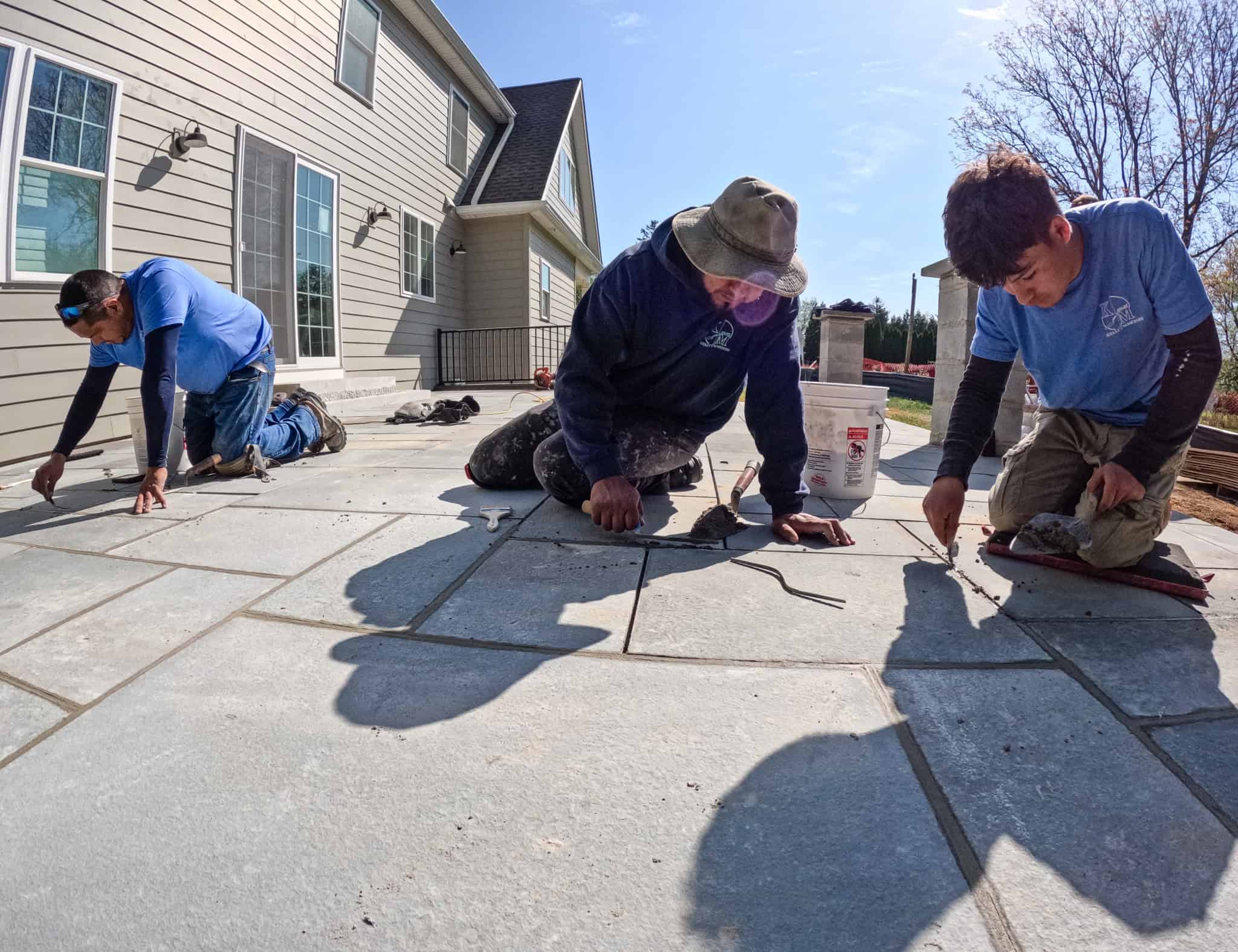
Flagstone
A premium, timeless option ideal for historic or natural-style properties.
Expect to be toward the middle to high end of our pricing range because flagstone requires hand-laying and precise cutting.
Concrete Pavers
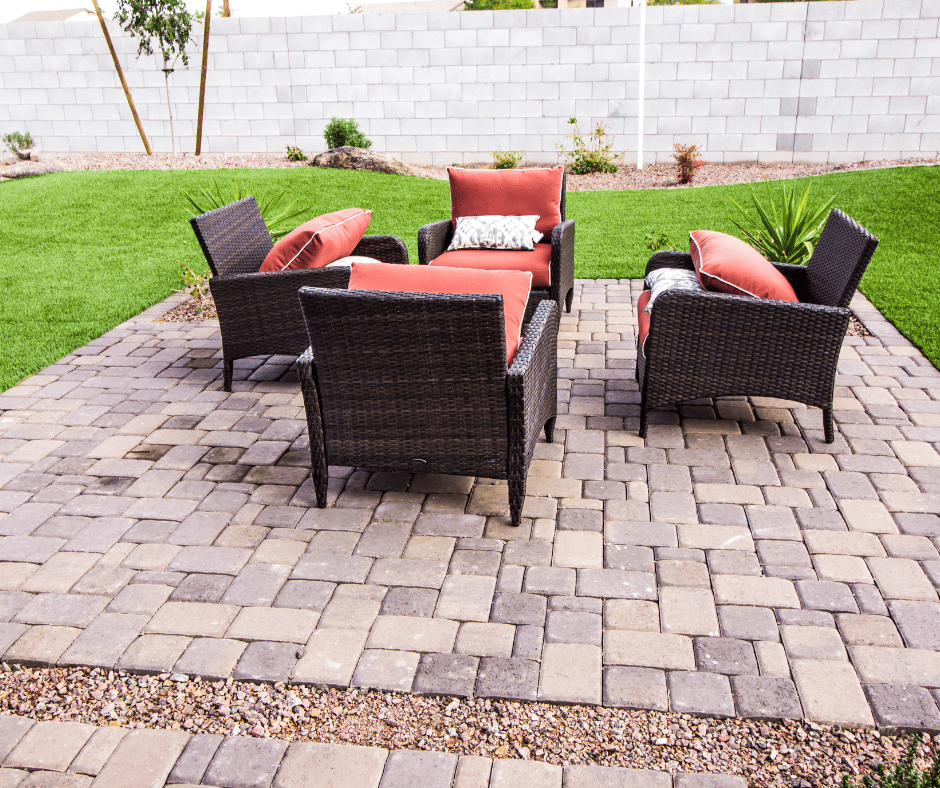
Predictable, durable, and available in endless colors and patterns.
Often the most cost-efficient option for medium to large patios.
Brick
Perfect for older homes or clients who love a traditional, warm aesthetic.
Concrete
The most budget-friendly option, especially for smaller or simpler spaces.
Material selection alone can shift your price by tens of thousands of dollars, depending on style and installation method.
2. Size & Layout of the Patio
This one is simple: bigger patios cost more, but design complexity matters just as much.
A 400 sq ft rectangle will always cost less than a:
- Multi-level patio
- Curved patio
- Patio with inlays, patterns, borders
- Patio with built-in features
Our typical patio sizes fall into three categories:
- Small patio (~$20K): Perfect for a seating area or grill space.
- Medium patio (~$40K): Room for dining + lounge areas.
- Large custom patio ($60K+): Plenty of space for multiple zones, features, and architectural details.
3. Site Conditions (A Big Deal in the Main Line)
This is a major factor many homeowners don’t realize affects cost.
The Main Line is known for:
- Older homes
- Tight access
- Mature landscaping
- Existing concrete or stone
- Elevation changes
If we can’t get machinery into your backyard or if demolition is needed before we start, labor can increase significantly.
A patio built on a perfectly flat, accessible property is going to cost less than one that requires extensive excavation, removal, or grading.
4. Base Preparation (Where Quality Really Begins)
A patio is only as good as the foundation underneath it.
A proper base includes:
- Excavation
- Geotextile stabilization fabric
- Several layers of compacted stone
- Proper pitch to prevent drainage issues
Good base prep is what keeps your patio from shifting, cracking, or sinking.
It’s also why we price our patios the way we do — we simply refuse to cut corners where it matters most.
5. Additional Features and Hardscape Add-Ons
Many homeowners want more than just a flat patio. Here are features that can raise the total project cost:
- Fire pits
- Outdoor kitchens
- Seat walls
- Steps and landings
- Water features
- Lighting
- Pergolas
On our website, we show examples of full outdoor living spaces that range from $80,000 to $100,000+, depending on how many of these features are included.
What You Can Expect to Spend (Real Scenarios)
Here are some examples based on the budgets we see most often:
Small Patio (~$20K)
- Simple layout
- Pavers or straightforward stone
- Minimal grading
- Perfect for a small seating area
Mid-Range Patio (~$40K)
- Larger layout
- More complex shape
- Possibly includes a small fire pit, sitting wall, or steps
- More premium materials
High-End Patio ($60K+)
- Premium materials like flagstone or multi-color pavers
- Curved or multi-level designs
- Custom detailing
- Built-in features like a fire pit or sitting wall
Full Outdoor Living Space ($80K–$100K+)
As seen on our pricing page, these typically include:
- Patio
- Fire or water feature
- Pergola
- Outdoor kitchen
- Lighting
This is the option homeowners choose when they want their backyard to feel like an extension of their home.
Optional Design Service
To make planning easier, we offer full design and 3D renderings for $2,500.
This allows you to see your exact layout before construction begins and gives you total confidence in the final plan.
So… Is a $20K–$60K Patio Worth the Investment?
For most Main Line and Chester County homeowners — yes.
Here’s why:
- It increases usable living space
- It raises property value
- It enhances curb appeal
- It improves how you entertain and relax
- It’s built to last when constructed properly
But the real value comes from hiring a contractor who understands drainage, base prep, design, and craftsmanship. A poorly built patio may look good on day one — but after one or two winters, the problems begin.
Final Thoughts
If you’re starting to plan your patio, here’s what we recommend:
- Set a realistic budget using the cost ranges above
- Choose materials that match both your home and your lifestyle
- Work with a contractor who provides transparency and detailed estimates
- Ask questions — the more informed you are, the better your outcome
At Kelly Masonry, our goal is to help you make the best possible decision for your home — whether you hire us or not.
If you’d like to talk through your project or get a quote, we’re here to help.