You invest time, effort, and money into a patio because you want a space that looks great and lasts. But here’s a truth many homeowners don’t realize: how you handle water is as crucial as choosing the stone or pavers.
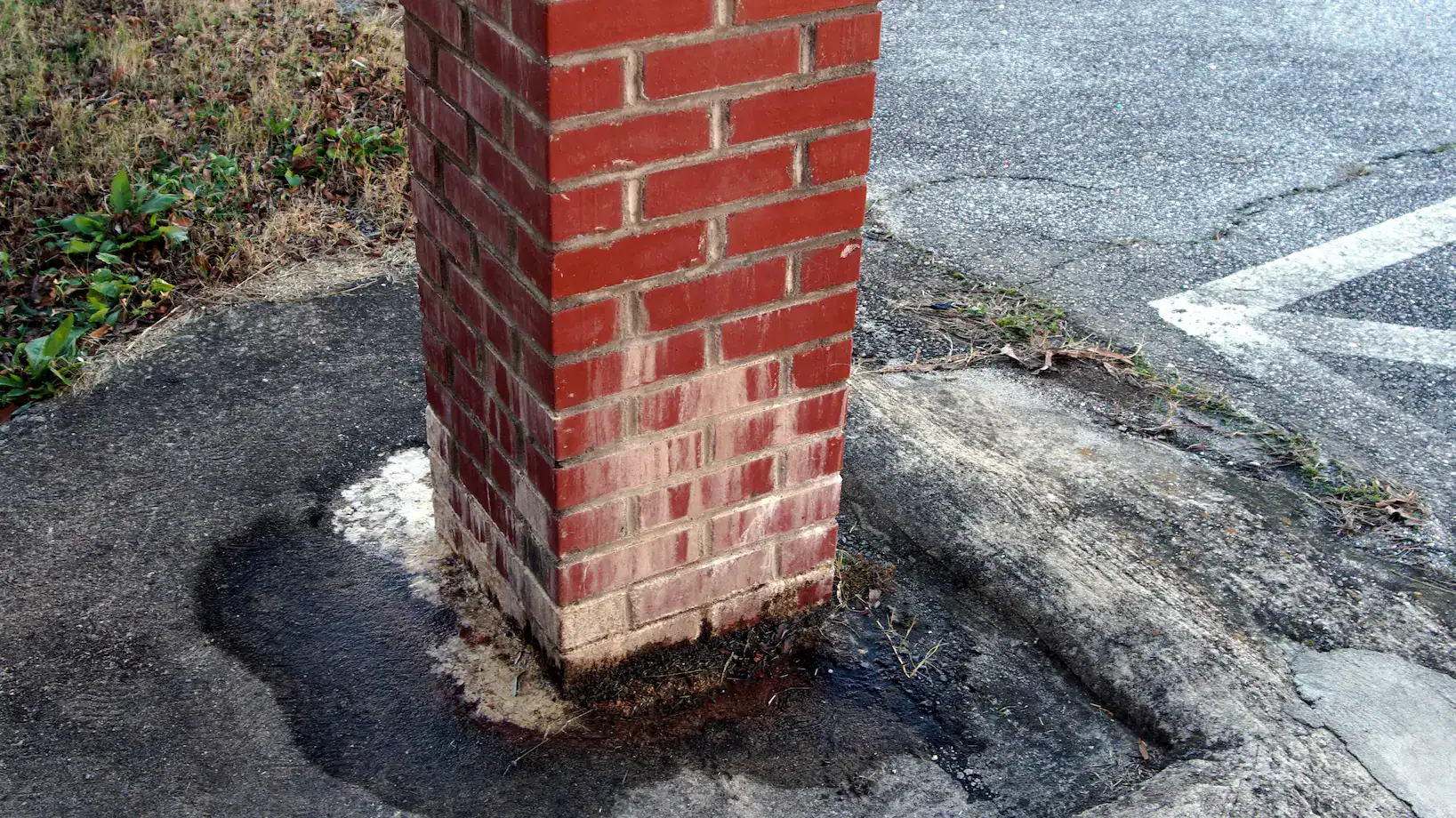
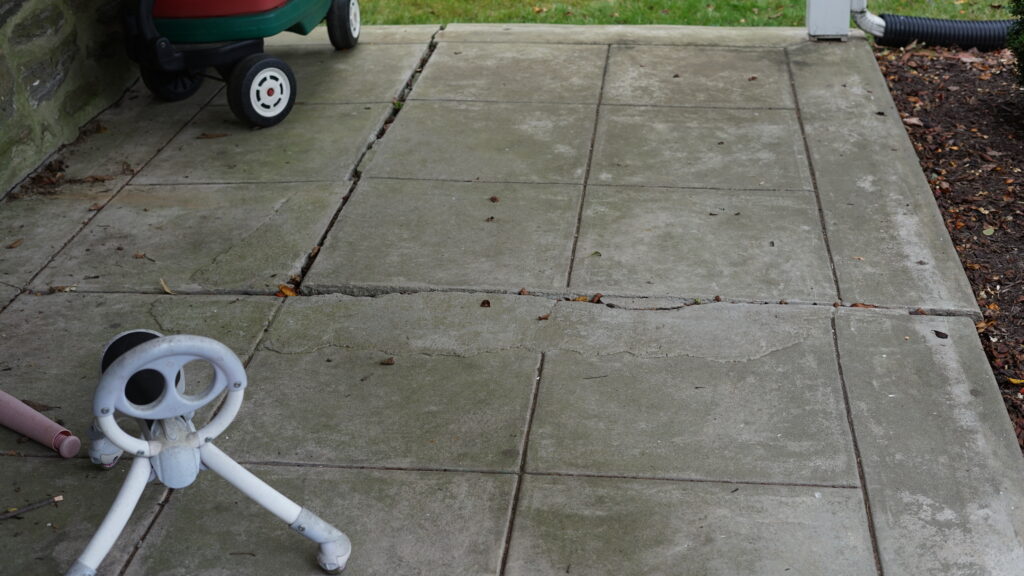
Poor drainage is one of the silent killers of patios. If water sits, seeps, freezes, or is forced under the surface, over time it damages the structure, destabilizes the base, causes shifting, and shortens the useful life of your hardscape.
Here are some of the common consequences of poor drainage:
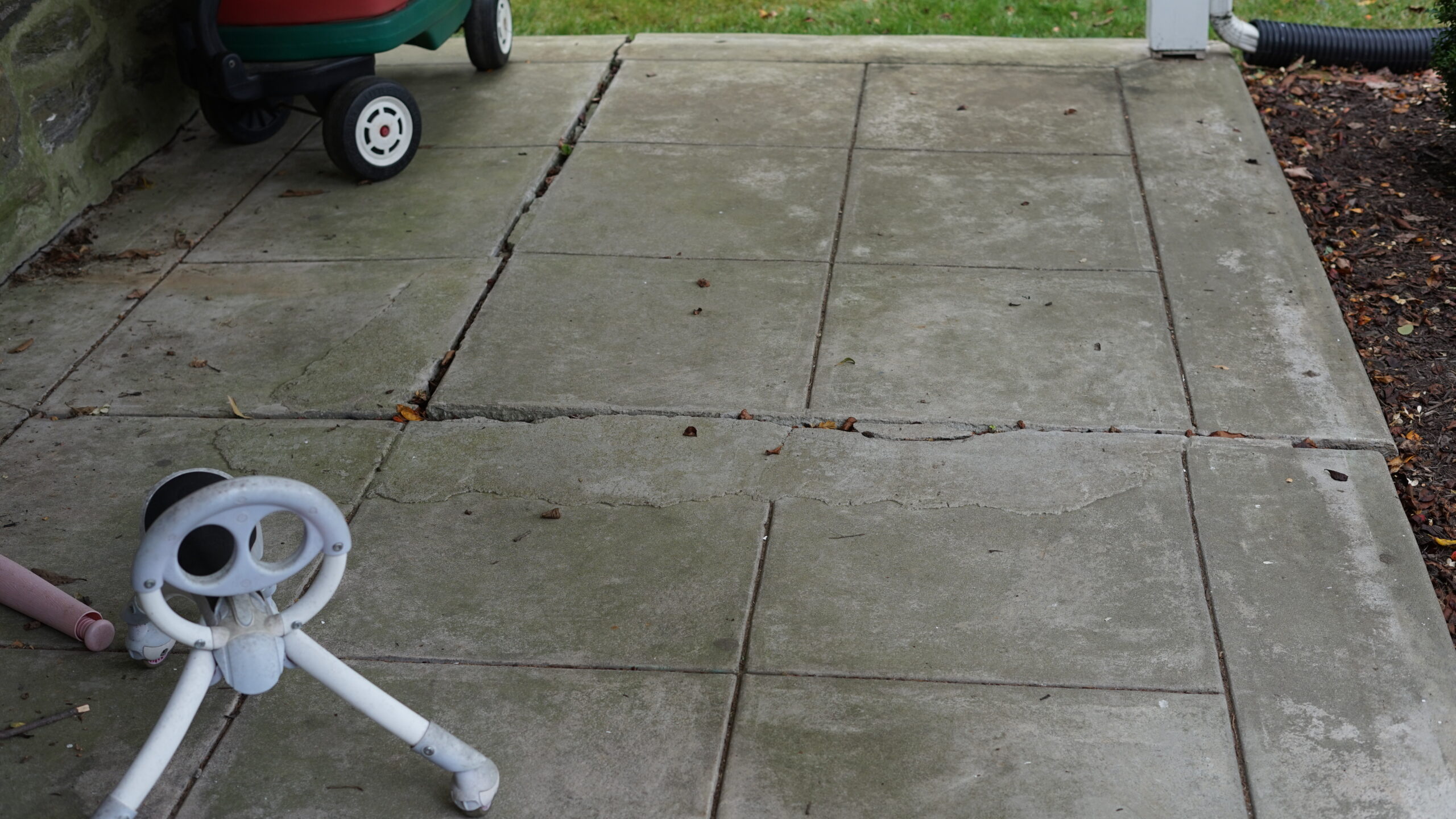
- Sunken or shifted pavers / stones. When the base becomes saturated, pavers can sink or slump.
- Freeze-thaw damage. Water that collects under joints or in cracks expands when it freezes, pushing apart stone, mortar, or joints.
- Cracking, heaving, or splitting of materials. As water moves, or repeatedly saturates the materials, it can degrade them over time.
- Moss, algae, or organic growth. Constant moisture encourages unwanted growth in joints or on the surface, which not only looks bad but can make the surface slippery.
- Water infiltration toward your home. Drainage that isn’t controlled can allow water to flow toward your foundation or doorways, causing further structural issues.
So, understanding drainage isn’t optional—it’s essential. Let’s dig into how drainage impacts your patio’s lifespan and then walk through how to fix it.
How Drainage Affects Patio Lifespan (Technically & Structurally)
To truly appreciate why drainage matters, it helps to break down how water interacts with a patio system. Below are key mechanisms:
- Saturation of the Sub-Base
The layers beneath your patio (crushed stone, gravel, base aggregate) are intended to be porous and to carry away excess water. If that base becomes saturated or clogged, it loses its strength and can shift under load. - Erosion of Joint Material
Water that flows through joints can wash away sand or jointing material. Over time, this weakens the bonding between pavers, allowing movement. - Hydrostatic Pressure & Freeze Expansion
Water trapped beneath or behind walls or pavers pushes upward or outward when frozen. That repeated pressure can fracture stone or mortar joints. - Differential Movement & Settlement
When some areas drain and others don’t, or when water undermines portions of the base, the patio no longer moves as a single fitted unit. Sections can sink or shift independently. - Material Deterioration over Time
Constant moisture accelerates wear. Natural stone, concrete, or pavers may suffer surface damage, spalling, discoloration, or chemical degradation faster in poorly drained areas.
When you put all this together, you realize that poor drainage doesn’t just shorten your patio’s life by a few years—it can create costly structural problems, repairs, or replacements long before your original design has exhausted its expected life.
How to Fix Drainage Issues (and Prevent Them Going Forward)
If your patio is already showing signs of trouble—or if you’re designing a new one—here are proven strategies to ensure proper drainage and maximize longevity.
1. Grade the Surface Properly (Slope Away from Structures)
The foundational rule of drainage is: water flows downhill. Your patio should never be perfectly flat. Instead, it should have a slight slope (commonly 1–2% or about ⅛ to ¼ inch per foot) away from your home or any structures, directing water to safe drainage areas.
Even when your yard is relatively flat, you can often grade the patio subgrade to channel water toward a drain or edge. In many projects, this subtle slope is one of the most overlooked—but essential—details.
2. Use Proper Base & Aggregate Materials
A strong, well-draining base is your first line of defense. Many problems begin when contractors skip or skimp on this layer. Use an open-graded aggregate (MOT Type 1 or equivalent), compacted in lifts, and include a geotextile fabric barrier so fine soil doesn’t clog the base.
If the base is thin or saturated, it fails to manage water properly, and everything above begins to suffer.
3. Add Subsurface Drainage (French Drains, PVC Pipes, etc.)
When surface slope alone isn’t enough, you can bury perforated PVC pipe or French drains beneath or adjacent to the patio. These systems collect water that has passed through the layers and safely guide it away—often to a dry well, storm system, or safe discharge zone.
If your patio abuts a garage or building, you may want a channel drain (trench drain) or slot drain along the edge to catch surface runoff before it spills into unwanted zones.
4. Use Channel Drains or Slot Drains Where Necessary
A well placed linear drain can capture surface water before it saturates or seeps back under your stones. In patios with transitions (e.g. next to driveways or thresholds), channel drains are especially useful.
Slot drains—thin, sleek channels often made of stainless steel or polymer—offer a clean, low-profile solution that blends with stonework while handling surface water.
5. Incorporate Permeable or Jointed Materials
Instead of tightly sealed surfaces, incorporate design features that let some water infiltrate:
- Permeable pavers or jointed pavers allow water to pass through gaps into the base.
- Wider, stable jointing systems that accept water drainage without losing structure.
- Gravel borders or infiltration zones adjacent to patios can help absorb overflow.
6. Redirect Roof & Gutter Water
Sometimes the culprit isn’t the patio itself but where roof runoff is landing. Make sure gutters and downspouts are directed away from the patio and toward appropriate drainage. This prevents heavy flows from overwhelming your system.
7. Clean & Maintain Drainage Components
Even the best drainage systems fail if blocked. Leaves, debris, roots, or sediment can clog inlets, pipes, or channels. Regular maintenance—clearing filters, flushing pipes, cleaning grates—helps ensure your system continues to function.
Real-Life Example (What We Do at Kelly Masonry)
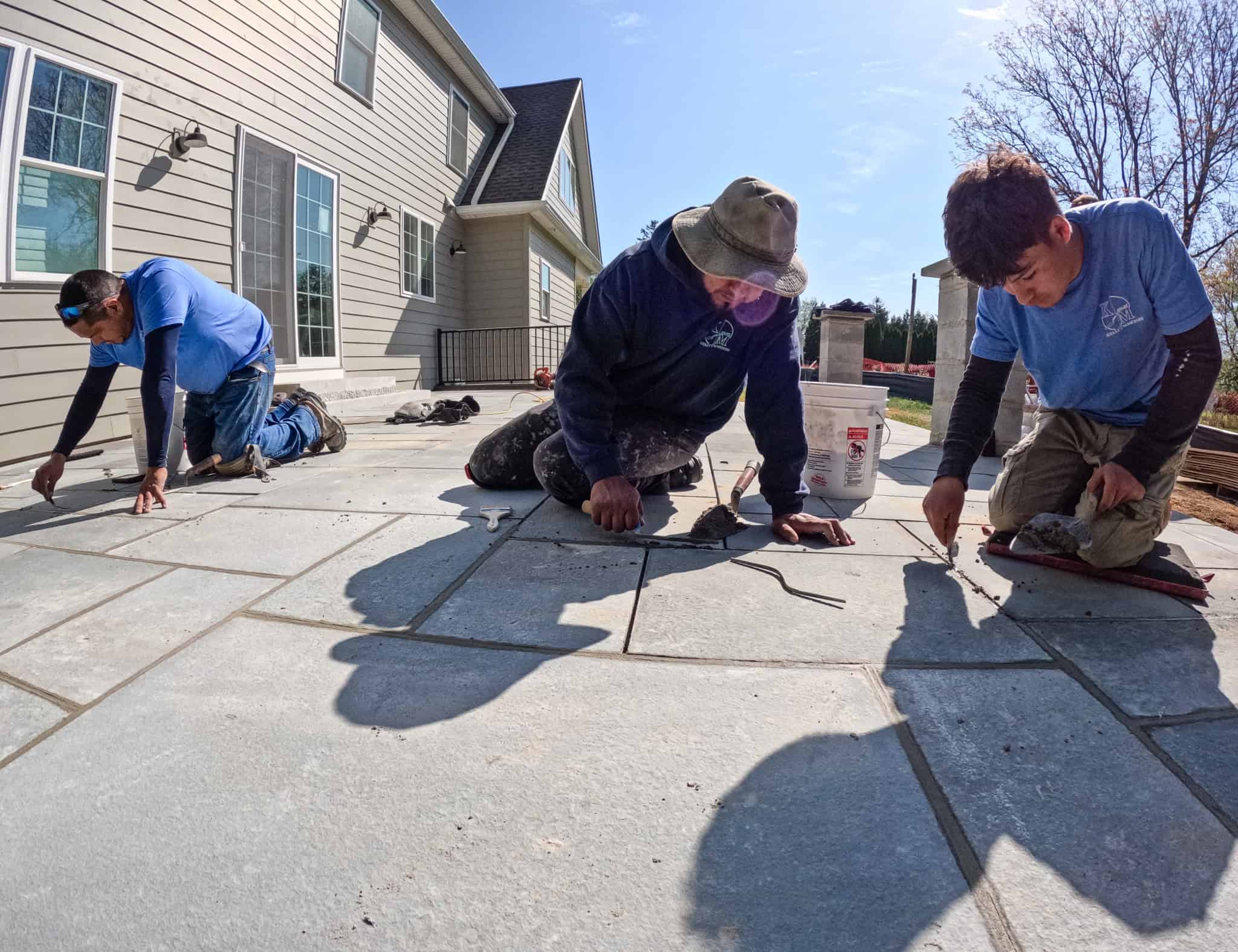
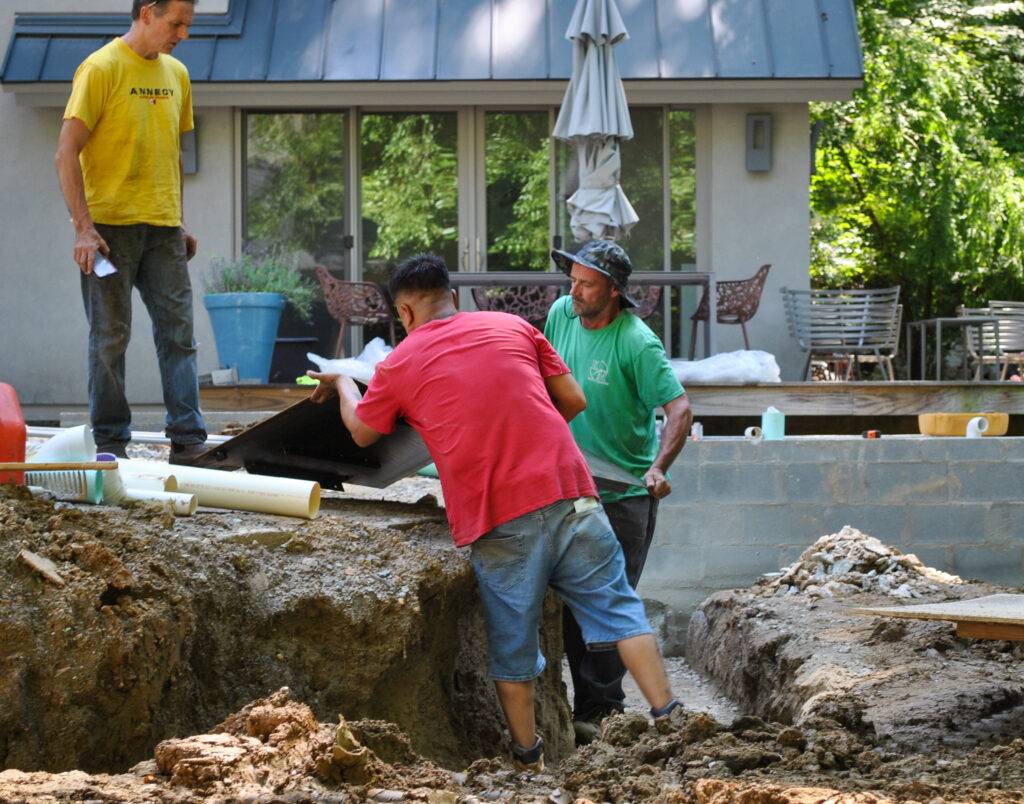
At Kelly Masonry, we treat drainage as the backbone of a successful patio. Before laying a single stone, we:
- Survey the existing topography to determine natural flow paths
- Create micro-grading to ensure runoff is directed away from buildings
- Design hidden drainage paths or install French drains where needed
- Use thick, well-compacted base material (open-graded aggregate)
- Add channel or slot drains where required—especially near steps or thresholds
- Choose jointing methods (sand, polymeric sand, etc.) that balance stability and permeability
When clients later see a patio that remains stable, leak-free, and low-maintenance decade after decade, they often tell us: “You nailed the drainage.” That’s no accident—it’s by design.
When to Call a Pro
Drainage problems can be subtle—small puddles after a rainstorm, slight tilting of stones, or recurring weed/moss growth in joints. If the issue is widespread, deep, or affecting foundation areas, it’s time to bring in an expert.
Professional assessment can reveal hidden grade flaws, subsurface water sources, or failing drainage components. Fixing the wrong area or patching only surface symptoms often leads to recurring issues—and higher long-term costs.
The Bottom Line
Your patio may look beautiful at first, but without the right drainage, it’s exposed to slow but steady deterioration. In contrast, a well-drained patio resists erosion, shifting, freeze-thaw damage, and material wear.
If you’re planning a new patio, renovating an old one, or noticing issues, invest in drainage first. It’s one of those “behind the scenes” features that adds years, performance, and peace of mind—just like the craft you see on top.
At Kelly Masonry, we don’t just build patios—we engineer them to last. Let us help you with a design that treats water as a partner—not an enemy.