An interior thin brick accent wall uses real brick veneer to create the appearance of traditional brick masonry without constructing a full-depth brick wall. Thin brick is lighter than full brick and is attached to a suitable existing surface using a compatible adhered-veneer system.
Thin brick can be used in living rooms, kitchens, entryways, bedrooms, and selected fireplace applications. The finished result depends on the brick, substrate, layout, mortar joints, corners, lighting, and surface finish.
This guide explains the differences between thin brick and full brick, appropriate installation surfaces, design options, cost factors, maintenance, and when professional installation is advisable.
Interior Brick Accent Walls at a Glance
| Question | Direct answer |
|---|---|
| What is thin brick? | Thin brick is real clay brick manufactured or cut in a thinner profile for adhered-veneer applications. |
| Is it structural? | No. Interior thin brick veneer depends on its backing and installation system for support. |
| Can it go over drywall? | Some systems permit installation over properly prepared interior drywall, but the wall and selected system must be compatible. |
| Is it lighter than full brick? | Yes. Thin brick creates a brick appearance with less thickness and weight than full-depth bricks. |
| Can it be painted or limewashed? | Often, but the treatment should be compatible with the brick and installed assembly. |
| Is it suitable around a fireplace? | Only when the product, assembly, finish, and location meet the fireplace manufacturer’s requirements and applicable clearances. |
| Can homeowners install it themselves? | A small, uncomplicated wall may be manageable, but corners, outlets, fireplaces, uneven walls, and complex layouts favor professional installation. |
| How much does it cost? | Cost depends on wall size, brick selection, substrate preparation, corners, joints, access, and finish. |
Exposed brick walls are popular
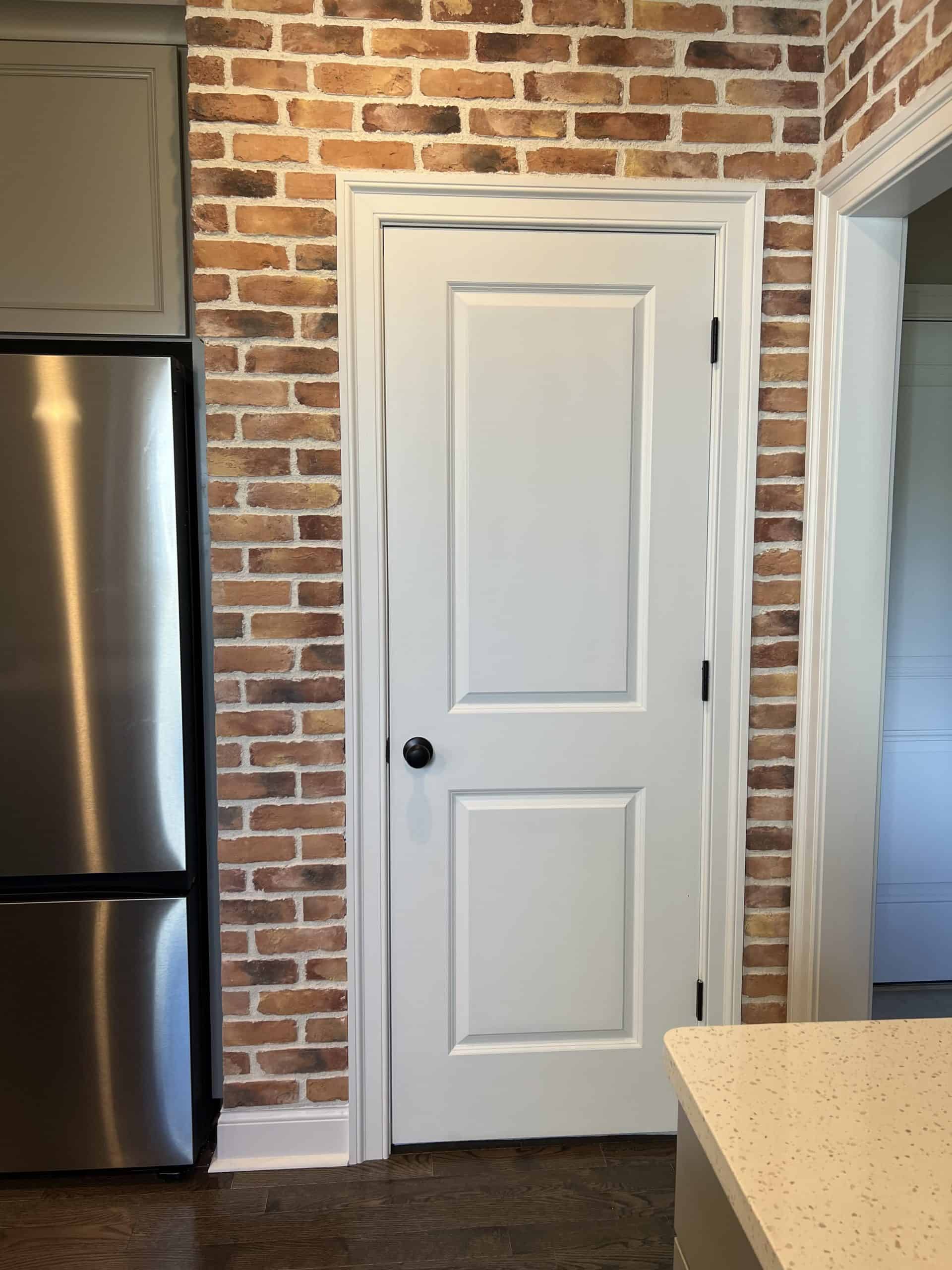
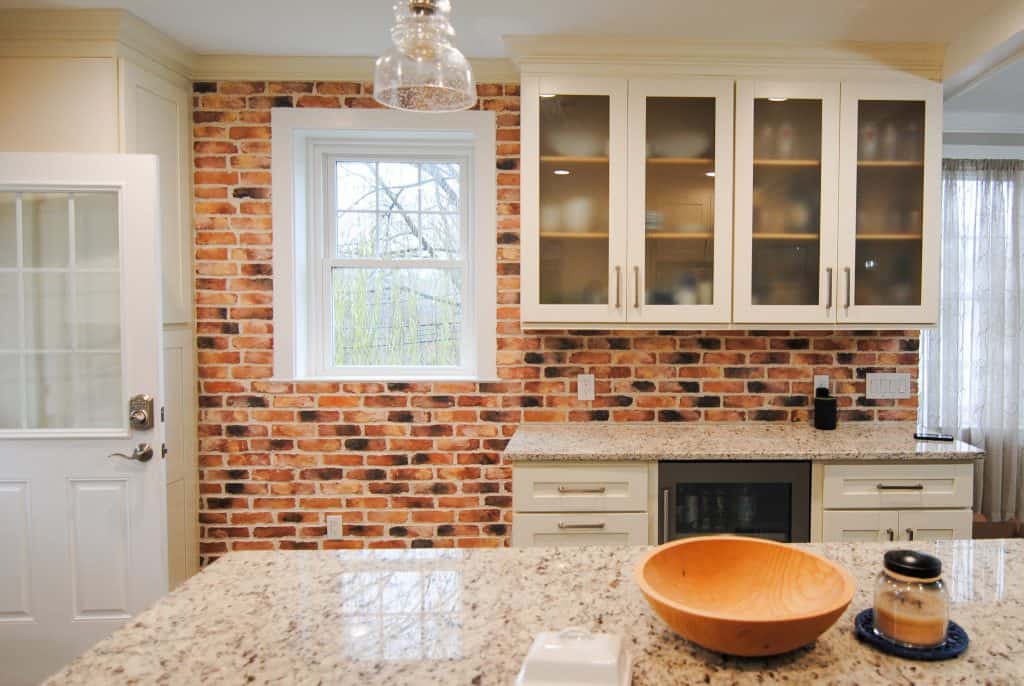
Exposed brick walls are a popular feature with interior designers and homeowners. Not only do they add intrigue and pair well with many materials, but they also add character to an otherwise blank space. The brick’s imperfection adds dimensional detail. Its warm color can spice up a room, or it can be painted white for a lighter, more pristine effect or black for a more rustic impression. Today’s thin brick options make adding brick as a décor feature much easier.
What are thin bricks?
Thin brick is real clay brick manufactured or cut in a thinner profile for veneer applications. It provides the color, texture, variation, and mortar-joint appearance of traditional brick while requiring less depth and weight than full-depth masonry.
Thin brick is not structural. It must be installed over a sound, compatible substrate using an approved adhered-veneer system.
Thin brick is available in different dimensions, colors, textures, and corner pieces. Product dimensions and coverage vary, so material quantities should be calculated using the selected manufacturer’s specifications.
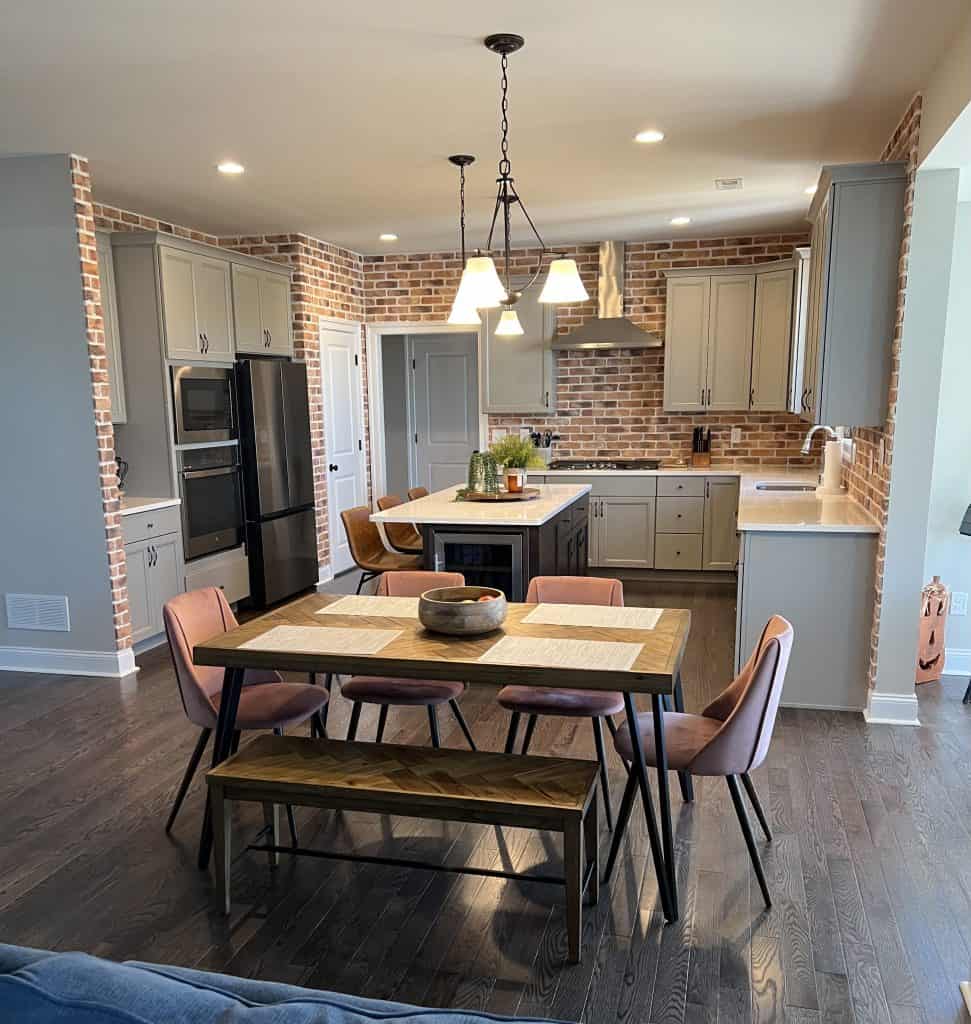
Thin Brick vs. Full Brick vs. Faux Brick Panels
| Option | What it is | Advantages | Considerations |
|---|---|---|---|
| Thin brick veneer | Real clay brick in a thinner profile attached to a suitable substrate | Authentic color, texture, corners, and mortar joints with less thickness than full brick | Requires a compatible substrate and complete installation system |
| Full-depth brick | Traditional masonry units laid with mortar | Traditional masonry construction and substantial depth | Heavier, thicker, and may require structural support |
| Faux brick panels | Lightweight panels designed to resemble brick | Fast installation and low weight | Appearance and texture may be less authentic than real brick |
Which option is best?
Thin brick is usually the most appropriate choice when a homeowner wants an authentic interior brick appearance without constructing a full-depth masonry wall. Full brick may be appropriate when the project is part of a larger masonry or structural design. Faux panels prioritize low weight and speed over authentic masonry materials.
Should You Install an Interior Thin Brick Wall Yourself?
A small, uncomplicated accent wall may be manageable for a homeowner with suitable tools and construction experience. However, thin brick should not be treated as a simple decorative tile.
The wall condition, bonding system, brick layout, corners, openings, mortar joints, and finish all affect the result. Professional installation is advisable when the project involves fireplaces, cabinets, outlets, outside corners, uneven walls, moisture exposure, or a highly visible finished area.
The following sections explain how the substrate and installation system should be evaluated before work begins.
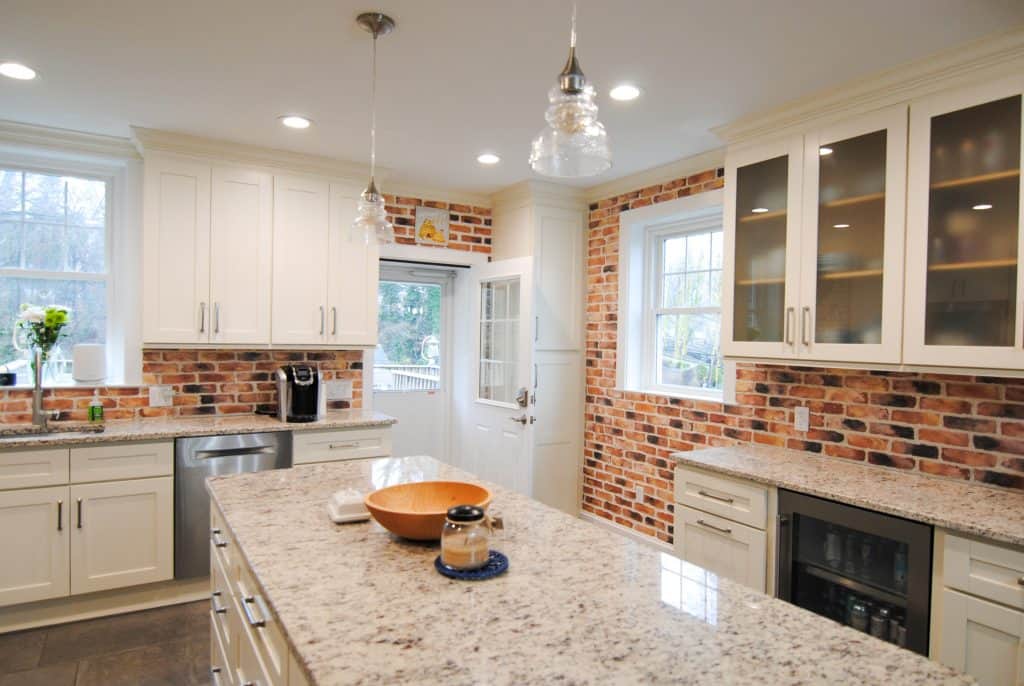
Can Thin Brick Be Installed Over Drywall?
Some interior thin-brick systems can be installed over drywall, but drywall suitability should never be assumed.
Before installation, confirm that:
- The drywall is securely fastened
- The wall is structurally sound
- The surface is sufficiently flat
- Paint, coatings, dust, or residue will not interfere with bonding
- The selected adhesive or modified mortar is approved for both the brick and substrate
- The total system is appropriate for the room and exposure
- Outlets, trim, cabinets, and wall penetrations have been addressed
The selected thin-brick manufacturer’s instructions should determine the final preparation and installation method. A damaged, flexible, contaminated, or unsuitable wall may require repair or an approved backer system before brick is installed.
The Brick Industry Association emphasizes that the substrate must be structurally sound, clean, sufficiently flat, and compatible with the chosen adhered-veneer system.
How Is an Interior Thin Brick Wall Installed?
A successful installation starts with selecting a complete thin-brick system that is compatible with the existing wall and intended room.
The typical professional process includes:
- Inspecting the wall: The installer checks the substrate, flatness, stability, coatings, moisture exposure, outlets, trim, and transitions.
- Selecting the system: Brick, corner pieces, bonding material, joint material, and finish are selected as a compatible assembly.
- Planning the layout: The wall is measured, and the brick courses are planned to avoid narrow pieces at visible edges.
- Preparing the substrate: Loose material, incompatible coatings, surface irregularities, and other bond problems are corrected.
- Installing the brick: Thin brick is placed level and consistently spaced according to the system manufacturer’s instructions.
- Finishing the joints: The joints are filled and tooled to achieve the selected profile and appearance.
- Cleaning and curing: Excess material is removed using methods appropriate for the brick and mortar, and the assembly is allowed to cure.
- Applying an optional finish: Stain, limewash, mortar wash, or masonry-compatible paint may be considered after the brickwork is properly cured and evaluated.
Do not specify one adhesive, water ratio, trowel size, cutting tool, or curing period for every project. Those details should come from the selected system’s technical instructions.
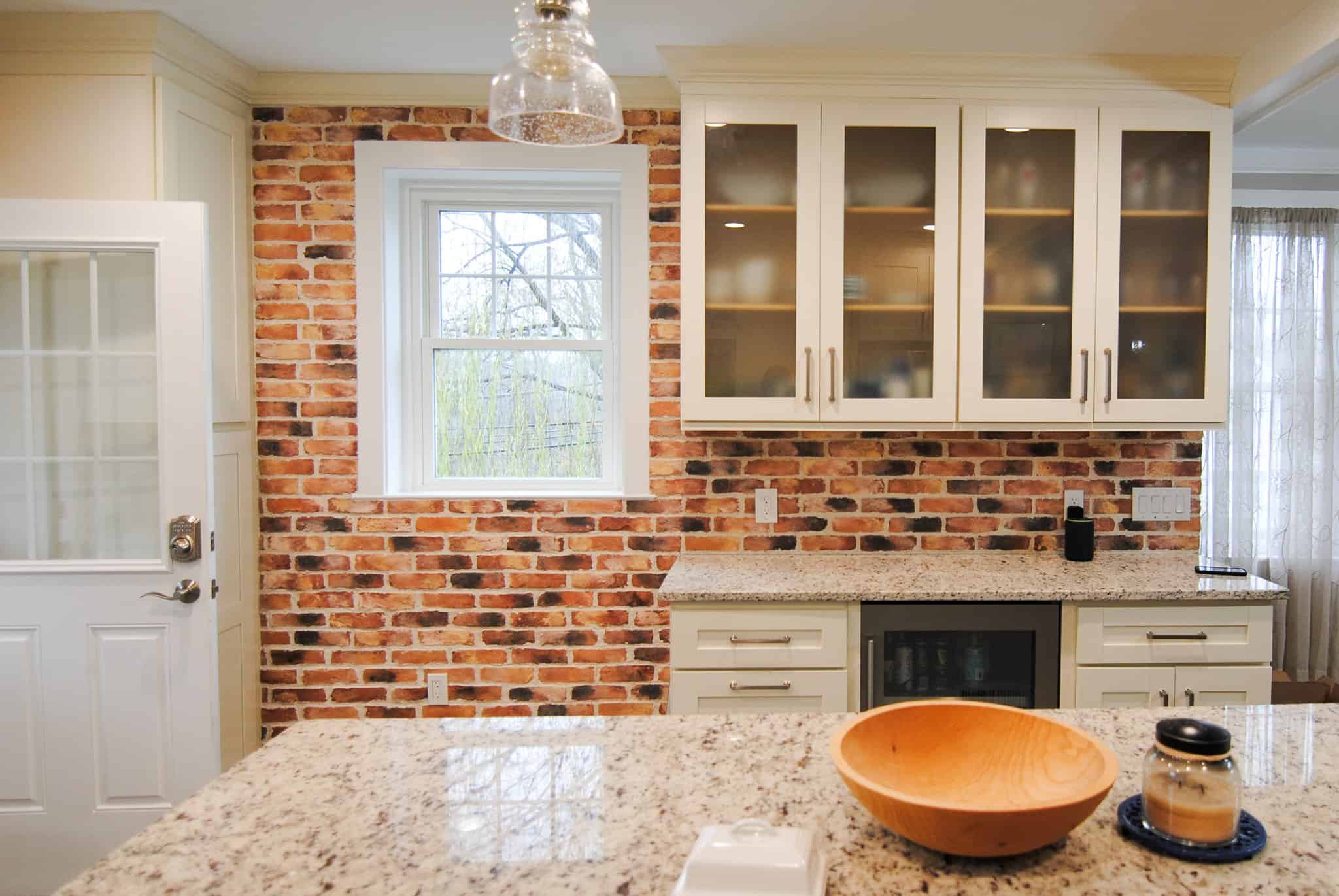
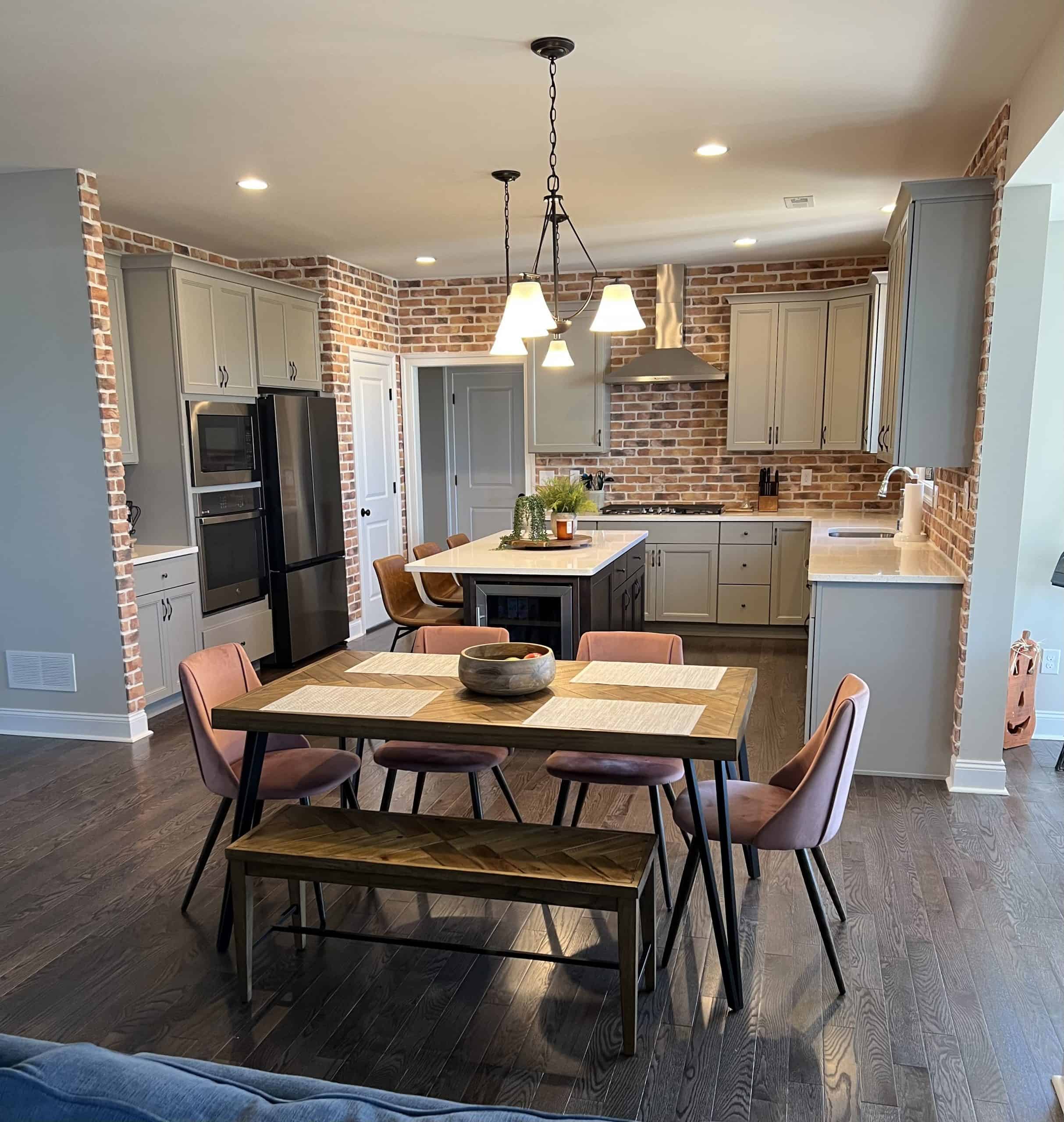
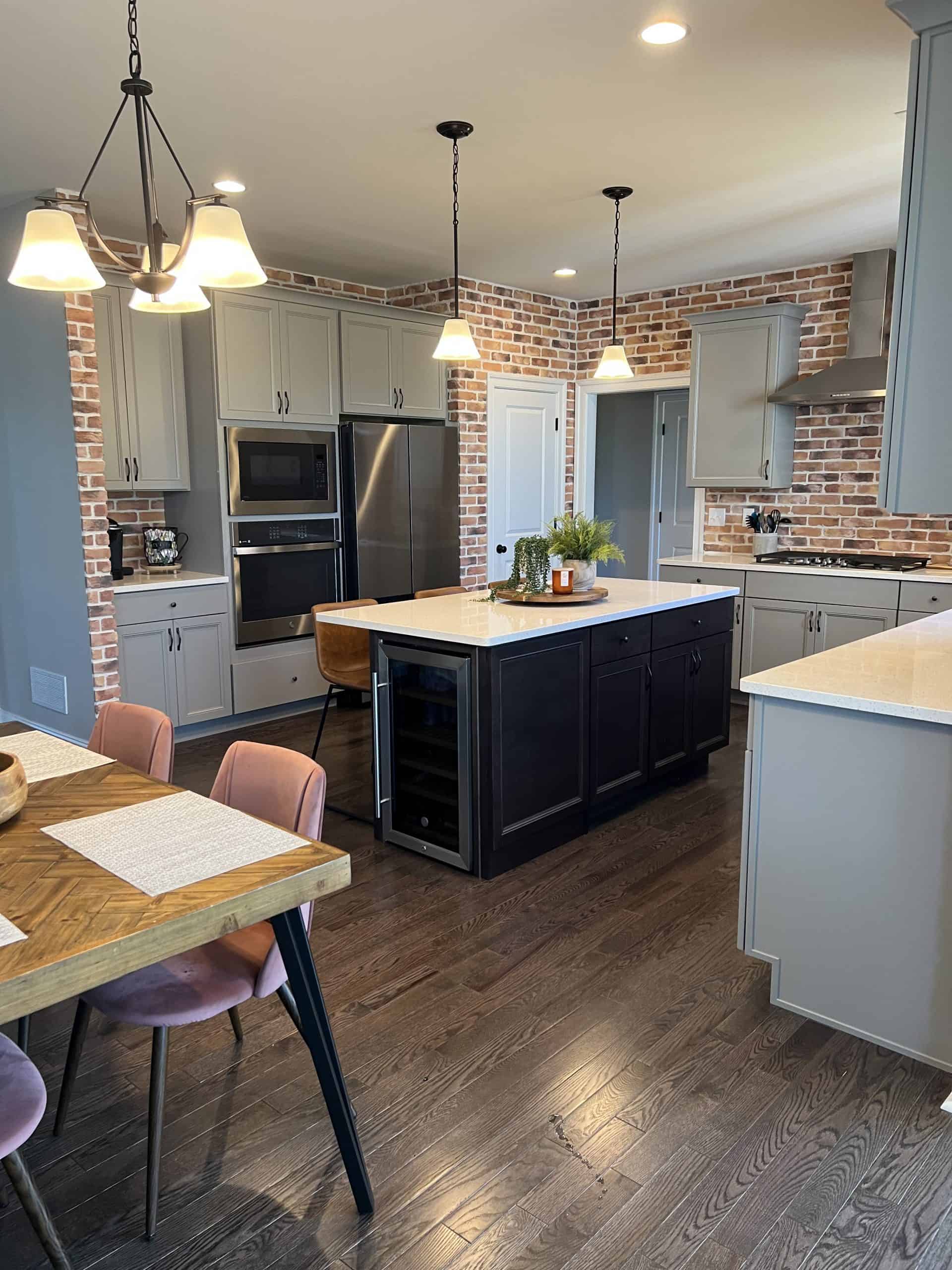
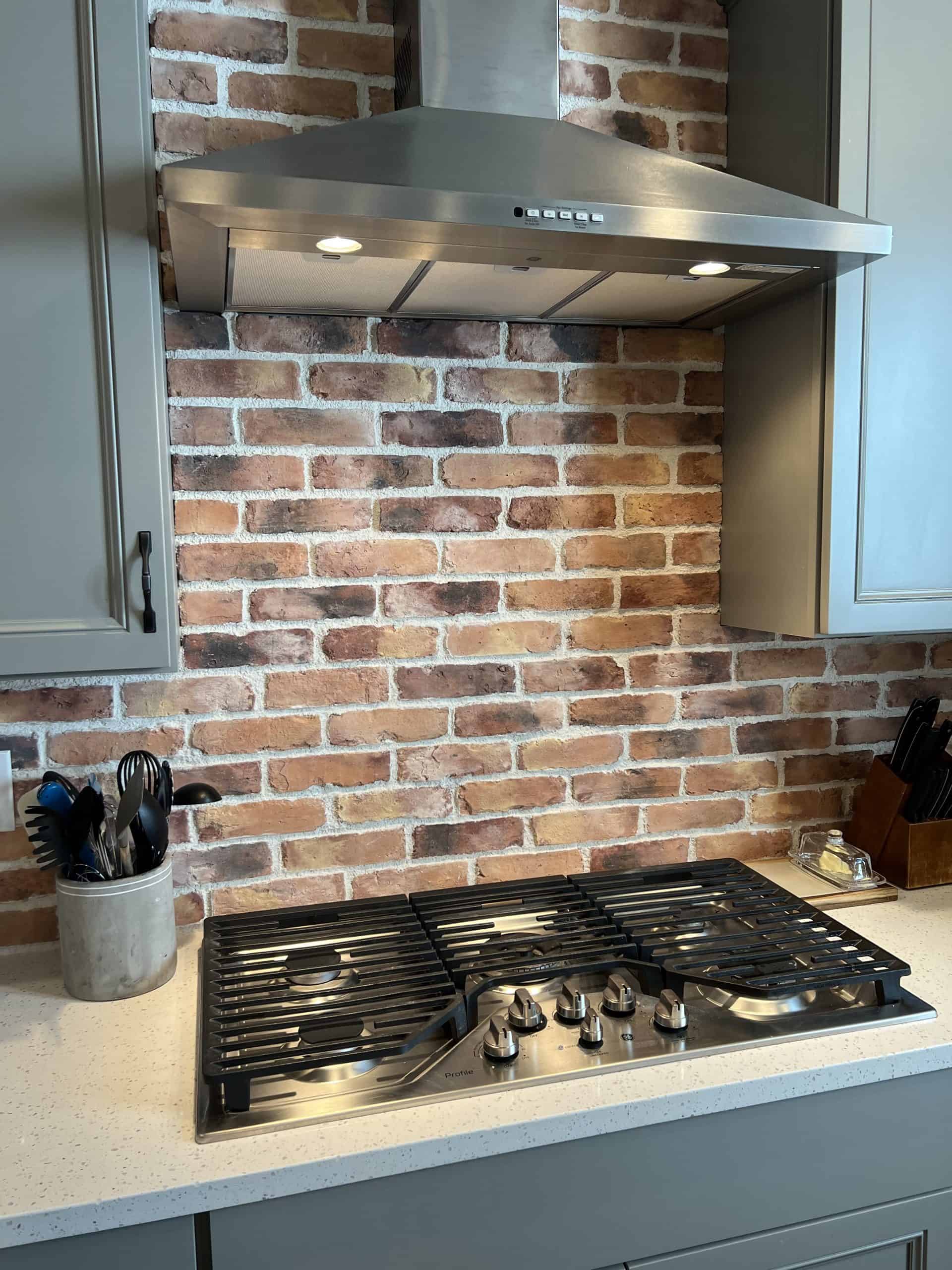
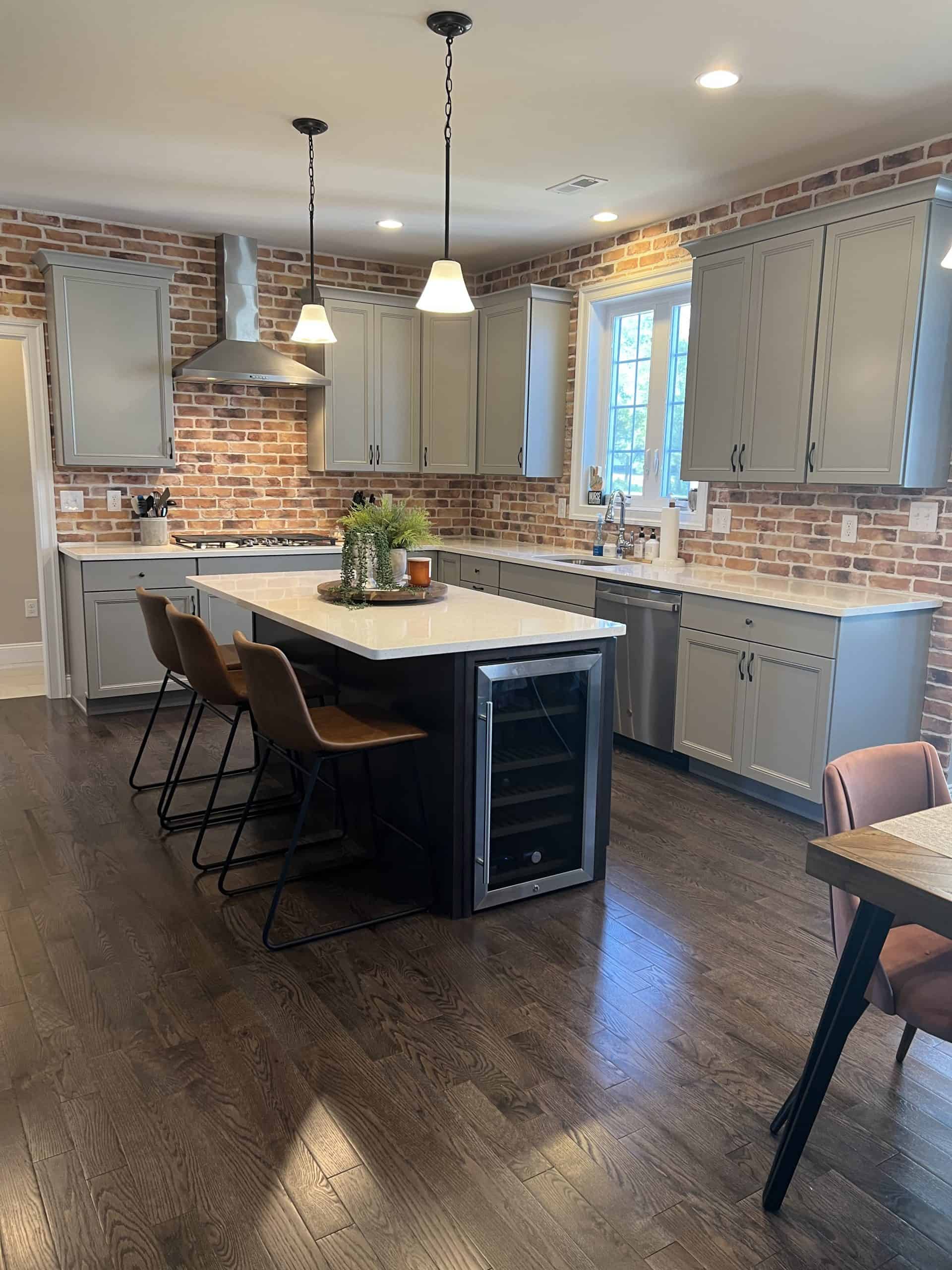
Thin brick gives you an authentic brick wall look without the work of laying full-size brick.
How Much Does an Interior Thin Brick Accent Wall Cost?
Interior brick wall pricing depends on
- Wall dimensions
- Brick manufacturer and style
- Individual bricks versus panel systems
- Number of corners and openings
- Existing wall condition
- Substrate preparation
- Outlet and trim adjustments
- Mortar color and joint profile
- Brick cuts and pattern complexity
- Fireplace or backsplash conditions
- Staining, limewashing, painting, or sealing
- Jobsite access and cleanup
A site evaluation is necessary before an exact proposal can be prepared because two walls of the same size may require different preparation, cuts, corners, and finishes.
Kelly Masonry provides project-specific pricing after evaluating the wall, material, layout, corners, openings, substrate preparation, and desired finish.
Request a consultation for an estimate based on your interior brick accent-wall project.
Natural Brick, Limewash, Paint, or Mortar Wash?
| Finish | Appearance | Main consideration |
|---|---|---|
| Natural brick | Preserves the original brick color and texture | Brick and mortar color selection becomes especially important |
| Masonry stain | Changes color while retaining much of the brick texture | Usually a more permanent color decision |
| Limewash | Matte, mineral-based finish with natural variation | Appearance changes and weathers over time |
| Mortar wash or German schmear | Mortar partially covers the brick faces and joints | Final coverage depends heavily on installation technique |
| Masonry-compatible paint | Opaque and uniform | Can conceal texture and create future maintenance requirements |
Before applying any finish, consider moisture, permanence, maintenance, surface preparation, and compatibility with the brick assembly. Use a sample panel before treating the entire wall.
Where Can Interior Thin Brick Be Used?
Living rooms
Thin brick can create a focal point behind a television, shelving, artwork, or seating area. Lighting should be planned carefully because directional light emphasizes brick texture and mortar joints.
Kitchens
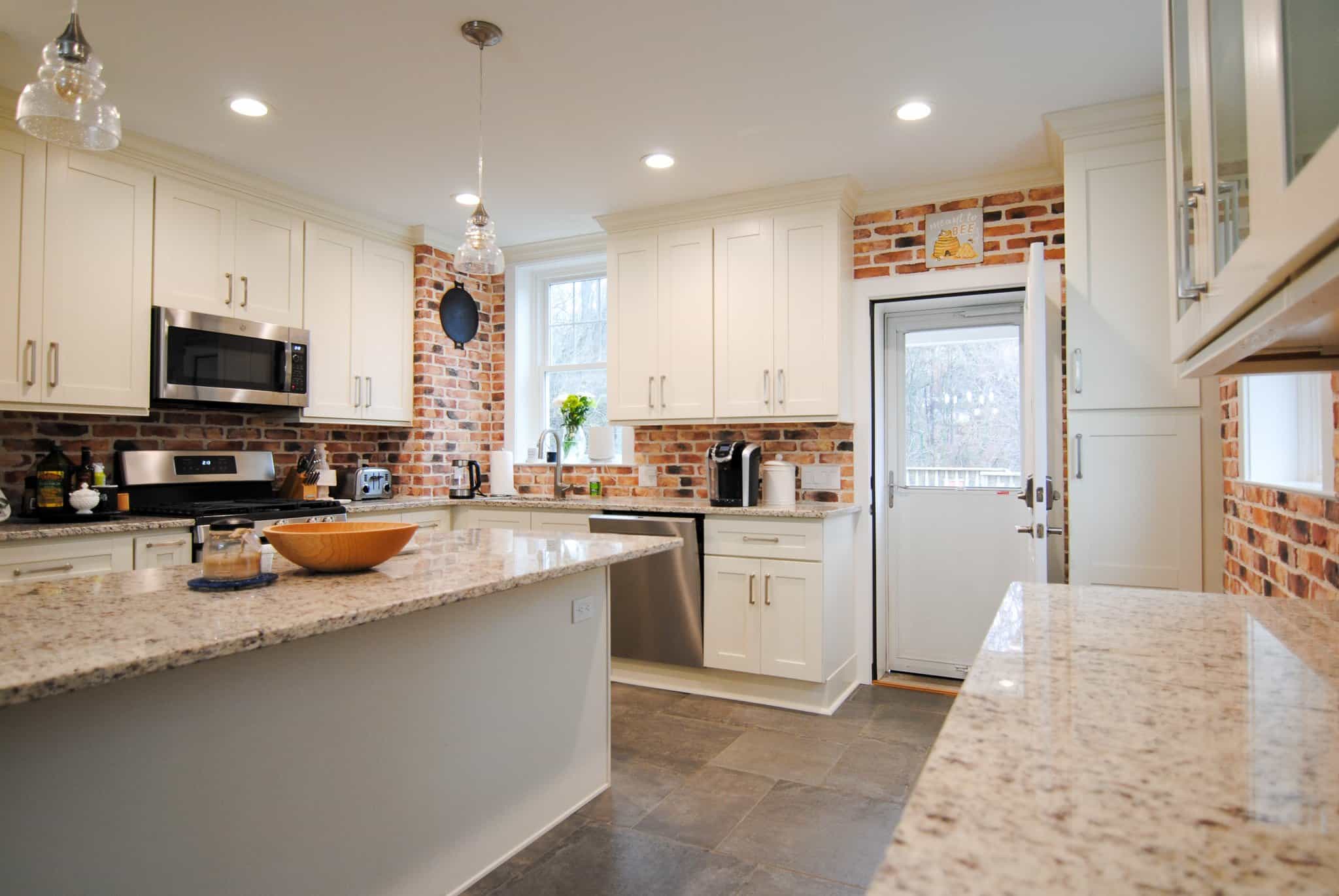
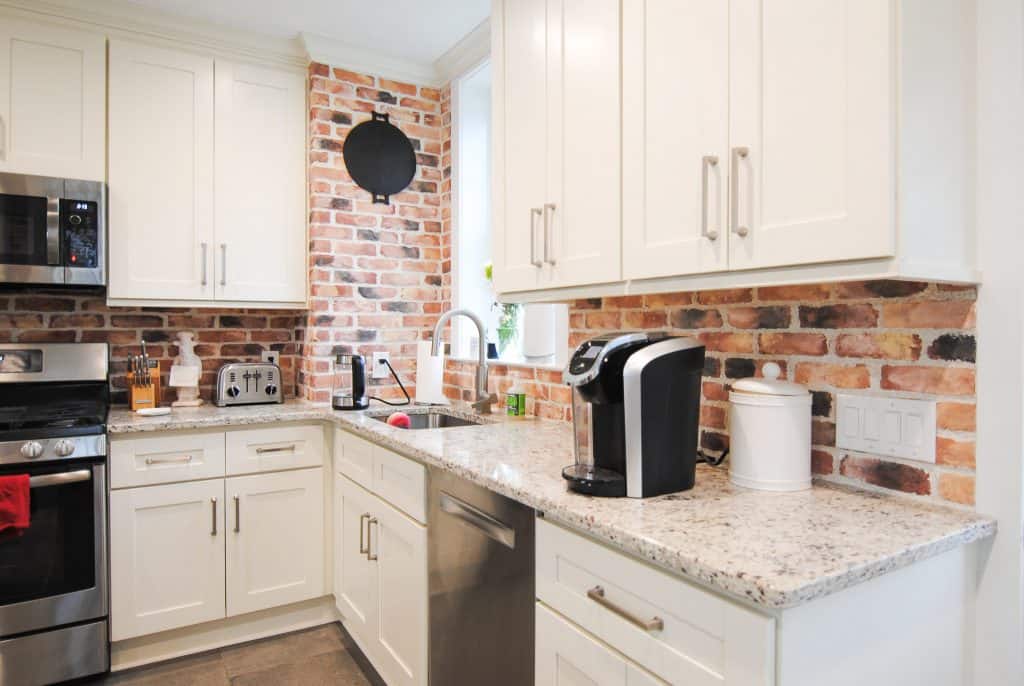
Thin brick can be used as a backsplash or feature wall when the selected material and finish are suitable for moisture, cooking residue, and regular cleaning.
Fireplace surrounds
Thin brick may be appropriate around some fireplaces, but the brick, substrate, bonding material, mortar, and finish must satisfy the fireplace manufacturer’s requirements and applicable clearances. Standard decorative thin brick should not be assumed suitable inside a firebox.
Entryways and mudrooms
Brick can add texture near an entrance, but the design should account for baseboards, door trim, switches, flooring transitions, and cleaning.
Bedrooms and home offices
A limited accent wall or lighter mortar color can introduce brick texture without visually overpowering a smaller room.
DIY vs. Professional Thin-Brick Installation
A small, flat accent wall with few cuts may be suitable for an experienced homeowner using a complete manufacturer-approved system.
Professional installation is the better option when the project includes:
- Uneven or damaged walls
- Outside corners
- Windows or multiple openings
- Numerous electrical outlets
- Cabinets and backsplashes
- Fireplace surrounds
- Moisture exposure
- Complex brick patterns
- Difficult material matching
- Existing masonry requiring repair
- A high-visibility finished area
A mason can also help select brick, mortar color, joint profile, corner units, and transitions that make the finished wall look intentional rather than applied as an afterthought.
Frequently Asked Questions
Is thin brick real brick?
Yes. Clay thin brick is made from similar materials and processes as traditional brick but in a thinner, lighter profile intended for veneer applications.
Is a thin brick wall structural?
No. Adhered thin brick is a veneer. It depends on the substrate and bonding system for support and should not be described as a load-bearing brick wall.
Can thin brick be installed over painted drywall?
Possibly, but the existing paint, drywall attachment, surface condition, bonding material, and selected system must be evaluated. Follow the thin-brick and bonding-material manufacturers’ instructions.
How many thin bricks are needed per square foot?
Coverage varies by brick dimensions and joint width. Use the product manufacturer’s coverage chart and include an appropriate allowance for cuts, breakage, corners, and pattern layout.
Does an interior brick wall need to be sealed?
Not always. Sealing depends on the brick, room, exposure, finish, and manufacturer recommendations. A kitchen backsplash may have different cleaning and protection needs than a bedroom accent wall.
Can thin brick be installed around a fireplace?
It may be suitable around some fireplace applications, but the selected assembly must meet the fireplace manufacturer’s requirements and applicable clearances. Do not assume that standard decorative brick, adhesive, or finish is suitable inside a firebox.
Can thin brick be painted?
Yes, some brick can be painted, stained, limewashed, or mortar-washed. The brick should be properly prepared, cured, dry, and compatible with the selected treatment.
Is thin brick difficult to remove?
Removal can damage drywall or the underlying substrate because the veneer is bonded to the wall. Homeowners should treat thin brick as a long-term finish rather than temporary décor.
Considering an Interior Brick Accent Wall?
Kelly Masonry can help evaluate your wall, recommend thin-brick and mortar options, plan corners and transitions, and determine whether the project is appropriate for professional installation.
View our masonry portfolio or request a consultation to discuss your interior brick-wall project.
About the Author
John Kelly is the founder of Kelly Masonry and has more than 25 years of masonry experience. His team works with brick, stone, mortar, veneers, masonry restoration, and custom residential projects throughout Delaware County, the Main Line, and surrounding Pennsylvania communities.