A deck can be a great place to relax or entertain, but direct summer sun can make it uncomfortable during the hottest parts of the day.
The best way to add shade depends on how much coverage you want, where the sun hits your deck, whether you want protection from rain, and whether you prefer a temporary or permanent solution.
For flexible shade, an umbrella or freestanding canopy may be enough. For a more permanent outdoor space, a pergola, retractable awning, louvered pergola, or covered structure may make more sense.
Before choosing, consider:
- How the sun moves across your deck
- How much of the deck needs shade
- Whether you also want rain protection
- Wind exposure
- How a structure would attach to the deck or house
- Your budget
- The architecture of your home
- Whether permits or structural work may be required
Kelly Masonry designs and builds custom decks and pergolas throughout Delaware County and the Main Line.
12 Deck Shade Ideas at a Glance
| Shade option | Best for | Shade coverage | Permanent? |
|---|---|---|---|
| Patio umbrella | Small seating and dining areas | Adjustable | No |
| Freestanding canopy | Larger temporary coverage | Moderate to high | Usually no |
| Shade sail | Contemporary partial shade | Moderate | Semi-permanent |
| Retractable awning | Adjustable shade near the house | High | Yes |
| Fixed awning | Consistent coverage | High | Yes |
| Traditional pergola | Architectural shade | Partial | Yes |
| Louvered pergola | Adjustable overhead coverage | Adjustable | Yes |
| Pavilion or covered structure | Maximum overhead coverage | High | Yes |
| Shade trees | Natural shade | Increases over time | Yes |
| Exterior roller shades | Low-angle sun and glare | Adjustable | Semi-permanent |
| Outdoor curtains or screens | Side shade and privacy | Variable | Semi-permanent |
| Trellises and climbing plants | Natural partial shade | Light to moderate | Semi-permanent |
1. Patio Umbrellas
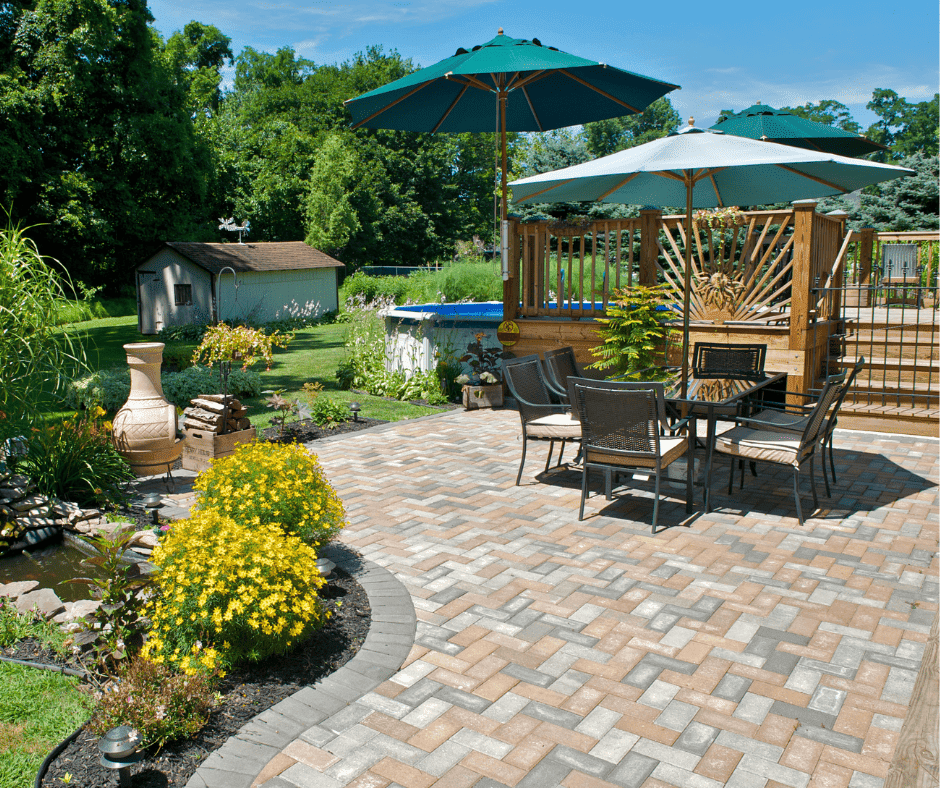
A patio umbrella is one of the simplest ways to add shade to an existing deck.
Umbrellas work especially well over:
- Dining tables
- Lounge chairs
- Small seating areas
- Flexible furniture layouts
Cantilever umbrellas can cover a larger seating area without placing the pole directly through the center of a table.
When choosing an umbrella, consider:
- Canopy size
- Base weight
- Available deck space
- Wind exposure
- Tilt and rotation
- Fabric durability
- Storage during severe weather
An umbrella is a good option when you want shade without permanently changing your deck.
2. Freestanding Canopies
A freestanding canopy can cover a larger portion of a deck than a typical umbrella.
It may work well for:
- Seasonal entertaining
- Dining areas
- Temporary gatherings
- Decks where you do not want to attach anything to the house
The biggest advantage is flexibility. The biggest limitation is usually wind.
Canopies should be anchored and used according to the manufacturer’s instructions. A lightweight seasonal canopy should not be treated like a permanent roof or left up during severe weather unless it is specifically designed for those conditions.
3. Shade Sails
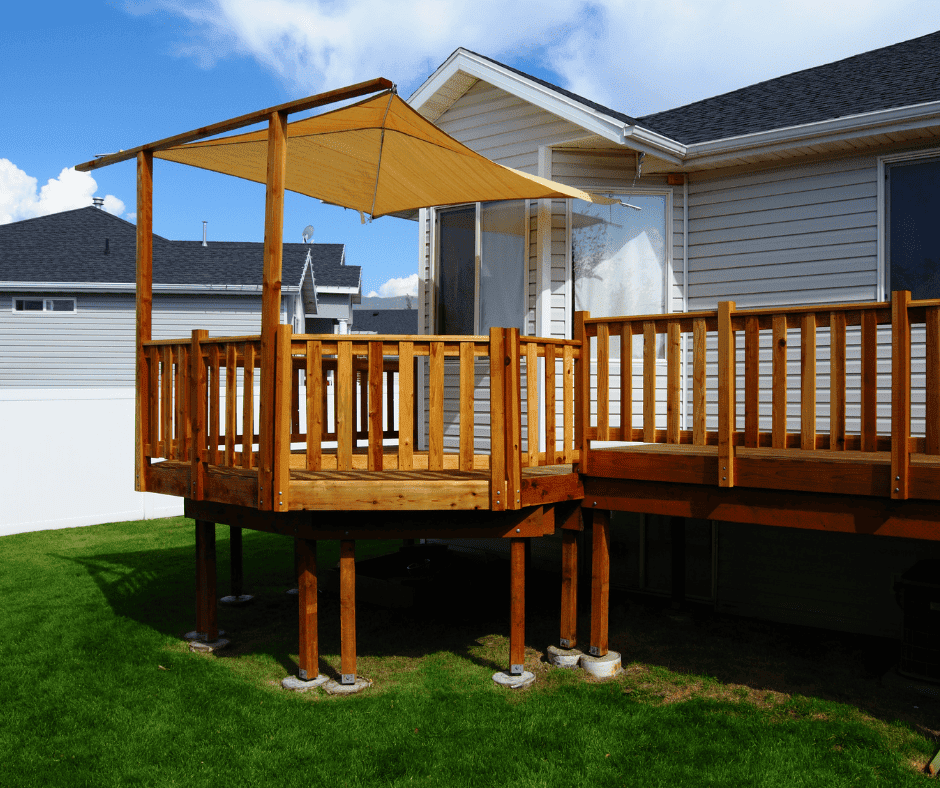
Shade sails use tensioned outdoor fabric supported by posts or suitable structural attachment points.
They can create a clean, contemporary appearance and work particularly well over:
- Seating areas
- Portions of a deck
- Patios
- Pool-adjacent spaces
Shade sails usually provide partial rather than complete coverage, depending on their size and position.
They also require more planning than simply hanging fabric between existing structures. Wind creates significant forces on a tensioned sail, so posts and attachment points need to be suitable for the system.
A shade sail can be a good option when you want a modern look without constructing a complete roof.
4. Retractable Awnings
A retractable awning gives you more control over when the deck is shaded.
It can be extended during hot periods and retracted when you want more sunlight or when weather conditions require it.
Benefits can include:
- Large adjustable coverage area
- Shade close to the house
- Fewer posts occupying deck space
- Motorized operation
- Optional wind or sun sensors on some systems
Awnings attached to the house should be installed according to the manufacturer’s structural requirements.
Wall construction, attachment points, width, projection, wind exposure, and clearances around doors and windows all matter.
5. Fixed Awnings
Unlike retractable awnings, fixed awnings remain in place.
They can provide consistent shade over:
- Doors
- Windows
- Small deck areas
- Cooking areas
- Seating zones
A fixed awning may make sense when you know exactly where shade is needed throughout the season and do not need the flexibility of a retractable system.
Because the structure remains exposed to the weather, material durability and proper attachment are especially important.
6. Traditional Pergolas
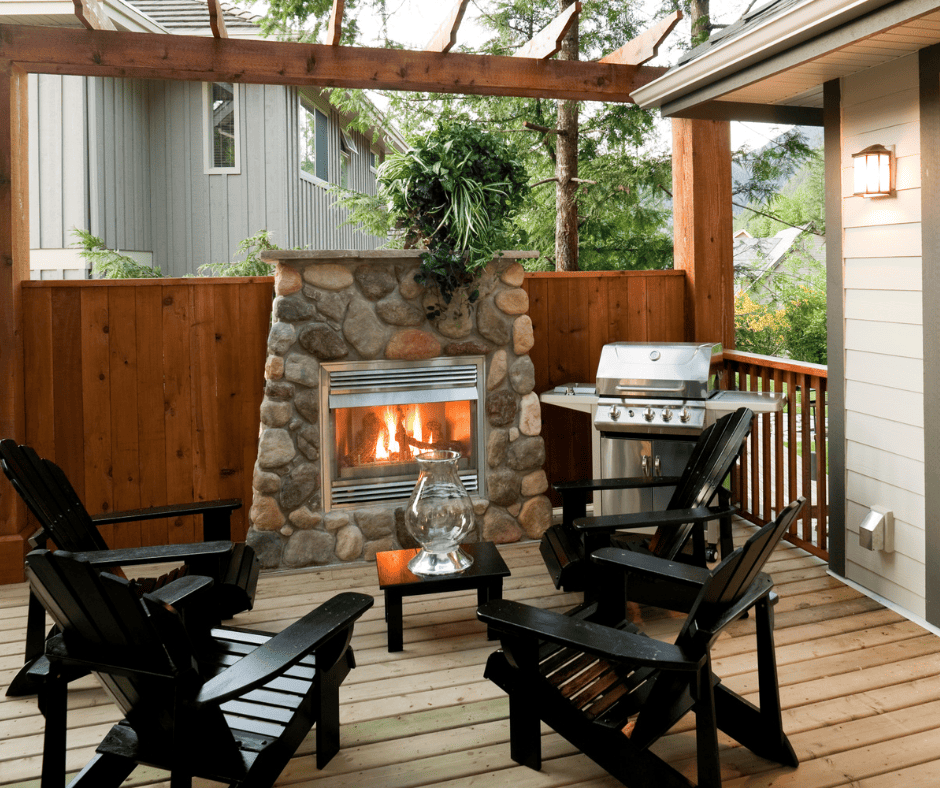
A pergola can provide shade while making the deck feel more like a defined outdoor room.
Traditional pergolas have an open roof made from rafters or slats, so they generally provide partial shade rather than complete overhead coverage.
The amount of shade depends on:
- Rafter spacing
- Rafter orientation
- Time of day
- Direction of the sun
- Pergola height
- Additional shade materials
Coverage can sometimes be increased with:
- Retractable fabric
- Shade panels
- Climbing plants
- Exterior curtains
- Other systems designed for the pergola
Pergolas can also help define:
- Outdoor dining areas
- Lounge spaces
- Outdoor kitchens
- Fire features
- Entertainment areas
Explore our pergola design and construction services.
7. Louvered Pergolas
A louvered pergola offers more control over shade than a traditional open-roof pergola.
Instead of fixed rafters, the roof uses adjustable louvers that can be opened or closed depending on the sun and weather.
A louvered pergola may be a good choice when you want:
- Adjustable sun and shade
- More overhead coverage
- A permanent outdoor-room feel
- Integrated lighting or other features
- More control than a traditional open pergola
Depending on the system, closing the louvers may also provide more weather protection than an open pergola.
However, louvered systems vary significantly. Drainage, wind ratings, electrical components, structural requirements, and weather protection should be evaluated for the specific product.
If you mainly want architectural definition and partial shade, a traditional pergola may be enough. If controlling sun exposure throughout the day is important, a louvered system may be worth considering.
Learn more about pergolas and outdoor shade structures.
8. Pavilion or Covered Structure
If you want more consistent shade and stronger weather protection, a roofed structure may be a better choice than an open pergola.
Options can include:
- Pavilion
- Covered porch
- Roof extension
- Covered deck area
A roofed structure can make a deck more comfortable during:
- Strong midday sun
- Hot summer afternoons
- Light rain
- Changing weather
It is also a much more involved construction project.
The design may need to account for:
- Foundations
- Existing deck structure
- Posts and beams
- Roof loads
- Flashing
- Gutters
- Drainage
- Electrical work
- Permits
If weather protection is one of your main goals, it is usually better to plan a true covered structure rather than expecting a traditional open pergola to function like a roof.
9. Shade Trees
Trees can provide natural shade while becoming part of the overall landscape.
Their benefits may include:
- Natural cooling
- Seasonal shade
- Privacy
- Landscape character
- Integration with planting beds
The biggest limitation is time. A newly planted tree may take years to provide substantial shade.
Tree selection and placement should consider:
- Mature canopy size
- Root growth
- Distance from the deck and foundation
- Leaf or fruit drop
- Sun exposure
- Local growing conditions
- Long-term maintenance
Avoid planting large trees so close to the deck that future roots, branches, or maintenance create problems.
If trees are part of a larger backyard project, they can be coordinated through the landscape design process.
10. Exterior Roller Shades
Exterior roller shades are especially useful when low-angle morning or afternoon sun is the problem.
Unlike overhead shade, roller shades are installed vertically on a covered deck, porch, pergola, or pavilion to help block sun and glare from the side.
They can work well for:
- Western afternoon sun
- Morning glare
- Covered outdoor dining areas
- Additional privacy
- Pergolas and pavilions
- Outdoor rooms where overhead shade already exists
Depending on the system, exterior shades may be manually operated or motorized.
They work best when planned with the supporting structure. Size, mounting points, wind exposure, fabric type, and how the shades will be secured or retracted should all be considered.
Exterior roller shades can also complement a pergola or roof rather than replacing it. The structure handles overhead sun while the shades help control sunlight coming in from the sides.
11. Outdoor Curtains or Screens
Outdoor curtains and screens can provide side shade, privacy, and a more enclosed feeling.
They are particularly useful when the main problem is low-angle sun rather than overhead sun.
They may help with:
- Late-afternoon western sun
- Morning sun
- Privacy
- Glare
- Defining a seating area
Outdoor curtains work best when attached to a suitable:
- Pergola
- Pavilion
- Covered porch
- Other supporting structure
Choose products designed for exterior conditions and make sure they can be secured or retracted when wind increases.
For homeowners who want a cleaner or more automated appearance, retractable exterior screens may be another option.
12. Trellises and Climbing Plants
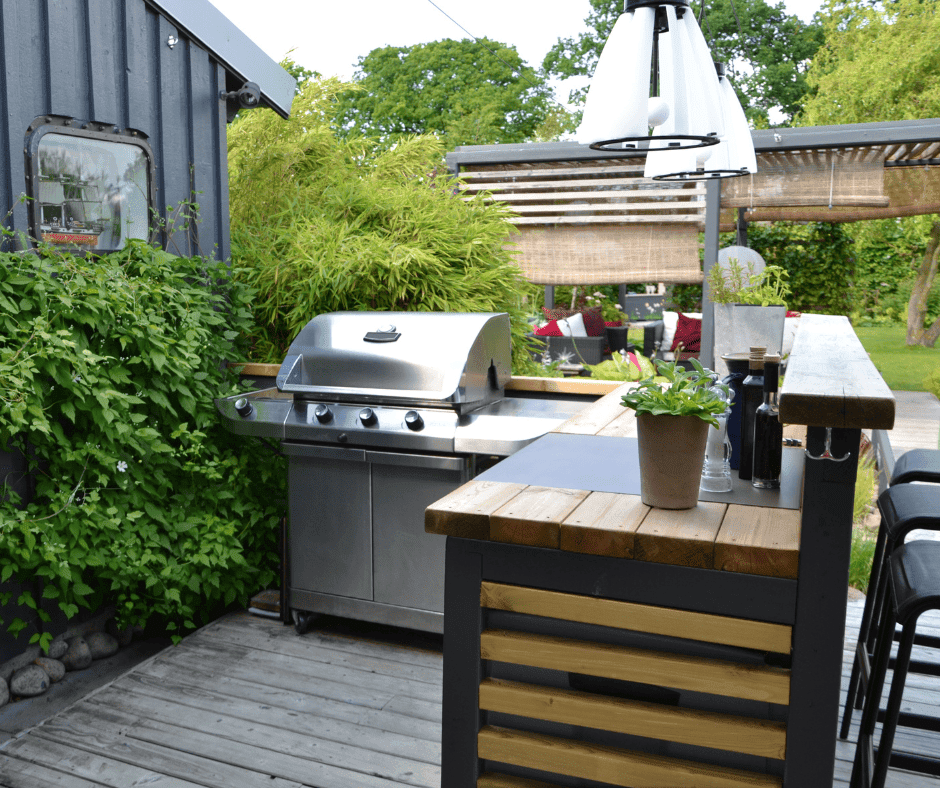
A trellis can provide partial shade while adding greenery and privacy around the edge of a deck.
It can be especially useful when you want:
- A natural appearance
- Partial shade
- Privacy
- Landscape integration
- Screening along one side of the deck
Climbing plants can gradually turn the trellis into a living screen.
Before choosing plants, consider:
- Mature size
- Growth rate
- Sun requirements
- Maintenance
- Seasonal appearance
- How the plant attaches itself to structures
Avoid plants that could damage siding, gutters, masonry, decking, or other parts of the house.
Which Deck Shade Option Is Best?
The right option depends on what you want the shade to accomplish.
Choose an umbrella when:
- You need movable shade
- Only a small area needs coverage
- You do not want permanent construction
Choose a shade sail when:
- You want a contemporary appearance
- Partial coverage is enough
- Suitable attachment points can be provided
Choose an awning when:
- Shade is needed close to the house
- You want broad coverage without posts taking up deck space
- Adjustable coverage is important
Choose a traditional pergola when:
- You want partial shade
- Architectural appearance is important
- You want to define an outdoor room
Choose a louvered pergola when:
- You want adjustable overhead shade
- You want more coverage than a traditional pergola
- The deck is intended to function like an outdoor room
Choose a covered structure when:
- You want the most consistent overhead shade
- Weather protection matters
- You want the deck to function more like an extension of the home
Choose exterior roller shades when:
- Low-angle sun is the main problem
- You already have a roof or pergola
- You want adjustable side coverage
Choose trees or trellises when:
- Natural shade is the priority
- You are comfortable waiting for plants to mature
- Landscaping is part of the overall design
Think About Where the Sun Actually Hits Your Deck
Before choosing a shade structure, spend some time observing your deck.
Check the sun during:
- Morning
- Midday
- Late afternoon
- Early evening
A pergola or roof directly overhead may provide excellent midday shade but do little against low western sun later in the day.
That is why some decks benefit from combining different solutions.
For example:
Pergola + exterior roller shades
The pergola handles overhead sun while the shades block lower afternoon sun.
Covered structure + open seating area
Part of the deck stays protected while another area remains open to the sky.
Pergola + landscaping
The pergola creates immediate partial shade while trees provide additional shade as they mature.
The best solution responds to the direction of the sun instead of simply covering as much of the deck as possible.
Can You Add a Pergola or Roof to an Existing Deck?
Sometimes, but the existing deck should be evaluated before adding a permanent structure.
Important considerations include:
- Footings
- Posts
- Beams
- Joists
- Connections to the house
- Existing settlement or movement
- Additional structural loads
- Attachment points
A deck designed to support people and furniture should not automatically be assumed to support a pergola or roof.
Depending on the project, independent footings or structural modifications may be required.
If the existing deck is approaching the end of its useful life, it may make more sense to design the new deck and shade structure together.
Learn more about our custom deck design and construction services.
Does Adding Shade to a Deck Require a Permit?
Temporary items such as umbrellas generally do not involve the same approval process as permanent construction.
A permanent:
- Pergola
- Pavilion
- Roof
- Attached awning
- Structural deck modification
may require municipal review depending on the design and location.
Requirements can also involve:
- Setbacks
- Lot coverage
- Structural loads
- Electrical work
- Historic-district requirements
Check with your township or borough before beginning permanent construction.
How Much Does a New Deck Cost?
If shade is part of a new deck project, it makes more sense to budget for the complete outdoor space rather than looking only at the cost of the shade structure.
For planning purposes, our custom deck projects generally fall into these ranges:
| Deck project | Typical range |
|---|---|
| Standard composite deck with railings, stairs, and landing | Around $40,000 |
| More customized deck with lighting and upgraded features | Around $60,000 |
| Larger custom deck with additional features | $85,000+ |
These are general planning figures, not prices for pergolas or shade structures by themselves.
The total investment can change based on:
- Deck size
- Deck height
- Structural work
- Materials
- Railings
- Stairs and landings
- Lighting
- Drainage
- Pergola or roof structure
- Site access
- Existing deck demolition
Review our project pricing or use our pricing calculator when planning a larger deck project.
Frequently Asked Questions
What is the easiest way to add shade to a deck?
A patio umbrella is usually one of the simplest options because it provides immediate shade without permanent construction.
What provides the most shade on a deck?
A roofed structure generally provides the most consistent overhead shade. Pergolas, awnings, louvered systems, and fabric solutions provide different levels of adjustable or partial coverage.
Does a pergola provide enough shade?
It depends on the design. A traditional open pergola provides partial shade. The amount of coverage depends on rafter spacing, orientation, sun angle, and any additional shade materials.
What is the difference between a pergola and a louvered pergola?
A traditional pergola typically uses fixed open rafters. A louvered pergola uses adjustable roof slats that can provide greater control over sunlight and, depending on the system, additional weather protection.
Is a pergola better than an awning?
Neither is automatically better. A pergola adds permanent architectural structure and helps define an outdoor room. A retractable awning may be better when adjustable shade close to the house is the main goal.
Can you put a pergola on an existing deck?
Possibly, but the deck structure, footings, connections, and additional loads should be evaluated before adding a permanent structure.
How do I block late-afternoon sun on my deck?
Exterior roller shades, outdoor curtains, screens, strategically positioned shade sails, landscaping, or a combination of overhead and side shade may work better than overhead coverage alone.
Can I add shade without attaching anything to my house?
Yes. Umbrellas, freestanding canopies, independently supported pergolas, trees, and some shade-sail systems can provide shade without relying on the house for support.
Does a pergola protect a deck from rain?
A traditional open-roof pergola provides limited rain protection. Louvered or covered systems may provide more protection depending on their design.
Are exterior roller shades useful on a deck?
Yes, particularly on covered decks and pergolas where low-angle morning or afternoon sun enters from the side.
Should I add shade when building a new deck?
It is worth planning shade at the same time as the deck, even if you do not install every feature immediately. Planning ahead can help with footings, structure, electrical service, furniture layout, and future pergola or roof placement.
About the Author
John Kelly is the founder of Kelly Masonry. Since 2002, Kelly Masonry has designed and built decks, pergolas, patios, masonry, and complete outdoor-living spaces throughout Delaware County, the Main Line, and surrounding Pennsylvania communities.
Originally published: April 5, 2023
Reviewed by: John Kelly
Last updated: August 10, 2026
Need More Shade on Your Deck?
If your current deck gets too much sun—or you are planning a new deck—we can help you think through the deck layout, pergola or covered structure, lighting, landscaping, and the rest of the outdoor space.
Explore our custom deck services, learn about our pergolas, browse our completed projects, or request a consultation.